Last updated: September 30, 2026
Quick Answer
Bathing a dog who hates water gets easier when you slow down the process, control the environment, and reward every small win. Use lukewarm water, a non-slip mat, a handheld sprayer instead of a hose, and high-value treats or a lick mat to keep your dog’s mind off the water. For dogs with severe fear, waterless shampoo and gradual desensitization can replace or delay a full bath entirely.
Key Takeaways
- Fear usually comes from a specific trigger, not water itself, like slippery floors, loud faucets, or cold temperatures.
- Gradual desensitization works better than forcing a scared dog into the tub.
- Lukewarm water only (test it on your wrist first) prevents shock and discomfort.
- Waterless or no-rinse shampoo is a legitimate option between full baths or for dogs who panic.
- Treats, lick mats, and calm voices turn bath time into a reward session instead of a fight.
- Most dogs only need a bath every 4 to 6 weeks, so you have more flexibility than you think.
- A groomer can help if home baths consistently end in stress for you or your dog.
Why do some dogs hate water and baths?
Most dogs who hate baths aren’t afraid of water itself. They’re reacting to a specific part of the experience, like a slippery tub floor, the sound of running water, cold temperatures, or a past bad experience.
A recent behavior breakdown from Dogster points to six common triggers behind bath-time fear, including slick surfaces, loud water noise, uncomfortable water temperature, past trauma, and sensitivity around the face and ears.
Once you know the trigger, you can fix it directly instead of guessing.
- Slippery tub: add a rubber bath mat for grip.
- Loud faucet noise: fill the tub before your dog gets in, or use a quiet handheld sprayer.
- Cold or hot water: always use lukewarm water and check it yourself first.
- Face and ear sensitivity: avoid direct spray to the head; use a damp washcloth instead.
Common mistake: owners assume their dog is “just difficult” and skip figuring out the actual trigger. That guarantees the same fight every single time.
Genius way 1: How to get a dog used to water gradually
The single most effective long-term fix for bathing a dog who hates water is gradual desensitization. You break the bath into tiny, low-stress steps and only move forward once your dog is relaxed at each stage.
Vet-approved guidance from mid-2026 recommends starting with something as simple as rewarding your dog for walking into the bathroom calmly, then for standing in a completely dry tub, before introducing any water at all.
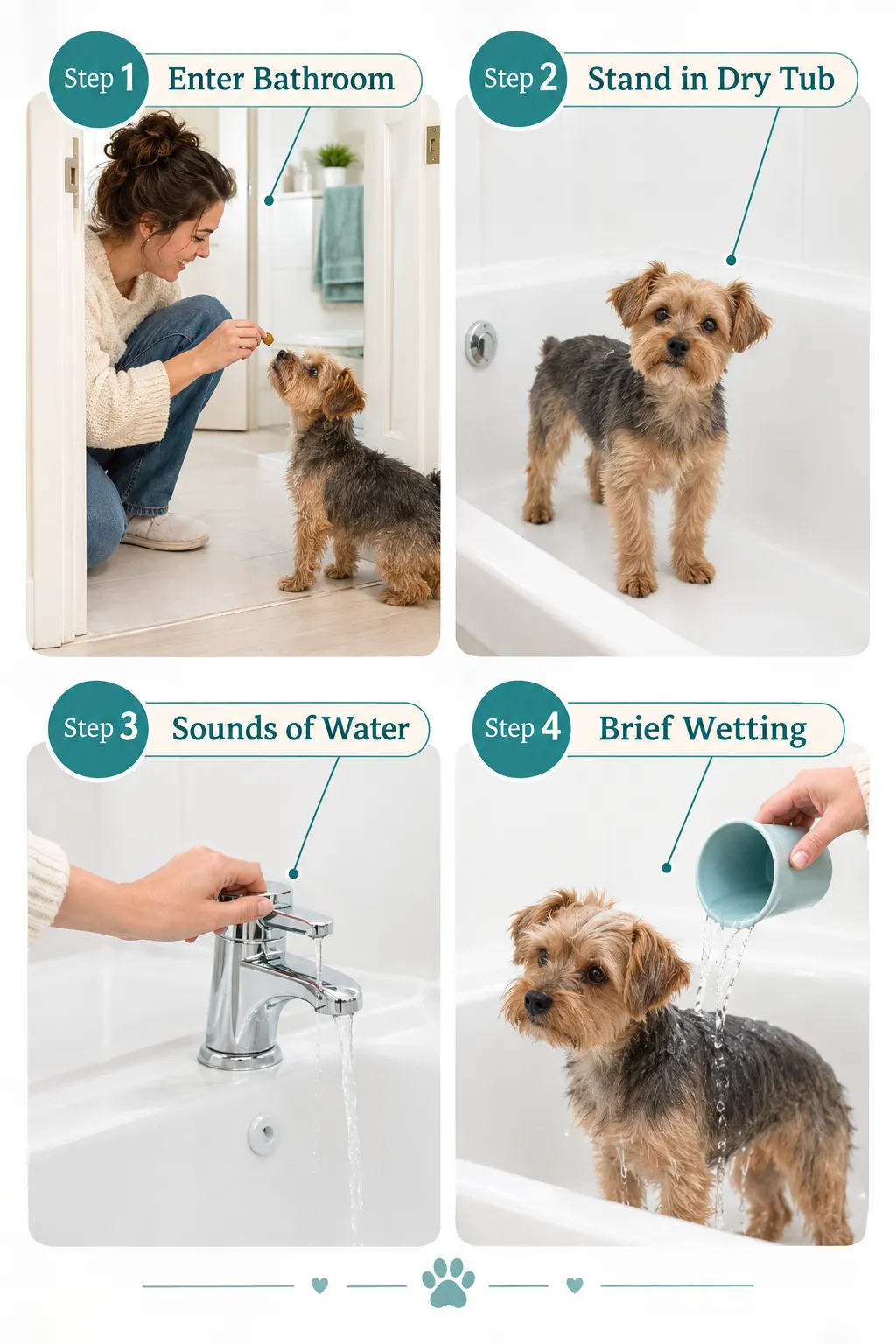
Here’s a simple version you can start today:
- Day 1-2: Toss treats into the bathroom so your dog wanders in willingly.
- Day 3-4: Reward your dog for standing in a dry, empty tub.
- Day 5-6: Turn the faucet on nearby (not on your dog) so they get used to the sound.
- Day 7+: Introduce a small cup of lukewarm water on the paws only, then reward heavily.
Choose this method if your dog freezes, shakes, or tries to bolt at the sight of the tub. If any step causes real panic, stop for the day and try again tomorrow. Forcing it usually makes water phobia worse, according to Purina’s bathing guidance.
Genius way 2: Can you bathe a dog without using a tub?
Yes, you can bathe a dog without a tub. Options include a walk-in shower with a non-slip mat, an outdoor bucket bath in warm weather, or a kitchen sink for small breeds.
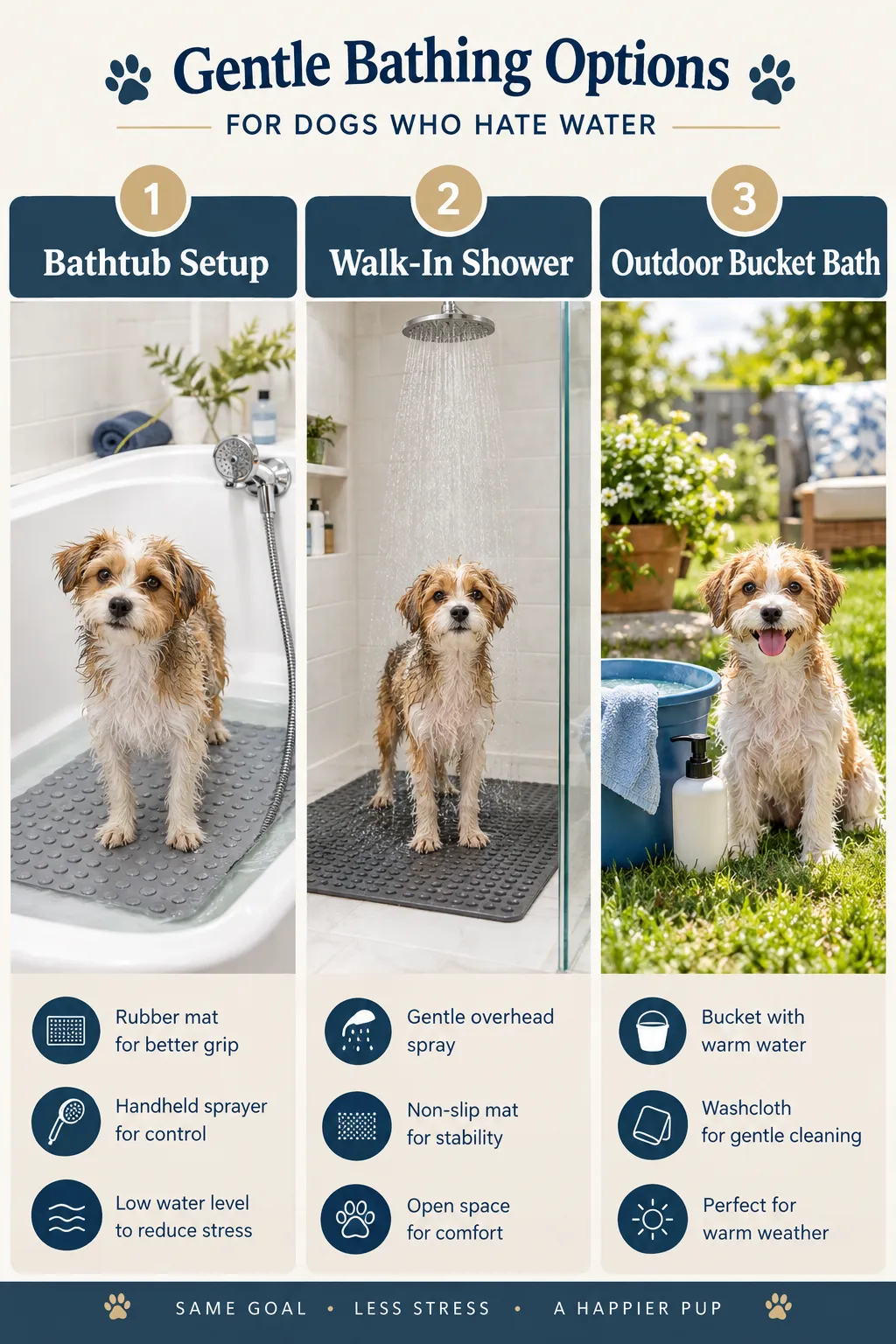
| Setup | Best for | Key advantage |
|---|---|---|
| Bathtub with mat | Most dogs, all sizes | Contained space, easy rinsing |
| Walk-in shower | Dogs scared of tub walls | More open, less “trapped” feeling |
| Outdoor bucket/hose | Warm weather, larger dogs | Low pressure, open space feels less scary |
| Kitchen sink | Small breeds, puppies | Owner has full control, less bending |
Decision rule: choose outdoor bathing if your dog associates the bathroom specifically with fear, since a new location can reset the association completely. Choose a shower over a tub if your dog panics about feeling “trapped” in a small basin.
Whichever setup you pick, PetDirect’s bath-time guidance for water-shy dogs recommends turning the water off between rinsing steps to cut down on constant noise, which alone can lower a nervous dog’s stress level.
What temperature water should you use for dogs?
Always use lukewarm water for bathing a dog who hates water, never hot or cold. Test it on the inside of your wrist before your dog gets anywhere near the tub.
Water that’s too cold can trigger shivering and panic. Water that’s too hot can burn sensitive skin or just feel alarming to an already nervous dog. Hartz’s bathing tips recommend keeping baths short and lukewarm throughout, not just at the start, since water temperature can drop fast in a big tub.
Edge case: senior dogs and puppies are more sensitive to temperature swings than adult dogs, so check the water again halfway through the bath, not just once at the beginning.
Genius way 3: What’s the best dog shampoo for anxious dogs?
The best shampoo for an anxious dog is a gentle, tear-free, fragrance-light formula, and for dogs who truly can’t handle water, a waterless or no-rinse shampoo works as a full substitute.
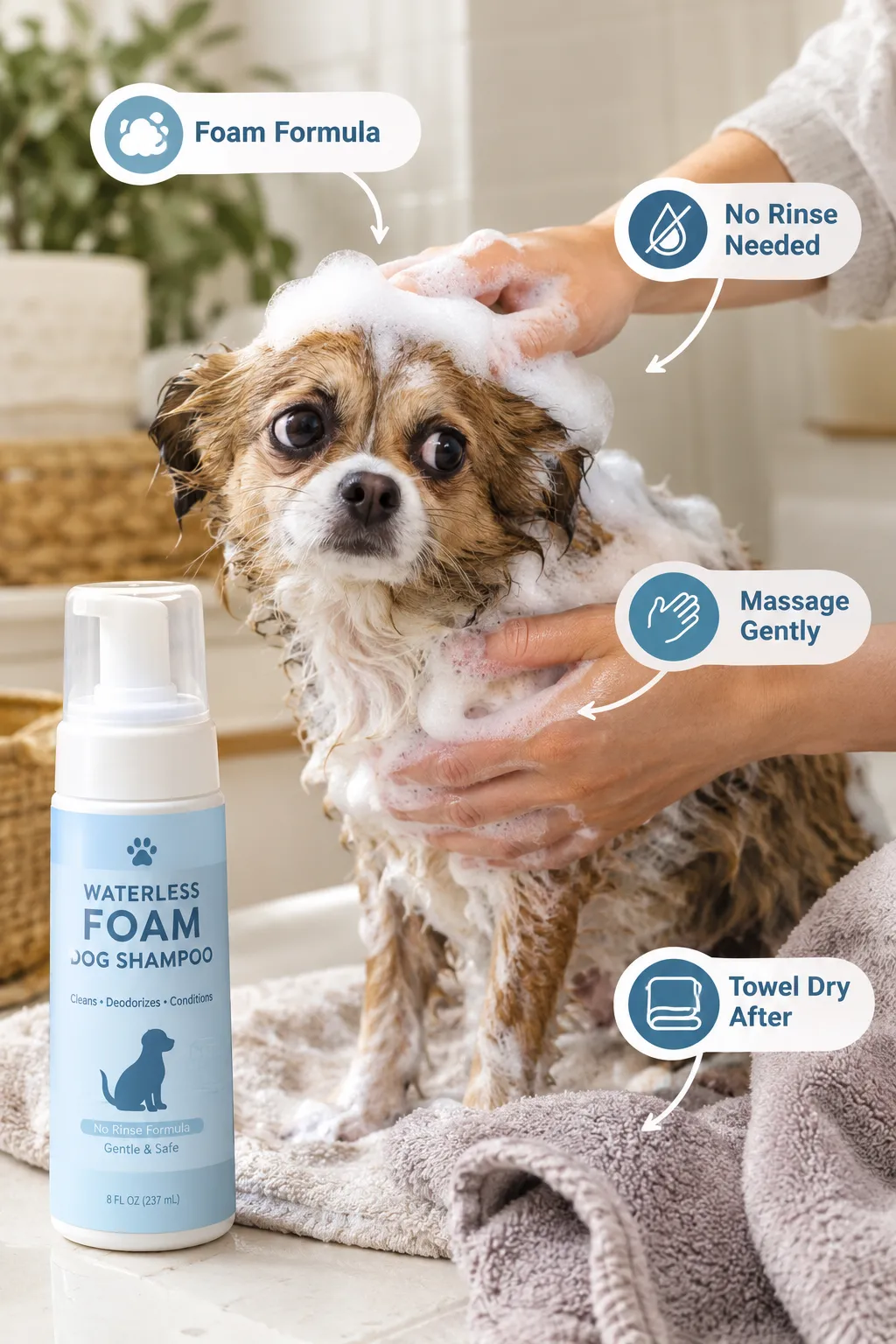
Waterless shampoos have become a mainstream option, not just a backup plan. Business Insider’s shampoo roundup and Dogster’s waterless shampoo picks both highlight foam and spray formulas as solid choices for elderly, incontinent, or intensely fearful dogs.
How to use dry shampoo for dogs who hate water:
- Spray or foam the product directly onto dry fur.
- Massage it in, avoiding the eyes, ears, and any open cuts.
- Towel-dry or brush it out once fully worked through the coat.
You’ll find a wide range of these on Chewy’s waterless shampoo collection, Target’s waterless pet shampoo selection, and specific soothing options like Nature’s Promise Fresh & Soothing shampoo, plus unscented versions from brands like We Love Doodles’ unscented waterless shampoo.
Choose waterless shampoo if your dog has a full-blown panic response to water, or between full baths to stretch out the schedule.
Genius way 4: How to calm a dog during bath time
You calm a dog during a bath with continuous rewards, a calm voice, and by starting the wash at the body, saving the head for last. Distraction matters more than reassurance alone.
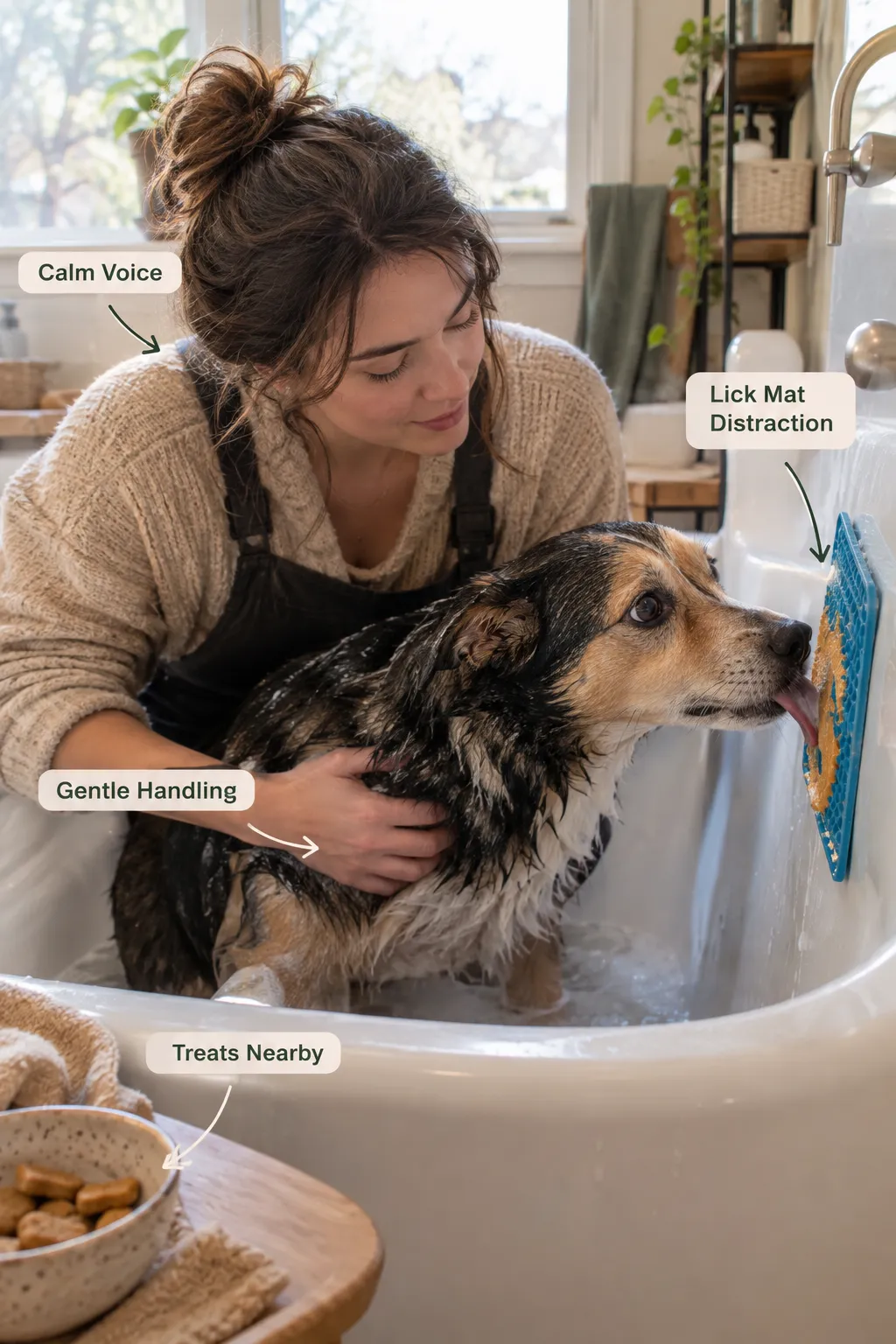
A trick that’s gained popularity: smear a small amount of dog-safe peanut butter or a lickable treat on the tub wall so your dog licks it throughout the bath. Purina’s routine care guide notes this turns the bath into a predictable reward session rather than a struggle.
Other calming steps that genuinely help:
- Start washing at the tail and body, not the face.
- Use a wet washcloth for the head instead of direct spray.
- Keep sessions short, five to ten minutes for most dogs.
- Talk in a low, steady voice the whole time.
Common mistake: rushing straight to the face with a sprayer. That’s often the exact moment panic sets in, according to Dogster’s water-hating dog guide.
If your dog is generally anxious beyond bath time, it may help to work on calm behavior in general using a structured calm dog training method.
Genius way 5: Do dog anxiety supplements help with bathing?
Some calming supplements can slightly reduce baseline anxiety, but they’re not a substitute for gradual training and a low-stress bath setup. Talk to your vet before giving anything new, especially before a stressful event like a bath.
Supplements alone rarely fix a dog that panics in water. They work best as one small piece of a bigger plan that includes desensitization, a non-slip mat, and reward-based handling. If your dog’s anxiety extends beyond bath time, it’s worth looking at broader calming strategies, including ways to help a reactive or anxious dog feel more secure day to day.
Decision rule: ask your vet about supplements if your dog shows anxiety in many situations, not just baths. If bath time is the only trigger, focus your energy on desensitization first.
Genius way 6: What if my dog has a traumatic bath experience?
If your dog has one bad bath experience, don’t force another bath right away. Give it time, switch to waterless shampoo temporarily, and restart with slow desensitization before trying water again.
One rough bath can set back weeks of progress. The fix is patience, not repetition. Go back to the very first desensitization steps, like standing calmly in a dry tub, before reintroducing any water at all.
Is it okay to skip baths if your dog hates them? Yes, in the short term. Skipping a bath and using waterless shampoo instead is far better than forcing a terrified dog into water. Just don’t skip hygiene altogether long term, since matted or dirty coats can cause skin problems.
If your dog’s coat starts smelling between baths, brushing and spot-cleaning with a damp towel can bridge the gap, and it also helps to address dog odor around the house naturally while you work through the training.
How often do you actually need to bathe a dog?
Most dogs only need a full bath every four to six weeks, not weekly. Dogs with skin conditions, allergies, or very short coats may need a different schedule, so check with your vet.
Over-bathing can actually strip natural oils and irritate skin, which makes a fearful dog’s experience even worse. Between full baths, brushing regularly and using waterless shampoo for spot cleaning keeps your dog fresh without the fight.
Quick example: a healthy adult Labrador with no skin issues might only need 6 to 8 full baths a year. A dog with allergies might need medicated baths more often, but that schedule should come from a vet, not guesswork.
Groomer vs doing it at home: what’s actually different?
A professional groomer has better equipment, more experience handling fearful dogs, and can often finish faster with less stress. Doing it at home costs less and lets you control the pace, but takes more patience if your dog is scared.
Groomer vs DIY at a glance
Professional groomer: trained handling techniques, professional-grade dryers and tools, often faster sessions, good option if home baths consistently fail.
DIY at home: lower ongoing cost, flexible schedule, full control over pace and rewards, best for dogs mid-way through desensitization training.
Choose a groomer if your dog’s fear is severe enough that home baths turn into a physical struggle every time, or if you simply don’t have time for a slow, multi-week desensitization process. Choose DIY if your dog tolerates gradual handling and you want to build trust yourself.
Bath time can also be part of a bigger bonding effort with your dog, especially if you’re still building trust with a newer dog in your home.
FAQ
Can I use regular human shampoo on my dog?
No. Human shampoo has a different pH and can dry out or irritate a dog’s skin. Stick to dog-specific formulas, including waterless options if needed.
How long should a bath take for a fearful dog?
Aim for five to ten minutes total. Shorter, efficient baths reduce the window for panic to build.
Should I ever use a blow dryer on a scared dog?
Only on the lowest, coolest setting, and only after your dog is comfortable with the sound. Towel drying is a safer default for anxious dogs.
Is outdoor bathing safe in cold weather?
No, avoid outdoor baths below comfortable room temperature. Stick to indoor baths with lukewarm water when it’s cold outside.
Will one good bath fix water fear permanently?
No. Fear usually fades gradually over multiple positive sessions, not after a single good experience.
Can puppies use waterless shampoo?
Check the product label first. Many waterless shampoos are safe for puppies, but always confirm the minimum age listed by the manufacturer.
Conclusion
Bathing a dog who hates water doesn’t have to be a wrestling match every few weeks. Start small: fix the specific trigger, use lukewarm water, add a non-slip mat, and keep treats or a lick mat going the whole time.
If your dog is genuinely terrified, lean on waterless shampoo while you work through gradual desensitization in the background. And if home baths keep ending badly, a groomer is a completely reasonable option, not a failure on your part.
Pick one genius method from this guide and try it at your dog’s next bath. Small, calm wins add up faster than one big forced session ever will.