
Last updated: October 1, 2026
Quick Answer
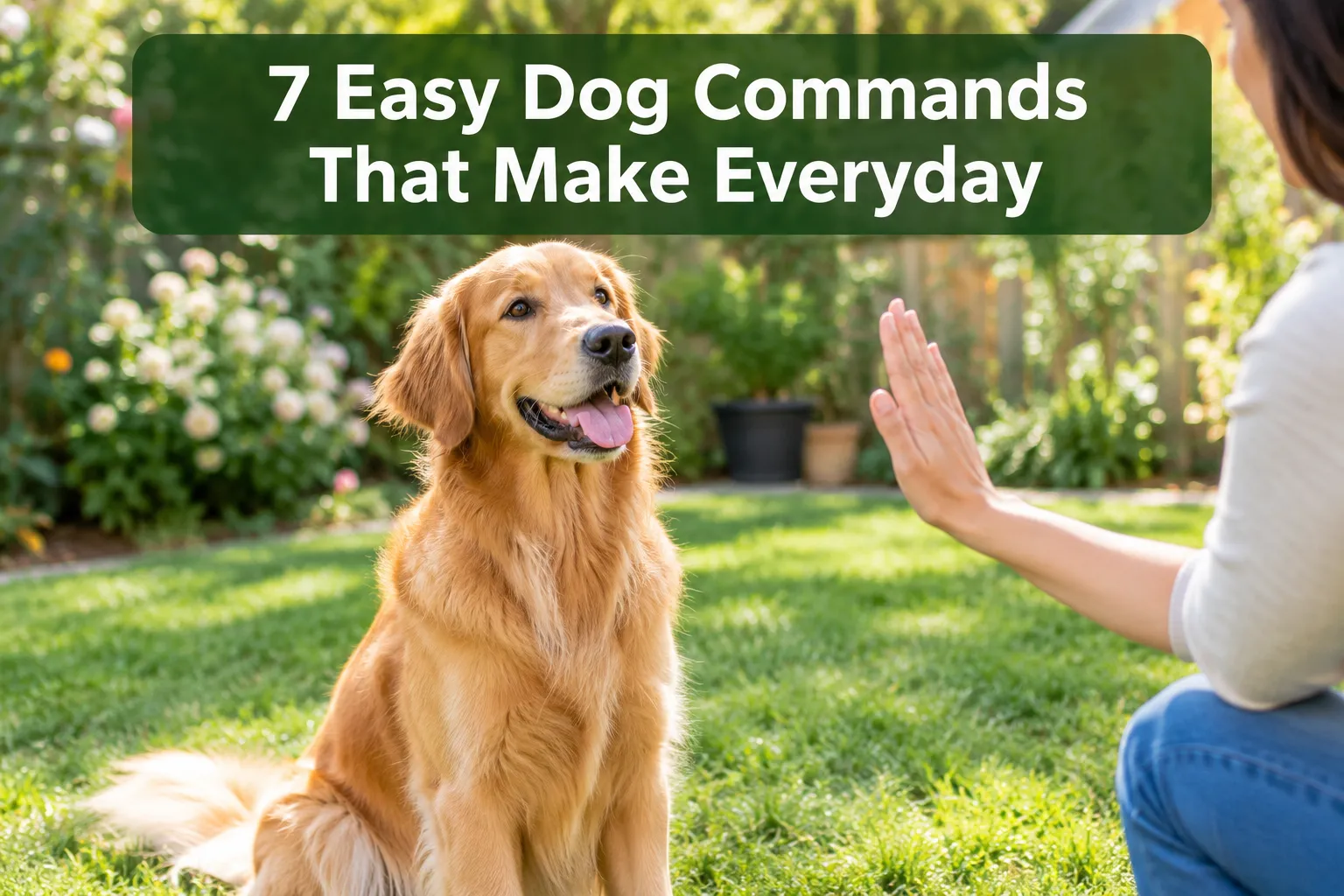
The seven easy dog commands that matter most for daily life are sit, down, stay, come, leave it, drop it, and heel (loose-leash walking). These cover calm manners, impulse control, safety around hazards, and stress-free walks. Most dogs can learn each one in short, consistent sessions over one to four weeks, and you don’t need fancy gear or constant treats to get there.
Key Takeaways
- Sit, down, stay, come, leave it, drop it, and heel form the core set of easy dog commands every dog needs for daily safety and manners.
- Short, frequent sessions (five minutes, several times a day) beat one long weekly lesson.
- Come (recall) is the most safety-critical command and should be trained early in low-distraction spots.
- Puppies learn basics fast but have short attention spans; adult dogs focus longer but may need to unlearn old habits first.
- Breed, age, and motivation all affect speed, but almost any healthy dog can learn these seven commands.
- Clear, consistent wording and hand signals matter more than fancy tools or constant treats.
- Dogs forget commands when they’re inconsistent, rushed, or only practiced in one setting.
Most dog owners don’t need fifty tricks. They need seven words that actually get obeyed when it counts, at the door, on the sidewalk, or when a squirrel bolts across the yard.
I’ve trained three dogs over the years, and the ones that turned out calmest weren’t the ones who knew the most tricks. They were the ones who nailed a short list of easy dog commands until those commands became automatic. That’s the whole idea behind this guide.
Before we get into the list, I want to mention something that changed how I approach training altogether. There’s a Free Dog Training Workshop that walks you through the exact housebreaking and obedience methods real service dog trainers use, and it’s free to join online if you want a faster path to the results below.
The 7 Easy Dog Commands That Actually Help in Daily Life
The seven commands that solve the most real-world problems are sit, down, stay, come, leave it, drop it, and heel. Each one targets a specific everyday situation, from calm greetings to safe walks.
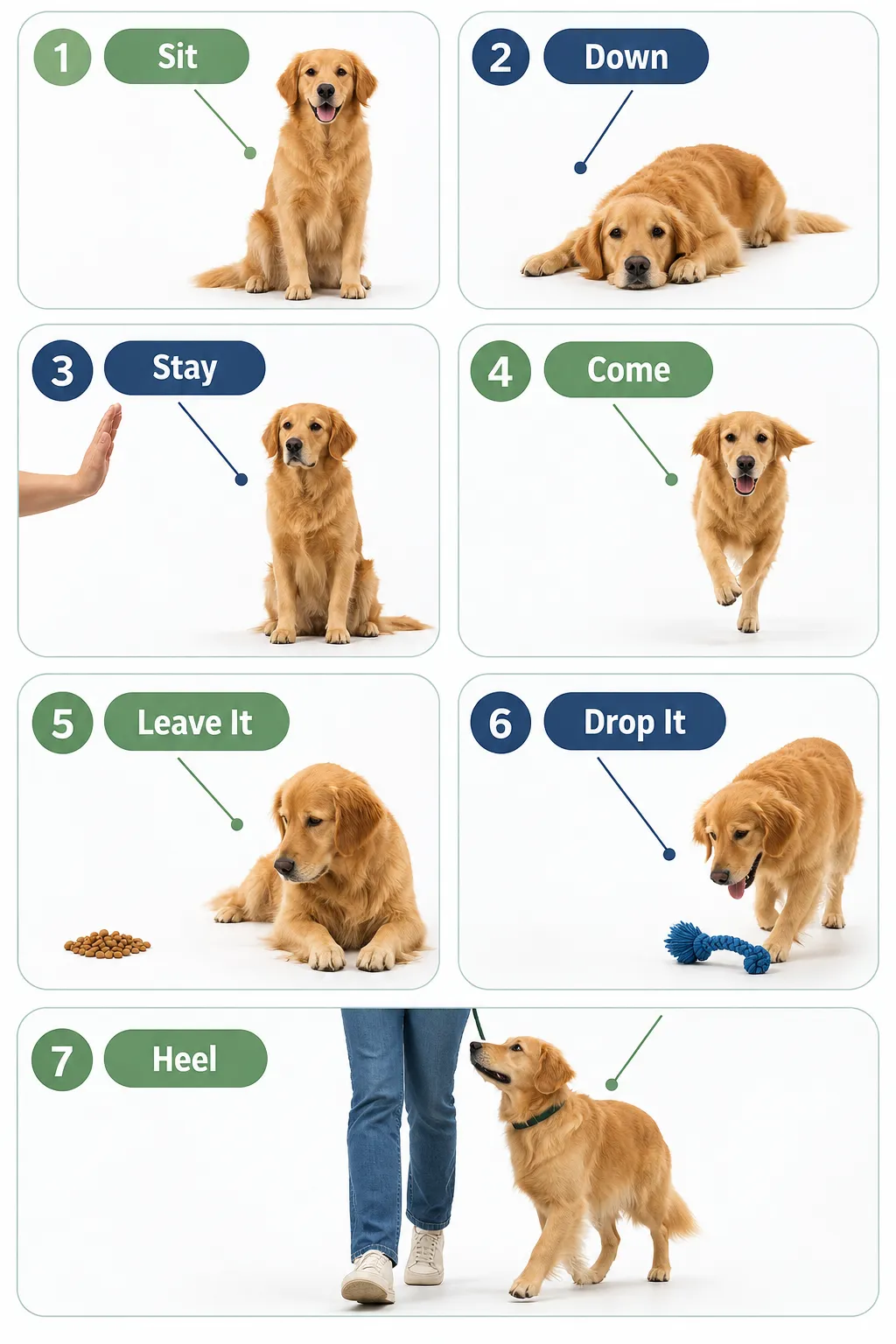
Here’s a quick breakdown of what each one actually does for you.
| Command | What It Solves | When You’ll Use It |
|---|---|---|
| Sit | Calms excitement at doors and greetings | Guests arriving, feeding time |
| Down | Settles a dog into relaxation | Dinner, vet waiting rooms |
| Stay | Prevents door-dashing and bolting | Open doors, curbs, car doors |
| Come | Brings your dog back safely | Off-leash parks, emergencies |
| Leave It | Stops ingestion of hazards | Dropped food, trash, sidewalk litter |
| Drop It | Gets dangerous items out of the mouth | Chewed socks, toxic plants |
| Heel | Keeps walks calm and pull-free | Daily walks, busy sidewalks |
This lines up with what major training organizations recommend too. The American Kennel Club frames come, heel, sit, stay, and down as the essential cues every dog should master, and adds leave it and drop it as the extras that keep dogs out of danger. If you want more hand-signal options beyond these seven, this list of powerful hand commands that get instant results is worth bookmarking too.
What Are the Easiest Dog Commands to Teach a Beginner
Sit and down are the easiest commands for a beginner to teach, because they rely on natural body movements rather than complex timing. Most dogs offer these positions on their own within the first short session.
Here’s a simple order that works well for beginners:
- Sit – lure the nose up and back with a treat or hand, say the word as the hips drop.
- Down – from sit, lure the nose down and forward toward the floor.
- Come – call in a happy voice from a few feet away, reward arrival.
- Leave It – cover a treat with your hand, reward only when the dog stops trying.
Choose sit first if your dog is bouncy or jumpy, since it’s the fastest win and builds confidence for both of you.
Sit vs Stay: Which Should You Teach First
Teach sit before stay, because stay builds on a position your dog already understands. Sit is a single action. Stay is self-control stretched over time, which is a harder skill.
A common mistake is trying to teach both at once. Your dog ends up confused about whether the goal is to sit or to hold still. Nail sit for a few days first, then add a one-second stay, then two seconds, then build up from there.
Edge case: if your dog already holds positions naturally (some calmer breeds do), you can introduce stay almost right alongside sit without much trouble.
How Long Does It Take to Teach a Dog Basic Commands
Most dogs learn a single basic command like sit or down within a few days to two weeks of short daily practice. Full reliability, meaning your dog obeys around distractions, usually takes three to six weeks per command.
Here’s a rough timeline based on general training patterns:
- Sit, down: a few days to one week for the basic response
- Come, leave it: one to three weeks, since these need distraction training
- Heel, stay: two to four weeks for a dog to hold up under real-world temptation
The AKC’s guidance on expert tips for dog training recommends short, frequent sessions over long ones, which speeds up learning without burning out your dog’s attention span. For a structured approach, the 14 day dog training plan is a solid way to stack these commands in order.
Best Dog Commands for Puppies vs Adult Dogs
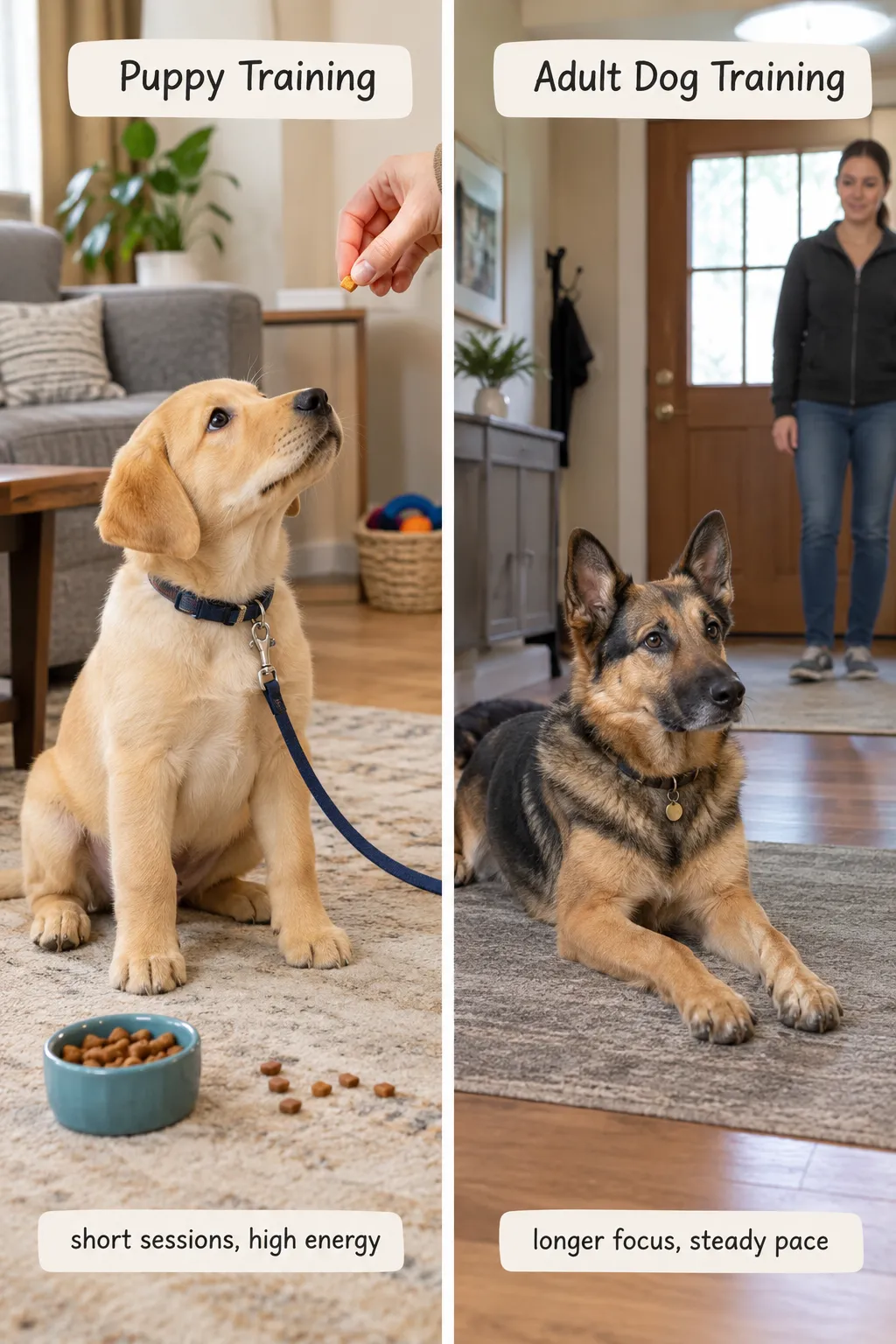
Puppies and adult dogs can both learn the same seven commands, but the pacing and focus points differ. Puppies learn fast but tire quickly, while adult dogs hold focus longer but sometimes need to unlearn bad habits first.
Puppies under six months do best with two-minute bursts, five or six times a day. Adult dogs can usually handle five to ten minute sessions without losing interest. AKC’s basic obedience program accepts dogs starting around five months old for this exact reason, waiting until attention spans can handle structured lessons.
Can older dogs learn new commands easily? Yes. Older dogs often learn faster than puppies because they’re calmer and have longer attention spans. The main adjustment is physical, so skip commands that strain joints and keep sessions gentle.
Do All Dog Breeds Learn Commands at the Same Speed
No, breeds do not learn commands at the same speed, but almost every healthy dog can learn these seven easy dog commands eventually. Working and herding breeds tend to pick up cues fast because they were bred to take direction. Independent breeds like hounds or terriers may need more repetition and stronger motivation.
A few quick examples:
- Faster learners: border collies, labradors, German shepherds
- Steady but stubborn learners: beagles, dachshunds, terriers
- Brachycephalic or small breeds: often need shorter sessions due to stamina, not intelligence
Breed is not a life sentence here. It just changes how long you’ll spend, not whether your dog can get there.
Why Won’t My Dog Listen to Commands
Dogs usually ignore commands because of unclear cues, inconsistent wording between family members, or training that only happened in one quiet room. Distraction, fatigue, and confusion are the three biggest culprits.
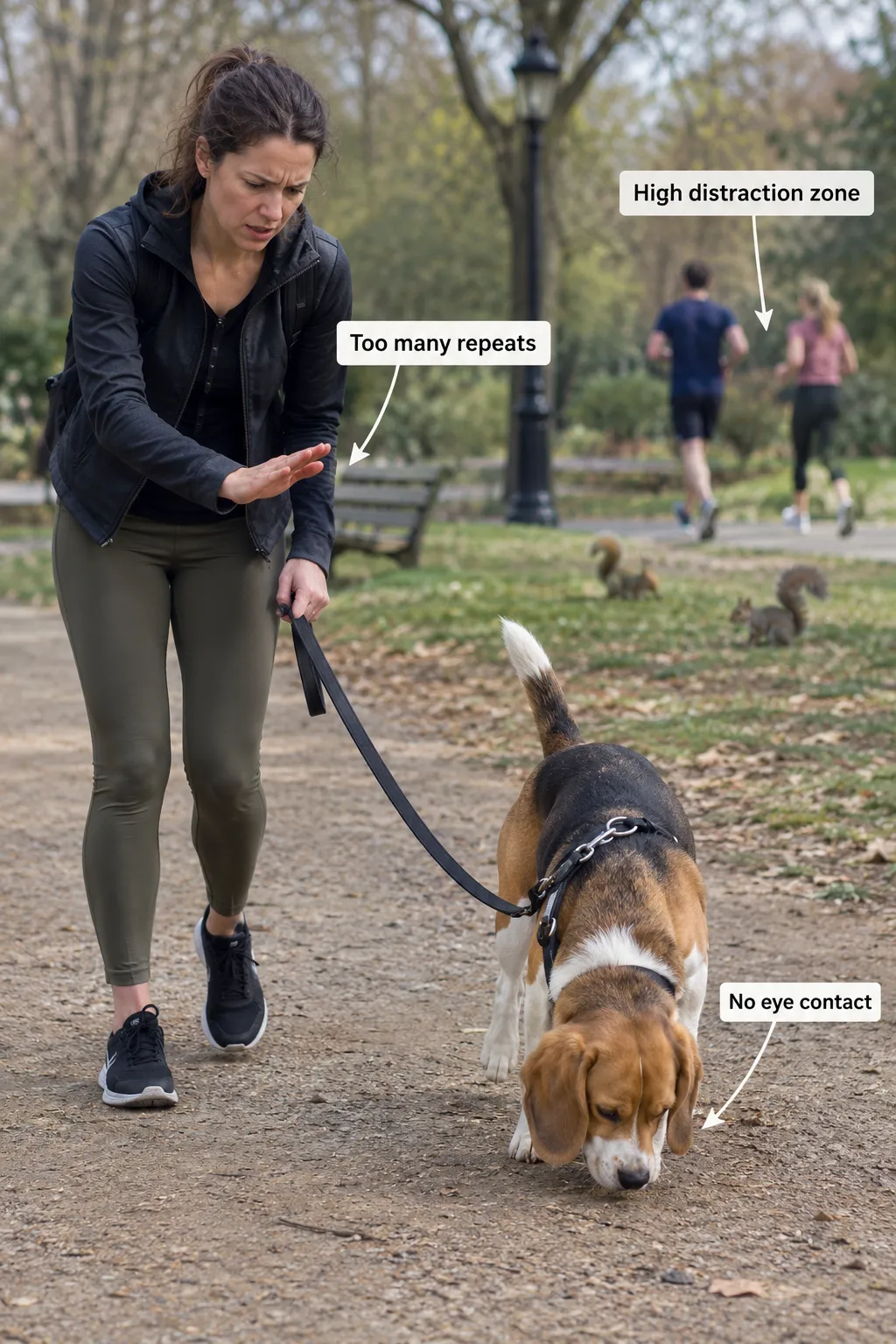
Common mistakes that cause this:
- Using different words for the same action (“down” sometimes meaning off the couch, sometimes meaning lie down)
- Practicing only indoors, then expecting outdoor reliability
- Repeating the command five times before the dog responds, which teaches them to ignore the first four
- Skipping the step of rewarding partial success
What to do if your dog forgets a command: go back to a lower-distraction setting, reward small wins again, and avoid repeating the word over and over. One clear cue, one pause, then help them succeed.
AKC’s advice on training cues stresses giving each behavior one unique word and keeping every household member consistent, which solves a surprising number of “my dog won’t listen” situations on its own.
What’s the Difference Between a Command and a Trick
A command is a cue tied to practical, everyday behavior that improves safety or manners, while a trick is a cue performed mainly for fun or show. Sit, stay, and come are commands. Shake, spin, and play dead are tricks.
The line matters because commands deserve more consistency and higher-value rewards during training, since they protect your dog from real hazards. Tricks are lower stakes, so a little looseness in training won’t cause problems the way it would with recall or leave it.
How to Teach Dog Commands Without Treats
You can teach dog commands without treats by using praise, play, physical affection, or access to something your dog wants, like going outside or getting a toy. The key is finding what motivates your specific dog, since not every dog is food-driven.
Try these substitutes:
- Praise and touch – an enthusiastic voice plus chest scratches for dogs that love attention
- Toy rewards – a quick game of tug right after the correct response
- Life rewards – opening the door, starting the walk, or tossing the ball only after the cue is followed
This matters because the AKC’s “80 percent rule” from its expert training tips says you shouldn’t add the verbal word until the dog performs the behavior correctly about 80% of the time with a lure or hand signal. Treats just make that lure phase faster. Without them, it takes a bit longer, but it still works.
Common Mistakes People Make When Training Dog Commands
The most common mistake is naming the behavior too early, before the dog reliably performs it with a lure or hand signal. This confuses the dog and weakens the word’s meaning.
Other frequent mistakes:
- Training only in one location, then expecting the command to transfer everywhere
- Ending sessions on a failed attempt instead of a small success
- Using punishment instead of redirection when the dog gets it wrong
- Skipping the “proofing” stage, where you add distance, duration, and distractions gradually
I made the location mistake with my own dog for months. He was flawless in the kitchen and useless at the park. Once I started practicing on sidewalks and near other dogs, everything clicked within two weeks.
Best Tools and Equipment for Dog Command Training
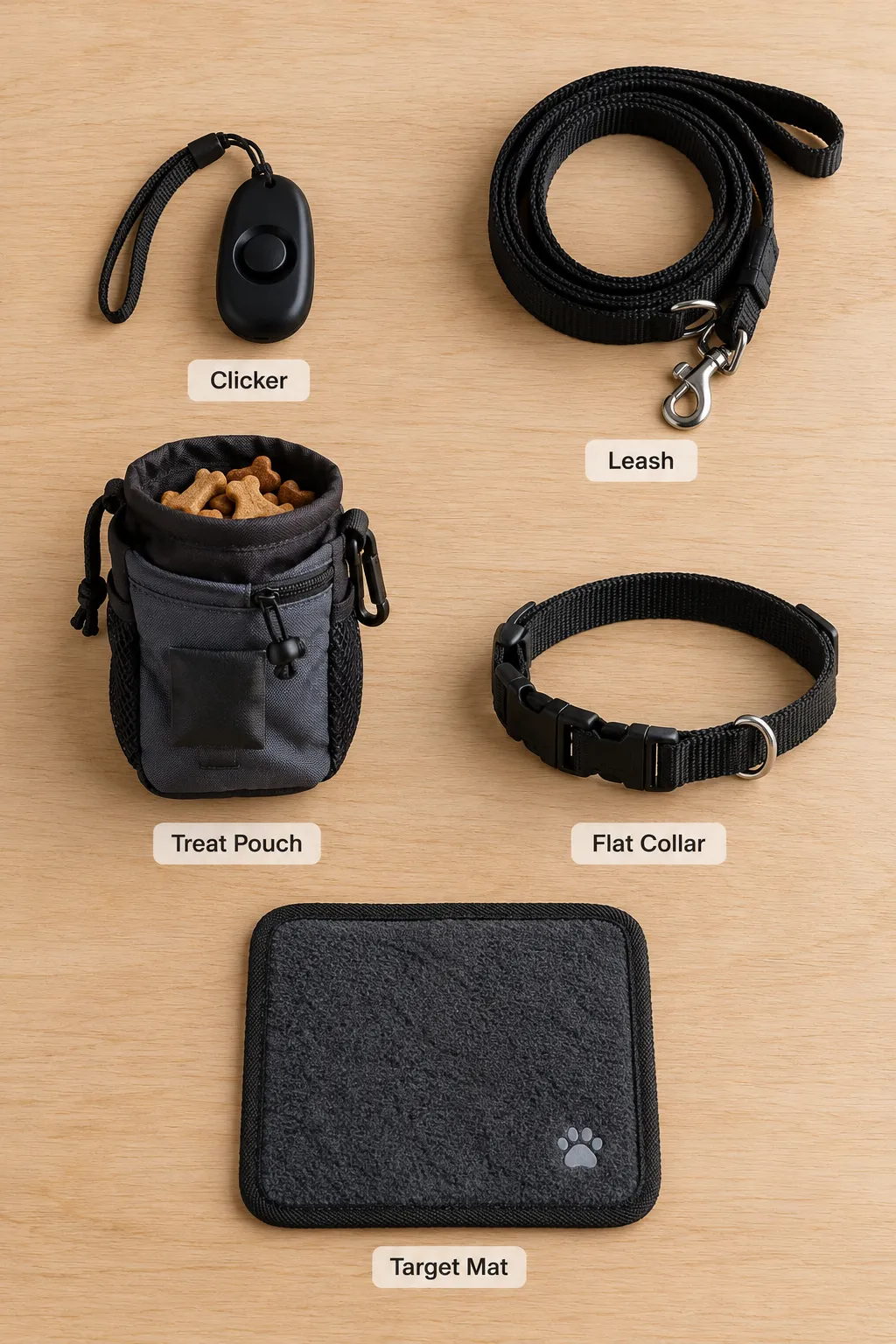
The core tools for teaching easy dog commands are a 4-to-6-foot leash, a flat collar or front-clip harness, small soft treats, and optionally a clicker. None of this needs to be expensive or specialized.
Here’s what actually earns its place in a training kit:
- Standard leash: retractable leashes make loose-leash heel training harder, so stick with a fixed length
- Treat pouch: keeps rewards accessible so timing stays tight
- Clicker: optional, but useful for marking the exact moment of success
- Target mat: helpful for place or settle training, a natural add-on once your seven commands are solid
If you’re also working on leash walking specifically, pairing equipment choices with attention games from dog training games for walks can make loose-leash heel click faster.
How Do Professional Dog Trainers Teach Commands So Fast
Professional trainers teach commands quickly by using short, high-frequency sessions, one consistent word per behavior, and reward timing within one to two seconds of the correct action. Speed comes from precision, not longer sessions.
Their playbook usually includes:
- Capturing or luring the behavior before ever naming it
- Marking success instantly with a clicker or sharp praise word
- Proofing in stages – first in a quiet room, then outside, then around distractions
- Reliable recall training first, since the AKC’s recall guidance notes that come should be trained early and tested across contexts before it’s trusted off-leash
This is also exactly the structure behind the Free Dog Training Workshop, which breaks down the same step-by-step methods service dog trainers use to build obedience fast, including housebreaking and stopping bad habits before they become permanent patterns.
If your dog is still in the mouthy, jumpy puppy phase, pairing commands with tips to stop puppy biting speeds up the whole process, since a calmer puppy focuses better during lessons. And if you want a broader command list beyond these seven, 9 top commands for smart daily training is a good next read.
Frequently Asked Questions
What are the 7 easiest dog commands to start with?
Sit, down, stay, come, leave it, drop it, and heel cover the most common daily situations and are the easiest starting set for any dog.
How many commands should a dog know?
There’s no fixed number, but mastering these seven easy dog commands solves most everyday problems before adding tricks or advanced cues.
Is “stay” the same as “wait”?
No. Stay means hold a position until released, while wait is a brief pause before moving. AKC separates these two cues because they serve different purposes.
Can I train my dog myself without a professional?
Yes, most dogs can learn all seven commands from a consistent owner using short daily sessions, clear wording, and patience.
What if my dog only listens at home?
This means the command hasn’t been proofed around distractions yet. Practice the same cue in new locations gradually, starting quiet and working up to busy ones.
Do small dogs need the same commands as big dogs?
Yes, size doesn’t change which commands matter. Recall and leave it are just as important for a small dog as a large one, sometimes more, since small dogs are harder to retrieve or stop physically.
How old should a puppy be before starting training?
Most puppies can start basic cues like sit around eight weeks, with structured obedience classes typically beginning around five months per AKC’s program guidelines.
Conclusion
Easy dog commands aren’t about turning your dog into a show performer. They’re about making mornings, walks, and visitors less chaotic. Sit, down, stay, come, leave it, drop it, and heel cover almost every daily situation you’ll run into.
Start with one command this week. Keep sessions short. Stay consistent with your wording, and reward the small wins before chasing perfection.
If you want a faster, more structured path, the Free Dog Training Workshop walks through the same step-by-step system service dog trainers rely on, covering housebreaking, obedience, and stopping bad habits in one place. It’s a solid next step once you’ve got these seven commands moving in the right direction.