

Last updated: August 22, 2026
Quick Answer: Learning how to make homemade wet dog food is simpler than most people think. You cook a lean protein, add a safe grain like brown rice, stir in dog-friendly vegetables, and mix everything together with a little low-sodium broth. The result is a fresh, moist meal your dog will love – and you control every single ingredient that goes into it.
Key Takeaways
- Homemade wet dog food typically combines a cooked protein (chicken, turkey, beef, or fish), a grain like brown rice, and dog-safe vegetables.
- Always talk to your vet before switching your dog to a homemade diet, especially if your dog has a health condition.
- Most homemade wet food recipes need added supplements to be nutritionally complete – a good multivitamin or vitamins to add to homemade dog food can fill the gaps.
- Homemade wet dog food lasts 3-4 days in the fridge and up to 3 months in the freezer when stored properly.
- Avoid onions, garlic, grapes, raisins, xylitol, chocolate, macadamia nuts, and raw dough – these are toxic to dogs.
- Dogs with kidney disease, allergies, or other health issues benefit greatly from customized homemade diets, but need vet-formulated recipes.
- Portion size depends on your dog’s weight, age, and activity level – your vet can help you calculate the right amount per day.
- Brown rice is one of the safest and most digestible grains for dogs and works well in almost every wet food recipe.
- Hydration is a major benefit of wet food – it helps dogs (especially seniors and those with kidney disease) stay properly hydrated every day.
- Making dog food at home can save money compared to premium commercial wet food, especially when you cook in bulk.
Why So Many Dog Owners Are Switching to Homemade Wet Dog Food
More dog owners than ever are choosing to make their own dog food at home, and the numbers back it up. According to WebMD’s pet nutrition reporting, interest in homemade dog food has grown steadily as pet owners become more aware of what goes into commercial products. When you make homemade wet dog food yourself, you know exactly what your dog is eating – no mystery fillers, no artificial preservatives, and no ingredients you can’t pronounce.
A lot of this shift started around 2020 and picked up even more steam through 2021. Dog owners began reading labels more carefully and asking harder questions about commercial dog food. Many says they noticed real changes in their dog’s coat, energy, and digestion after switching to fresh, homemade meals.
The community around homemade dog food is huge now. Sites like thismessisours have been sharing recipes and personal stories for years. When you read a comment section on any homemade dog food recipe post, you’ll find hundreds of replies from people saying things like “my dog loves this” or “thank you so much for sharing this.” That kind of engagement says a lot about how much dog owners care about what they feed their pets.
Meg from thismessisours says it best – never in her life did she think she would let her kids eat dog food, but the recipes she makes are so fresh and full of real ingredients that anyone could dig in. That says everything about the quality of homemade dog food done right.
So whether you’re here because your dog has a health condition, because you want to save money, or because you just love cooking for your pup, this guide covers everything you need to know about how to make homemade wet dog food the right way.
What Ingredients Are Safe for Homemade Dog Food
Safe ingredients for homemade dog food include lean proteins like chicken, turkey, beef, and fish; grains like brown rice and oatmeal; and vegetables like carrots, peas, green beans, sweet potatoes, and zucchini. These whole-food ingredients give dogs the protein, carbohydrates, and fiber they need to thrive. Always cook proteins and grains fully before serving, and skip any seasoning.
Safe Proteins
Dogs love protein, and it should make up the largest portion of any homemade dog food recipe. Here are the best options:
- Chicken (boneless, skinless breast or thigh) – one of the most popular and affordable choices
- Ground turkey – lean, easy to cook, and gentle on sensitive stomachs
- Lean ground beef – great for dogs that need more calories or iron
- Salmon – rich in omega-3 fatty acids, great for coat health
- Eggs – a complete protein source that dogs love; cooked eggs are safe and nutritious
- Lamb – good for dogs with chicken or beef allergies
Always make sure proteins are fully cooked. Raw meat carries bacteria like Salmonella and E. coli that can make dogs (and the humans handling the food) sick.
Safe Grains
- Brown rice – the gold standard for homemade dog food; easy to digest and full of fiber
- White rice – great for dogs with upset stomachs
- Oatmeal – a good option for dogs with grain sensitivities to wheat
- Quinoa – a complete protein grain that works well in dog food recipes
- Barley – another digestible option with good fiber content
Brown rice comes up again and again in homemade dog food recipes for good reason. It’s affordable, widely available, and most dogs digest it well. You’ll typically use about 1-2 cups of cooked brown rice per batch, depending on your dog’s size.
Safe Vegetables
- Carrots (cooked or raw)
- Green beans (cooked)
- Peas (cooked)
- Sweet potatoes (cooked, no skin)
- Zucchini (cooked)
- Spinach (small amounts only)
- Broccoli (small amounts, cooked)
- Pumpkin (plain, cooked – great for digestion)
What to Avoid
These foods are toxic to dogs and must never appear in any homemade dog food recipe:
| Toxic Food | Why It’s Dangerous |
|---|---|
| Onions and garlic | Destroy red blood cells, cause anemia |
| Grapes and raisins | Cause acute kidney failure |
| Xylitol (artificial sweetener) | Causes dangerous blood sugar drops |
| Chocolate | Contains theobromine, toxic to dogs |
| Macadamia nuts | Cause weakness, vomiting, tremors |
| Avocado | Contains persin, toxic to dogs |
| Raw yeast dough | Expands in stomach, releases alcohol |
| Alcohol | Extremely toxic even in small amounts |
| Cooked bones | Splinter and cause internal injuries |
| Nutmeg | Causes seizures and neurological damage |
This list is critical. Even a small amount of onion or garlic – whether fresh, powdered, or cooked into a sauce – can cause serious harm to your dog. Make sure every ingredient you add is on the safe list before it goes into the bowl.
How to Make Homemade Wet Dog Food: The Basic Method
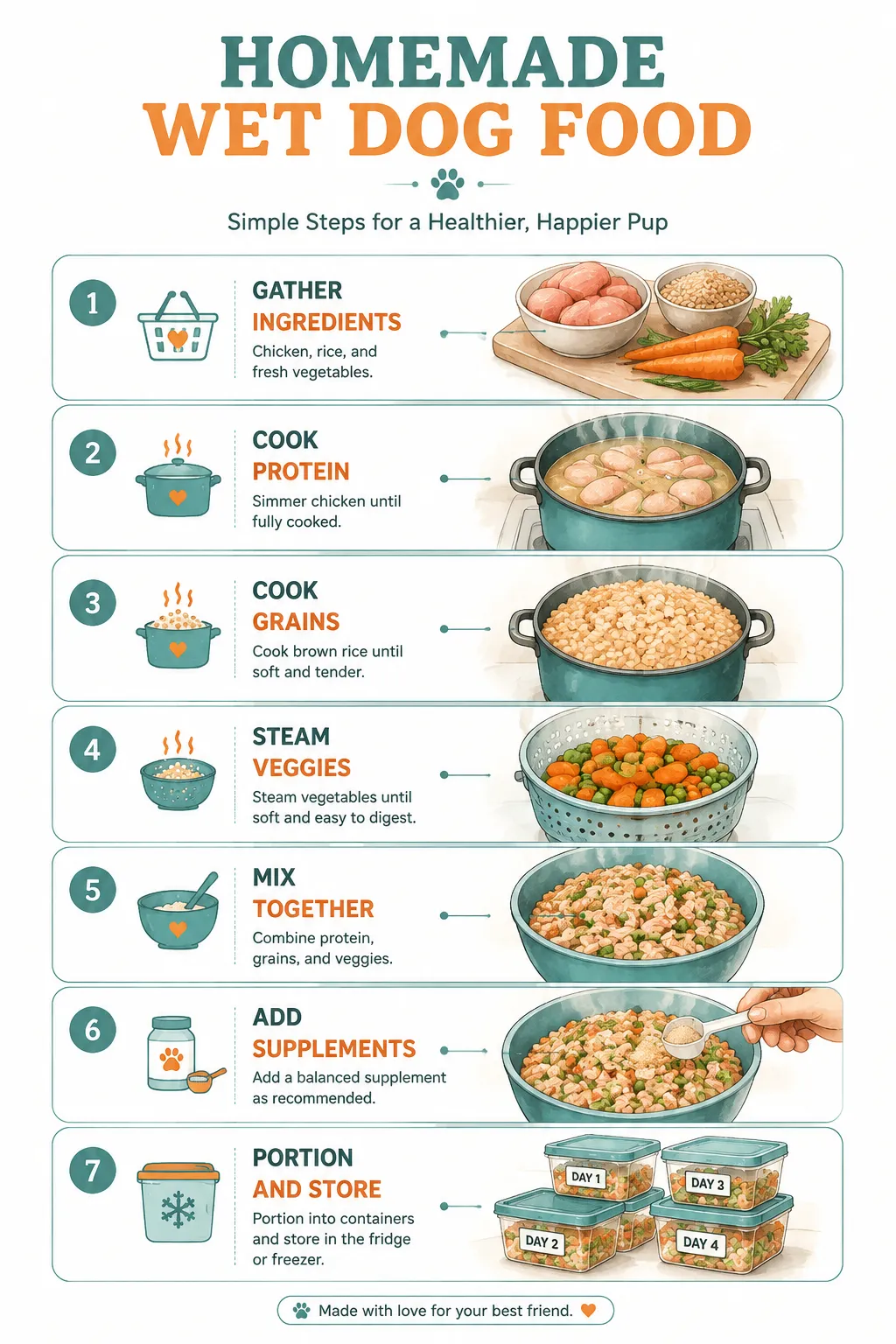
Making homemade wet dog food follows a simple formula: cook your protein, cook your grain, steam your vegetables, combine everything in the right ratio, and add any needed supplements. This basic method works for almost every recipe in this guide and takes about 45 minutes from start to finish.
The Basic Ratio
A good starting point for most adult dogs is:
- 50% protein (cooked meat or eggs)
- 25% grain (cooked brown rice or oatmeal)
- 25% vegetables (cooked dog-safe veggies)
Some recipes adjust this based on the dog’s needs. Dogs with kidney disease, for example, need lower protein and phosphorus. Senior dogs may need more fiber. Puppies need more protein and fat. We’ll get into those specifics in the individual recipes below.
Tools You Need
You don’t need fancy equipment to make homemade dog food. Here’s what helps:
- Large pot – for cooking proteins and grains
- Steamer basket – for vegetables
- Cutting board and sharp knife
- Measuring cups – you’ll use cups a lot to portion ingredients
- Large mixing bowl
- Food scale – helpful for portioning servings accurately
- Airtight containers or freezer bags – for storage
- Slow cooker or Instant Pot (optional but great for batch cooking)
If you want to make things even easier, check out these 5 crockpot dog food recipes vet-approved – the slow cooker does most of the work for you.
Step-By-Step Instructions for Basic Homemade Wet Dog Food
Step One: Gather all your ingredients. For a basic batch serving a medium dog (25-50 lbs) for about 4 days, you’ll need:
- 2 lbs boneless skinless chicken breast or ground turkey
- 2 cups dry brown rice (makes about 4 cups cooked)
- 1 cup chopped carrots
- 1 cup green beans
- 1/2 cup peas
- 2-3 cups low-sodium chicken broth or water
Step Two: Cook the brown rice. Rinse 2 cups of dry brown rice and add to a pot with 4 cups of water. Bring to a boil, reduce heat, cover, and simmer for 40-45 minutes until fully cooked and soft. Set aside.
Step Three: Cook the protein. Place chicken breast or ground turkey in a large pot. Cover with water or low-sodium broth and bring to a boil. Reduce heat and simmer for 15-20 minutes until fully cooked through. If using ground turkey, brown it in a pan with no oil or seasoning.
Step Four: Steam the vegetables. While the protein cooks, steam your carrots, green beans, and peas until soft – about 8-10 minutes. Soft vegetables are easier for dogs to digest.
Step Five: Shred or chop the cooked protein into small, bite-sized pieces. The size depends on your dog – smaller dogs need smaller pieces.
Step Six: Add everything to a large mixing bowl. Combine the cooked protein, cooked brown rice, and steamed vegetables. Mix well.
Step Seven: Add broth to reach your desired consistency. For wet food, you want a moist, stew-like texture. Add 1-2 cups of low-sodium broth or water and mix until everything is well combined.
Step Eight: Let the food cool completely before serving or storing. Never serve hot food directly to your dog. Portion into servings based on your dog’s daily calorie needs, store in airtight containers, and refrigerate or freeze.
That’s the core method. Every recipe below builds on these same steps.
7 Easy Homemade Wet Dog Food Recipes Your Dogs Will Go Crazy For
These seven recipes cover different proteins, dietary needs, and dog sizes. Each one is built on the basic method above, with specific adjustments. Dogs love variety, and rotating through a few different recipes keeps mealtime exciting.

Recipe 1: Classic Chicken and Brown Rice Wet Dog Food
This is the recipe that started it all for many homemade dog food families. It’s simple, affordable, and almost every dog loves it. Meg from thismessisours says this chicken and brown rice recipe is the one she comes back to again and again, and the reply section of her posts is always full of people saying “thank you so much – my dog loves this!”
Ingredients:
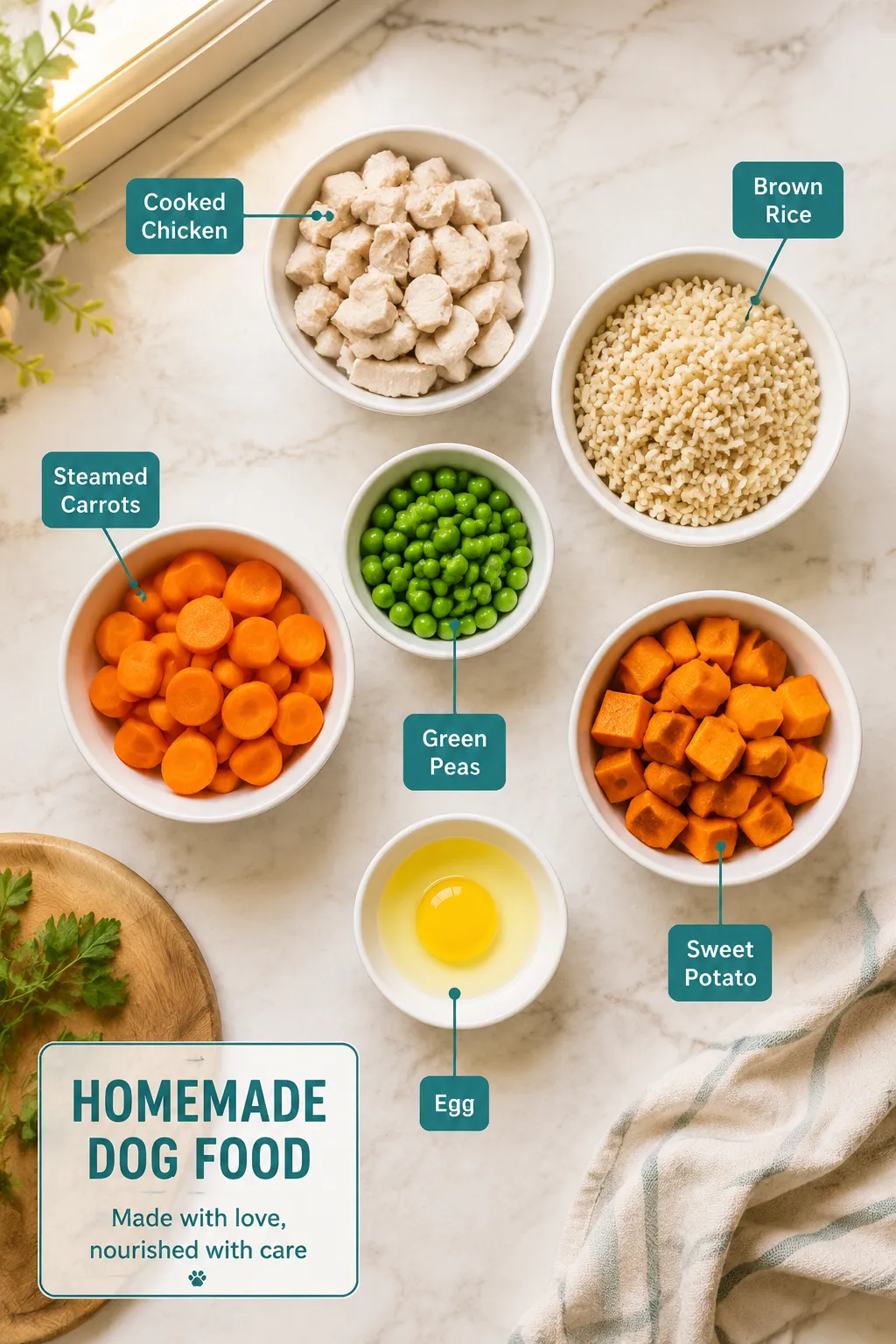
- 2 lbs boneless skinless chicken breast
- 2 cups dry brown rice
- 1 cup carrots, diced
- 1 cup peas (frozen is fine)
- 1/2 cup spinach, chopped
- 2-3 cups low-sodium chicken broth
- 1 tablespoon fish oil (optional, for coat health)
Directions:
- Cook brown rice according to package directions (about 40-45 minutes).
- Boil chicken breast in water or low-sodium broth until fully cooked, about 20 minutes.
- Steam carrots and peas until soft.
- Shred cooked chicken into small pieces.
- Combine chicken, cooked brown rice, carrots, peas, and spinach in a large bowl.
- Add broth to achieve a moist, stew-like consistency.
- Stir in fish oil if using.
- Cool completely, then portion and store.
Yield: About 8-10 cups of food
Shelf life: 3-4 days refrigerated, 3 months frozen
This recipe is great for adult dogs of all sizes. For a 30 lb dog, serve about 1.5 to 2 cups per day, split into two meals.
Recipe 2: Ground Turkey and Sweet Potato Homemade Dog Food
Ground turkey is one of the leanest proteins you can use in a homemade dog food recipe. It’s gentle on the stomach and most dogs love the flavor. Sweet potato adds natural sweetness, fiber, and beta-carotene. This recipe is especially popular with dogs that have mild food sensitivities.
Ingredients:
- 2 lbs lean ground turkey
- 1.5 cups dry brown rice
- 2 medium sweet potatoes, peeled and diced
- 1 cup green beans, chopped
- 1/2 cup peas
- 2 cups low-sodium turkey or chicken broth
- 1 egg (optional, for extra protein)
Directions:
- Cook brown rice as directed.
- Brown ground turkey in a large skillet over medium heat. No oil, no seasoning. Cook until no pink remains.
- Boil or steam sweet potato cubes until soft, about 15 minutes.
- Steam green beans and peas until tender.
- If adding egg, scramble it in a separate pan with no butter or oil.
- Combine all ingredients in a large bowl.
- Add broth and mix until moist and well combined.
- Cool completely before portioning.
Yield: About 9-11 cups
Shelf life: 3-4 days refrigerated, 3 months frozen
This recipe works great as a rotation with the chicken and brown rice recipe. Many dog owners say their dogs love this one just as much as the classic chicken version.
Recipe 3: Beef and Vegetable Stew Dog Food
This hearty recipe is perfect for larger, more active dogs that need more calories and iron. Lean ground beef or beef chuck gives dogs the energy they need, while a mix of vegetables adds fiber and micronutrients. This is a great recipe to make in bulk and freeze in individual portions.
Ingredients:
- 2 lbs lean ground beef (or beef chuck, trimmed of fat)
- 1.5 cups dry brown rice
- 1 cup carrots, diced
- 1 cup zucchini, diced
- 1/2 cup peas
- 1/2 cup pumpkin puree (plain, not pie filling)
- 2-3 cups low-sodium beef broth
Directions:
- Cook brown rice as directed.
- Brown ground beef in a large pot. Drain excess fat.
- Add carrots, zucchini, and peas to the pot. Add broth and simmer for 10-15 minutes until vegetables are soft.
- Stir in cooked brown rice and pumpkin puree.
- Add more broth if needed to reach a stew-like consistency.
- Simmer everything together for 5 more minutes.
- Cool completely, then portion.
Yield: About 10-12 cups
Shelf life: 3-4 days refrigerated, 3 months frozen
Pumpkin is a fantastic add-in for dogs with digestive issues. It adds fiber and helps regulate bowel movements. Just make sure you’re using plain pumpkin puree – not the spiced pie filling, which contains nutmeg and other spices that are harmful to dogs.
Recipe 4: Salmon and Sweet Potato Wet Dog Food
Salmon is one of the best proteins you can put in a homemade dog food recipe. It’s loaded with omega-3 fatty acids, which support brain health, reduce inflammation, and give dogs a gorgeous, shiny coat. This recipe is especially great for dogs with dry skin or dull coats.
Ingredients:
- 1.5 lbs fresh or canned salmon (no salt added, bones removed)
- 1.5 cups dry brown rice
- 2 medium sweet potatoes, peeled and diced
- 1 cup peas
- 1/2 cup carrots, diced
- 2 cups low-sodium broth or water
Directions:
- Cook brown rice as directed.
- If using fresh salmon, bake at 375°F for 15-20 minutes until fully cooked. Remove all bones carefully.
- If using canned salmon, drain well and check for bones.
- Steam sweet potatoes, peas, and carrots until soft.
- Flake the cooked salmon into small pieces.
- Combine salmon, brown rice, and vegetables in a large bowl.
- Add broth to moisten and mix well.
- Cool completely before serving.
Yield: About 8-10 cups
Shelf life: 3-4 days refrigerated, 2-3 months frozen
For more salmon-based ideas, check out these salmon and sweet potato dog food recipes that go into even more detail on this protein combo.
Recipe 5: Homemade Wet Dog Food for Dogs with Kidney Disease
Dogs with kidney disease need a very specific diet – lower in protein, phosphorus, and sodium, but still rich enough in calories to maintain weight. This recipe is designed to be gentler on the kidneys while still being something your dog will actually want to eat. Always work with your vet before putting a dog with kidney disease on any homemade diet.
Ingredients:
- 1 lb cooked chicken breast (lower phosphorus than red meat)
- 2 cups cooked white rice (easier on kidneys than brown)
- 1 cup cooked green beans
- 1/2 cup cooked carrots
- 1/4 cup cooked egg whites (low phosphorus protein)
- 2-3 cups homemade bone broth (no salt, no onion)
- 1 teaspoon fish oil
Directions:
- Cook white rice as directed.
- Boil chicken breast in plain water until fully cooked. No broth with added sodium.
- Steam green beans and carrots until very soft.
- Scramble egg whites in a dry pan until cooked through.
- Shred chicken into very small pieces.
- Combine all ingredients in a large bowl.
- Add homemade bone broth to make the food very moist – hydration is critical for dogs with kidney disease.
- Stir in fish oil.
- Cool completely before serving.
Yield: About 7-9 cups
Shelf life: 3-4 days refrigerated, 2 months frozen
Hydration is very important for dogs with kidney disease. The extra broth in this recipe helps keep kidneys flushed and working as well as possible. For a great bone broth recipe to use here, check out this homemade bone marrow broth recipe for dogs – it’s cheap, easy, and incredibly good for them.
Many families dealing with a dog with kidney disease says that switching to a homemade diet made a real difference in their dog’s quality of life. The journey with a dog with kidney disease is hard, but having control over what goes into every meal gives owners peace of mind.
Recipe 6: Egg and Vegetable Wet Dog Food (Budget-Friendly)
Eggs are one of the most underrated proteins in homemade dog food. They’re affordable, nutritious, and dogs love them. This recipe is great for tight budgets and works well as a rotation meal a few times per week. It’s not meant to be a dog’s only food, but it’s a great addition to any homemade diet rotation.
Ingredients:
- 6 large eggs
- 1.5 cups dry brown rice
- 1 cup peas
- 1 cup carrots, diced
- 1/2 cup sweet potato, diced
- 1/2 cup spinach, chopped
- 2 cups low-sodium broth
Directions:
- Cook brown rice as directed.
- Hard-boil or scramble the eggs. No butter, no oil, no salt.
- Steam carrots, sweet potato, and peas until soft.
- Chop or crumble cooked eggs into small pieces.
- Combine eggs, brown rice, and all vegetables in a large bowl.
- Add broth and mix until moist.
- Cool completely before serving.
Yield: About 6-8 cups
Shelf life: 3-4 days refrigerated, 2 months frozen
Eggs are a complete protein – they contain all the essential amino acids dogs need. The incredible, edible egg really is an amazing treat that all dogs love. If you want to learn more about feeding eggs to dogs, there’s a lot of great information out there about how eggs support coat health, muscle maintenance, and energy.
Recipe 7: Homemade Wet Dog Food for Dogs with Allergies
Food allergies in dogs are more common than many people realize. The most common culprits are chicken, beef, dairy, wheat, and eggs. This hypoallergenic recipe uses novel proteins and simple ingredients to minimize the risk of a reaction. It’s a great starting point for an elimination diet.
Ingredients:
- 2 lbs ground lamb or rabbit (novel protein)
- 1.5 cups dry oatmeal or quinoa (wheat-free grain)
- 1 cup zucchini, diced
- 1 cup peas
- 1/2 cup pumpkin puree (plain)
- 2 cups low-sodium broth (lamb or vegetable)
Directions:
- Cook oatmeal or quinoa as directed.
- Brown ground lamb or rabbit in a large skillet. No oil or seasoning.
- Steam zucchini and peas until soft.
- Combine cooked protein, grain, and vegetables in a large bowl.
- Stir in pumpkin puree.
- Add broth to reach a moist consistency.
- Cool completely before serving.
Yield: About 8-10 cups
Shelf life: 3-4 days refrigerated, 3 months frozen
If your dog has a known food allergy, always talk to your vet before starting an elimination diet. A vet or veterinary nutritionist can help you identify the specific allergen and design a recipe that’s safe and nutritionally complete. For more ideas on managing sensitive stomachs, these 7 homemade dog food recipes for a sensitive stomach are a great resource.
What Do Vets Say About Homemade Dog Food Diets
Vets are generally supportive of homemade dog food when it’s done correctly – meaning with a nutritionally balanced recipe, appropriate supplements, and regular vet check-ins. The concern most vets have is not with the idea of homemade food, but with poorly balanced recipes that leave dogs deficient in key nutrients over time.
According to Total Bond Vet’s homemade dog food guide, the biggest risk with homemade dog food is nutritional imbalance. Many popular “easy” recipes found online are missing critical nutrients like calcium, zinc, vitamin D, and essential fatty acids. Over weeks and months, these deficiencies can cause real health problems.
The American College of Veterinary Nutrition (ACVN) recommends that any dog on a long-term homemade diet have their recipe reviewed by a board-certified veterinary nutritionist. This is especially important for puppies, pregnant dogs, senior dogs, and dogs with health conditions.
That said, vets also recognize the benefits. Fresh food diets can improve digestion, coat quality, energy levels, and weight management. Many vets says that dogs on well-formulated homemade diets often look and feel better than dogs on low-quality commercial kibble.
The key word is “well-formulated.” A recipe that just throws together chicken, rice, and vegetables without accounting for calcium, phosphorus balance, and micronutrients is not complete. But a recipe built with proper ratios and appropriate supplements can absolutely meet a dog’s nutritional needs.
Healthy Paws Pet Insurance’s vet-approved homemade dog food resource says that consulting a vet before starting is the single most important step any dog owner can take.
What Vets Say About Raw Diets
When people find out that many dog owners make their own dog food at home, they often ask about raw diets. Let’s get that out of the way.
Raw diets (also called BARF diets – Biologically Appropriate Raw Food) involve feeding dogs uncooked meat, bones, and organs. Some proponents say it’s more natural and nutritious. However, most mainstream vets and veterinary organizations, including the American Veterinary Medical Association, do not recommend raw diets for most dogs.
The reasons include:
- Bacterial contamination risk – raw meat can carry Salmonella, E. coli, Listeria, and Campylobacter
- Nutritional imbalance – raw diet recipes are often even harder to balance than cooked ones
- Risk to humans – especially children, elderly people, and immunocompromised individuals in the household
- Bone hazards – raw bones can still splinter and cause internal injuries
For most dog owners, cooked homemade wet dog food is the safer, more practical choice. You get the benefits of fresh, whole ingredients without the bacterial risks.
How Do I Know If Homemade Dog Food Is Nutritionally Balanced
Homemade dog food is nutritionally balanced when it meets the minimum nutrient levels established by AAFCO (the Association of American Feed Control Officials) for your dog’s life stage. The easiest way to verify this is to have a veterinary nutritionist analyze your recipe, or to use a tool like BalanceIT or Pet Meal Planner.
AAFCO Nutrient Standards
AAFCO sets the nutritional standards that commercial dog food must meet, and these same standards are the benchmark for homemade diets. Key nutrient targets for adult dogs include:
- Protein: minimum 18% on a dry matter basis
- Fat: minimum 5.5% on a dry matter basis
- Calcium: 1.25 g per 1,000 kcal
- Phosphorus: 1.0 g per 1,000 kcal
- Calcium-to-phosphorus ratio: 1:1 to 2:1
Most homemade recipes without added supplements fall short on calcium, zinc, iodine, and vitamins D and E. This is why supplements are so important.
Should I Add Supplements to Homemade Dog Food
Yes – almost every homemade dog food recipe needs supplements to be nutritionally complete. The most commonly needed supplements include:
- Calcium (from ground eggshells or a calcium supplement) – most critical missing nutrient in homemade diets
- Fish oil (omega-3 fatty acids) – supports skin, coat, and brain health
- Vitamin E – antioxidant, often deficient in homemade diets
- Zinc – supports immune function and skin health
- Iodine (from kelp or a supplement) – thyroid function
- A complete multivitamin formulated for dogs
The specific supplements your dog needs depend on the recipe you’re using. A veterinary nutritionist can tell you exactly what to add and how much. For a deeper dive into this topic, check out this guide on vitamins to add to homemade dog food.
According to WebVet’s homemade dog food safety guidelines, calcium deficiency is the most common and most serious problem seen in dogs eating homemade diets without supplementation. Over time, it can lead to bone weakness, fractures, and developmental problems in young dogs.
Can I Make Wet Dog Food in Bulk and Freeze It
Yes, you can absolutely make homemade wet dog food in bulk and freeze it. Batch cooking is one of the best strategies for making homemade dog food sustainable long-term. Most recipes freeze well for 2-3 months without losing nutritional value or taste.
How to Freeze Homemade Dog Food
- Let the food cool completely to room temperature before freezing.
- Portion into individual serving sizes based on your dog’s daily intake.
- Use freezer-safe airtight containers or heavy-duty freezer bags.
- Remove as much air as possible from bags before sealing.
- Label each container with the recipe name and the date.
- Freeze flat for faster freezing and easier storage.
- Thaw overnight in the refrigerator before serving – never microwave to thaw.
How Long Does Homemade Wet Dog Food Last in the Fridge
Homemade wet dog food lasts 3-4 days in the refrigerator when stored in an airtight container. After 4 days, bacterial growth becomes a concern and the food should be discarded. In the freezer, most homemade wet food stays good for 2-3 months.
A practical routine that many homemade dog food families use:
- Cook a large batch on Sunday
- Keep 3-4 days’ worth in the fridge
- Freeze the rest in weekly portions
- Pull the next week’s portion from the freezer on Thursday or Friday to thaw in the fridge
This system means you’re only cooking once a week or every two weeks, which makes the whole process much more manageable.
What’s the Difference Between Homemade and Commercial Wet Dog Food
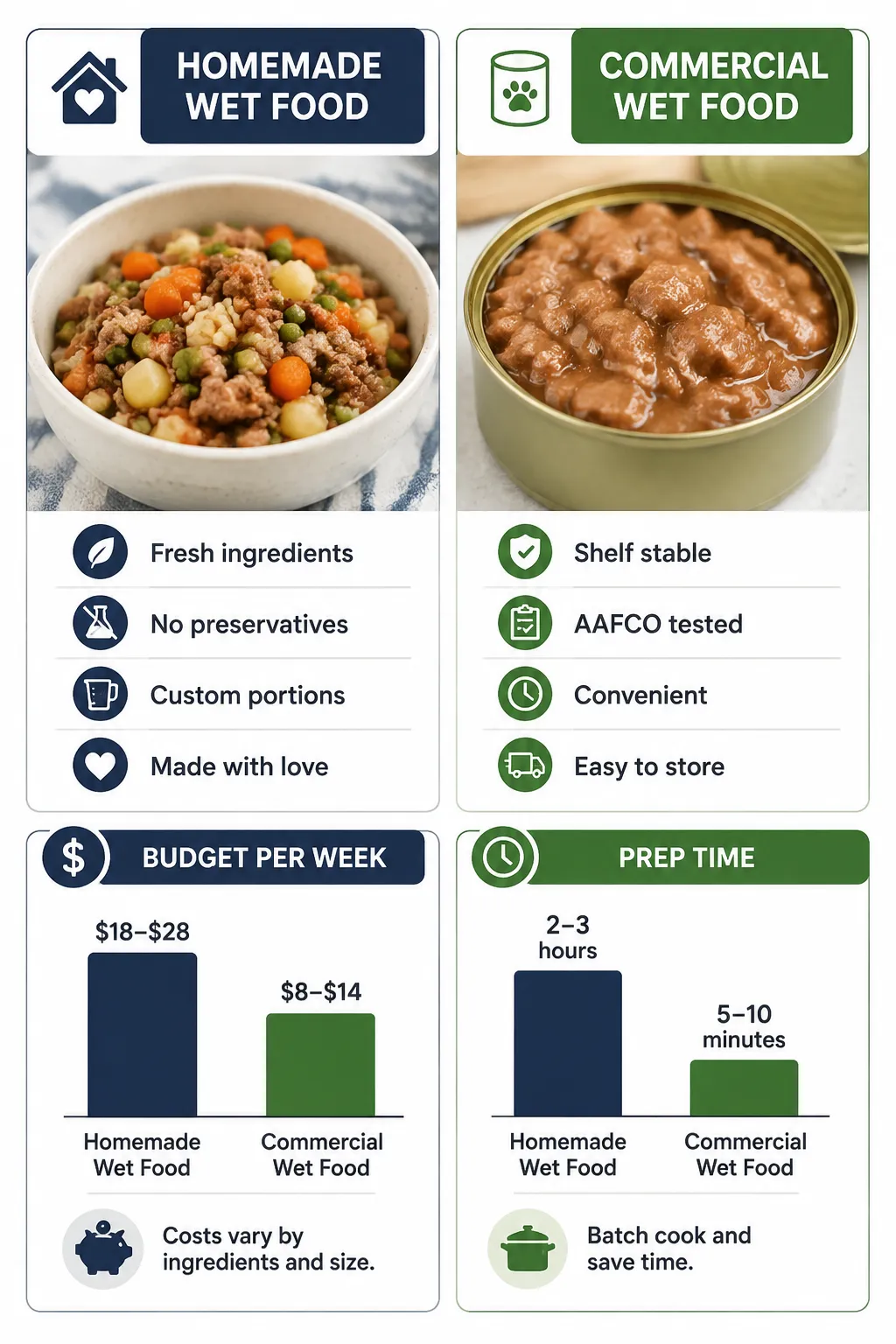
The main differences between homemade and commercial wet dog food come down to ingredient quality, nutritional completeness, convenience, and cost. Commercial wet food is formulated to meet AAFCO standards and is shelf-stable, while homemade wet food uses fresh ingredients but requires careful balancing to be complete.
Homemade Wet Dog Food
Pros:
- You control every ingredient
- No artificial preservatives, colors, or flavors
- Fresh, whole-food ingredients
- Customizable for allergies, health conditions, and preferences
- Dogs often find it more palatable
- Can be more affordable than premium wet food brands
Cons:
- Requires time and planning
- Can be nutritionally incomplete without supplements
- Shorter shelf life
- Needs vet oversight for dogs with health conditions
- Risk of bacterial contamination if not handled properly
Commercial Wet Dog Food
Pros:
- Convenient and shelf-stable
- Formulated to meet AAFCO standards
- Consistent nutritional profile
- Wide variety of options
- Easy to store
Cons:
- May contain low-quality ingredients, fillers, or by-products
- Less transparent ingredient sourcing
- Some brands use artificial preservatives
- More expensive per serving for premium options
- Less customizable for specific health needs
Nutrition Comparison
When it comes to calories, fat, protein, sodium, and cholesterol content, homemade wet dog food can actually be superior to commercial options – but only when properly formulated. A well-made homemade recipe with lean protein, brown rice, and vegetables will have a clean nutritional profile with no added sugar, minimal sodium, and appropriate fat levels.
Commercial wet food varies widely. Some premium brands use excellent ingredients and have great nutritional profiles. Others use lower-quality by-products and add fillers. Reading labels and understanding what you’re buying is essential if you choose to use commercial wet food.
Is Homemade Dog Food Cheaper Than Store-Bought
Homemade dog food can be cheaper than premium commercial wet food, especially when you buy ingredients in bulk and cook in large batches. For a medium-sized dog (30-50 lbs), homemade wet food typically costs $3-5 per day in ingredients, compared to $5-10 per day for high-quality commercial wet food.
Cost Breakdown (Approximate, 2026 Prices)
For a batch of Classic Chicken and Brown Rice (about 10 cups, feeding a 30 lb dog for 5 days):
| Ingredient | Approximate Cost |
|---|---|
| 2 lbs chicken breast | $6-8 |
| 2 cups dry brown rice | $1-2 |
| Mixed vegetables (carrots, peas, green beans) | $3-5 |
| Low-sodium broth | $2-3 |
| Supplements (per batch) | $2-4 |
| Total | $14-22 |
That works out to about $2.80-4.40 per day for a 30 lb dog – significantly less than most premium commercial wet food.
For budget-friendly homemade dog food ideas, check out these homemade dog food recipes on a budget that keep costs even lower.
The savings are most significant when you:
- Buy proteins in bulk or on sale and freeze them
- Use seasonal vegetables
- Make large batches and freeze portions
- Compare against premium or prescription commercial wet food (which can cost much more per day)
Keep in mind that the time investment is a real cost too. If you’re cooking for a large dog or multiple dogs, expect to spend 1-2 hours per week on food prep.
Can I Make Wet Dog Food for Dogs with Allergies
Yes, homemade wet dog food is actually one of the best options for dogs with food allergies. When you make food at home, you have complete control over every ingredient, which makes it much easier to avoid known allergens and identify new ones through elimination diets.
The most common food allergens in dogs, according to veterinary dermatology research, are:
- Beef (most common)
- Dairy products
- Chicken
- Wheat
- Eggs
- Lamb
- Soy
- Pork
If your dog has a suspected food allergy, your vet may recommend a strict elimination diet – feeding a single novel protein (one your dog has never eaten before) and a single carbohydrate source for 8-12 weeks to see if symptoms improve.
Good novel protein options for allergy dogs include:
- Rabbit
- Venison (deer)
- Duck
- Kangaroo
- Bison
For the grain or carbohydrate component, use a source your dog hasn’t eaten before – quinoa, oatmeal, or millet are good choices if your dog has only ever had rice or wheat.
The key rule for allergy elimination diets: nothing else goes in the bowl. No treats, no table scraps, no flavored supplements. Just the two ingredients for the full 8-12 weeks. This is the only way to get a clean result.
Once you’ve identified the allergen, you can build a more varied homemade diet that simply avoids that ingredient. A vet or veterinary nutritionist can help you make sure the resulting recipe is still nutritionally complete.
What Equipment Do I Need to Make Homemade Dog Food
You don’t need specialized equipment to make homemade wet dog food – most of what you need is already in a standard kitchen. The basics are a large pot, a cutting board, a knife, measuring cups, and airtight storage containers.
Here’s a more complete list organized by priority:
Must-Have Equipment
- Large stockpot (6-8 quart) – for cooking proteins and grains in bulk
- Cutting board – dedicated to dog food prep is a good food safety practice
- Sharp chef’s knife – for chopping vegetables and meat
- Measuring cups and spoons – you’ll use cups constantly in these recipes
- Large mixing bowl – for combining all ingredients
- Airtight food storage containers – glass or BPA-free plastic
- Freezer bags – for freezing individual portions
Nice-to-Have Equipment
- Slow cooker or Instant Pot – makes batch cooking much easier and more hands-off
- Food scale – more accurate than measuring cups for portioning
- Steamer basket – for cooking vegetables without losing nutrients
- Immersion blender – useful for making smoother food for senior dogs or puppies
- Ice cube trays – for freezing small portions (great for small dogs)
- Labels and marker – for dating your stored food
Equipment for Large Dogs or Multiple Dogs
If you have a large dog or more than one dog, you’ll want to scale up:
- 8-12 quart stockpot for bigger batches
- Extra-large mixing bowls
- More storage containers
- A dedicated shelf in your freezer
The slow cooker deserves special mention. You can literally dump all your ingredients in, set it to low, and come back 6-8 hours later to a fully cooked batch of dog food. It’s a great time-saver and makes the whole process much more sustainable for busy households.
How Do Vets Feel About Homemade Dog Food Diets
Most vets support homemade dog food when it’s done with proper guidance, but they have serious concerns about casually modified recipes and nutritional completeness. The veterinary consensus in 2026 is clear: homemade diets can be excellent for dogs, but they require more care and knowledge than most people realize.
A 2019 study published in the Journal of the American Veterinary Medical Association found that the vast majority of homemade dog food recipes available online were nutritionally deficient in at least one essential nutrient. Many were deficient in multiple nutrients. This is not a reason to avoid homemade food – it’s a reason to do it right.
The Cat Dog Central veterinary nutritionist guide says that working with a board-certified veterinary nutritionist is the gold standard for homemade diets. These specialists can analyze your specific recipe and tell you exactly what supplements to add to make it complete.
Vets also emphasize the importance of monitoring. Dogs on homemade diets should have:
- A vet check-up every 6 months (more often for dogs with health conditions)
- Annual bloodwork to check for nutritional deficiencies
- Regular weight monitoring
- Coat and energy level assessments
The good news is that the field of veterinary nutrition has grown significantly. There are now more resources than ever for dog owners who want to feed homemade food safely, including online consultation services with veterinary nutritionists.
What Vets Say About Specific Health Conditions
- Kidney disease: Vets strongly support homemade diets for kidney disease dogs, as commercial options are limited and often unpalatable. Low phosphorus, low sodium, and high moisture are the goals.
- Obesity: Homemade food gives owners precise calorie control, which vets say is a major advantage.
- Allergies: Homemade elimination diets are often recommended by veterinary dermatologists as the most reliable way to identify food allergens.
- Diabetes: Homemade diets with controlled carbohydrates can help manage blood sugar, but require careful vet oversight.
- IBD/sensitive stomach: Homemade food with simple, easily digestible ingredients often helps dogs with inflammatory bowel disease.
What Are Common Mistakes People Make With Homemade Dog Food
The most common mistake is skipping supplements – especially calcium. Other frequent errors include using toxic ingredients by accident, feeding the wrong portion size, and not varying the diet enough to cover all nutritional bases. Knowing these pitfalls in advance makes it much easier to avoid them.
Mistake 1: Skipping Calcium Supplementation
This is the number one problem. Meat and vegetables contain very little calcium, and without added calcium, dogs on homemade diets can develop serious bone problems over time. The fix is simple: add ground eggshell powder or a calcium supplement to every batch. About 1/2 teaspoon of ground eggshell powder per pound of cooked meat is a commonly used guideline, but check with your vet for the exact amount for your dog.
Mistake 2: Using Toxic Ingredients
It’s easier than you think to accidentally add something harmful. Garlic and onion powder, for example, are in many spice blends and sauces. Always use plain, unseasoned ingredients and check every label.
Mistake 3: Wrong Portion Sizes
Overfeeding is just as harmful as underfeeding. Many dog owners, especially when they first start making homemade food, give their dogs too much because “it looks like so little.” Use a food scale and calculate your dog’s daily calorie needs based on weight and activity level. Your vet can help you figure out the right amount per day.
Mistake 4: Not Varying the Protein
Feeding the same protein every day can lead to nutritional gaps and may increase the risk of developing a food sensitivity to that protein over time. Rotate between chicken, turkey, beef, fish, and eggs to provide a broader nutritional profile.
Mistake 5: Using the Wrong Fats
Dogs need healthy fats, but too much fat – especially saturated fat from fatty cuts of meat – can cause pancreatitis. Always use lean proteins and trim visible fat. Add healthy fats through fish oil or a small amount of coconut oil rather than through fatty meat.
Mistake 6: Not Cooking Vegetables Properly
Raw vegetables are harder for dogs to digest than cooked ones. Always steam or boil vegetables until soft. This is especially important for cruciferous vegetables like broccoli and cauliflower.
Mistake 7: Ignoring Portion Control for Treats
Many dog owners are careful about the main meals but forget that treats add calories too. If your dog is getting homemade food plus lots of treats, the calorie total can add up quickly. Treats should make up no more than 10% of your dog’s daily calorie intake.
Mistake 8: Not Consulting a Vet
Starting a homemade diet without talking to a vet first is a mistake that can have real consequences, especially for dogs with existing health conditions. A quick vet consultation at the start saves a lot of potential problems down the road.
Can Puppies Eat Homemade Wet Dog Food
Puppies can eat homemade wet dog food, but their nutritional needs are significantly different from adult dogs and require careful attention. Puppies need more protein, fat, calcium, and phosphorus than adult dogs to support rapid growth and development. A recipe designed for adult dogs is not appropriate for puppies without modification.
Key differences in puppy nutrition:
- Higher protein: Puppies need at least 22% protein on a dry matter basis (vs. 18% for adults)
- Higher fat: At least 8% fat on a dry matter basis (vs. 5.5% for adults)
- More calcium and phosphorus: Critical for bone and teeth development
- More calories overall: Puppies eat more relative to their body weight than adult dogs
If you want to feed your puppy homemade wet food, work with a veterinary nutritionist to design a recipe specifically for puppies. Don’t just use an adult recipe and add more of everything – the ratios matter as much as the quantities.
For puppy-specific recipes, check out these 10 fresh puppy food recipes designed with puppies’ unique needs in mind.
Large breed puppies have an additional consideration: they need a carefully controlled calcium-to-phosphorus ratio to prevent developmental orthopedic diseases. Too much calcium during growth can be just as harmful as too little. This is why large breed puppies especially need vet-formulated recipes.
Is Homemade Wet Dog Food Good for Senior Dogs
Homemade wet dog food is excellent for senior dogs. Older dogs often struggle with dry kibble due to dental issues, reduced sense of smell, and decreased digestive efficiency. Wet food is easier to chew, more aromatic, and more digestible – all of which matter a lot for senior dogs.
Senior dogs (generally 7+ years for most breeds, 5+ for large breeds) have specific nutritional needs:
- More protein, not less – contrary to old advice, most senior dogs benefit from higher-quality protein to maintain muscle mass
- More omega-3 fatty acids – for joint health and cognitive function
- More fiber – for digestive health
- Fewer calories – most senior dogs are less active and gain weight more easily
- More moisture – senior dogs are more prone to dehydration and kidney issues
A homemade wet food diet addresses all of these needs naturally. The high moisture content alone is a major benefit for senior dogs.
For more ideas on feeding older dogs, these 7 heartwarming homemade dog food recipes for small senior dogs and 7 best homemade dog food for senior dogs to boost energy and joint health are excellent starting points.
What Vegetables Should I Avoid in Dog Food
Several vegetables are toxic or harmful to dogs and must never be used in homemade dog food. The most important ones to avoid are onions, garlic, leeks, chives, and wild mushrooms. Even small amounts of these can cause serious health problems.
Vegetables to Avoid Completely
- Onions (all forms: raw, cooked, powdered) – destroy red blood cells, cause hemolytic anemia
- Garlic (all forms) – toxic in larger amounts, causes anemia
- Leeks and chives – same family as onions, same risks
- Wild mushrooms – many species are highly toxic; only use commercially grown mushrooms in very small amounts
- Avocado – contains persin, which is toxic to dogs
- Rhubarb – contains oxalic acid, toxic to dogs
- Tomato leaves and stems – the green parts contain solanine; ripe tomato flesh is okay in very small amounts
Vegetables to Use in Moderation
- Spinach – high in oxalates; fine in small amounts but don’t make it a staple
- Broccoli – can cause gas and digestive upset in large amounts; small amounts are fine
- Cauliflower – similar to broccoli; fine in moderation
- Corn – not toxic but low nutritional value and a common allergen
- Potatoes – cooked plain potatoes are okay in moderation; raw or green potatoes contain solanine
Best Vegetables for Dogs
The safest and most nutritious vegetables for dogs are:
- Carrots (great source of beta-carotene and fiber)
- Green beans (low calorie, high fiber)
- Peas (good protein and fiber)
- Sweet potatoes (rich in vitamins A and C)
- Pumpkin (excellent for digestion)
- Zucchini (low calorie, easy to digest)
- Cucumber (hydrating, low calorie)
How Much and When Should You Feed Your Dog Homemade Wet Food
The right amount of homemade wet dog food per day depends on your dog’s weight, age, activity level, and whether they’re being fed wet food exclusively or as part of a mixed diet. A general starting point is 2-3% of your dog’s ideal body weight per day in food, but this varies significantly.
General Daily Feeding Guidelines
| Dog Weight | Daily Food Amount (Approximate) |
|---|---|
| 5-10 lbs (small dog) | 1/2 to 1 cup per day |
| 10-20 lbs | 1 to 1.5 cups per day |
| 20-40 lbs | 1.5 to 2.5 cups per day |
| 40-60 lbs | 2.5 to 3.5 cups per day |
| 60-80 lbs | 3.5 to 4.5 cups per day |
| 80-100 lbs | 4.5 to 5.5 cups per day |
These are approximate starting points. Monitor your dog’s weight and adjust up or down as needed. If your dog is losing weight, add more. If they’re gaining weight, reduce slightly.
Meal Frequency
- Puppies (under 6 months): 3-4 small meals per day
- Puppies (6-12 months): 2-3 meals per day
- Adult dogs: 2 meals per day (morning and evening)
- Senior dogs: 2 smaller meals per day, or 3 if they have digestive issues
Splitting daily food into two meals is better than one large meal for most dogs. It helps maintain stable blood sugar, reduces the risk of bloat (especially in large breeds), and keeps dogs more satisfied throughout the day.
Calorie Calculation
For a more precise approach, calculate your dog’s daily calorie needs (also called Resting Energy Requirement or RER):
RER = 70 x (body weight in kg)^0.75
For most adult dogs, the daily calorie needs are:
- Inactive/neutered: RER x 1.2-1.4
- Active adult: RER x 1.6-1.8
- Working dog: RER x 2.0-5.0
Your vet can help you calculate this precisely for your dog.
Homemade Dog Food Seasoning: What’s Safe and What’s Not
Homemade dog food should contain no added salt, no garlic, no onion, and no spices designed for human cooking. Dogs have different taste receptors than humans and don’t need – or benefit from – the seasonings we use in our own food. The natural flavors of cooked meat, vegetables, and broth are more than enough to make food appealing to dogs.
Safe Flavor Boosters
While you shouldn’t season dog food the way you season your own meals, there are some safe additions that can make food more appealing:
- Low-sodium chicken or beef broth – adds flavor and moisture
- Homemade bone broth (no salt, no onion) – dogs love this
- Plain pumpkin puree – adds sweetness and fiber
- Fish oil – adds flavor and omega-3s
- Plain yogurt (small amounts) – adds creaminess and probiotics
- Parsley (fresh, small amounts) – safe and can help with breath
- Turmeric (small pinch) – anti-inflammatory, generally safe in small amounts
What to Avoid
- Salt – too much sodium is harmful to dogs, especially those with heart or kidney issues
- Garlic and onion (any form) – toxic
- Pepper – can irritate the digestive tract
- Nutmeg – toxic to dogs
- Xylitol – found in some peanut butters and sweeteners, extremely toxic
- Artificial flavors or preservatives
The goal of homemade dog food is to let the natural flavors of real ingredients shine. Dogs have a much more sensitive sense of smell than humans, which means even plain cooked chicken smells incredibly appealing to them. You don’t need to add anything to make it taste great to your dog.
Dog-Friendly Bone Broth Recipe
Bone broth is one of the best additions you can make to any homemade wet dog food recipe. It adds moisture, flavor, and a range of nutrients including collagen, glucosamine, and chondroitin – all of which support joint health, gut health, and coat quality.
Making bone broth for dogs is slightly different from making it for humans: no salt, no garlic, no onion, and no spices.
Simple Dog-Friendly Bone Broth Recipe
Ingredients:
- 2-3 lbs beef marrow bones or chicken carcass (raw or roasted)
- 2 tablespoons apple cider vinegar (helps extract minerals from bones)
- Enough water to cover the bones by 2 inches
- Optional: 1 cup carrots, 1 cup celery (no onion or garlic)
Directions:
- Place bones in a large stockpot or slow cooker.
- Add apple cider vinegar and let sit for 30 minutes (this helps pull minerals from the bones).
- Add enough water to cover bones by 2 inches.
- Add optional vegetables if using.
- Bring to a boil, then reduce to a very low simmer.
- Simmer for 12-24 hours (the longer, the more nutrients are extracted).
- Let cool, then strain out all bones and solids.
- Refrigerate overnight. Skim off the fat layer that forms on top.
- Store in the fridge for up to 5 days, or freeze in ice cube trays for easy portioning.
Important: Never give dogs cooked bones. The bones used to make broth are strained out and discarded – only the liquid is served.
Use bone broth to add moisture to any of the 7 recipes above, or serve it as a hydrating topper over dry food.
What Kind of Snacks Can I Feed My Dog with Kidney Disease
Dogs with kidney disease need low-phosphorus, low-sodium snacks that won’t put extra strain on their kidneys. The best snack options are fresh vegetables and fruits that are naturally low in phosphorus and potassium.
Safe Snacks for Kidney Disease Dogs
- Apple slices (no seeds or core) – low phosphorus, good fiber
- Cucumber slices – very low phosphorus, hydrating
- Watermelon (no seeds or rind) – hydrating, low phosphorus
- Blueberries – antioxidant-rich, low phosphorus
- Green beans (cooked) – low phosphorus, low calorie
- Carrots (cooked) – low phosphorus in small amounts
- White rice cakes (plain) – low phosphorus carbohydrate snack
Snacks to Avoid for Kidney Disease Dogs
- High-phosphorus treats like cheese, meat jerky, and commercial dog treats (most are too high in phosphorus)
- High-potassium foods like bananas and tomatoes (can be problematic in advanced kidney disease)
- High-sodium treats – any commercial treat with added salt
- Bones or bone-based treats – very high in phosphorus
Hydration is very important for dogs with kidney disease. Encourage water intake by adding extra broth to meals, offering ice cubes made from diluted broth, and always keeping fresh water available. Many dogs with kidney disease don’t drink enough on their own, so wet food and broth-rich meals are especially important for keeping them hydrated.
The journey with a dog with kidney disease is challenging, but diet management – including the right snacks – makes a real difference in quality of life and can help slow the progression of the disease.
This Is a Great Activity for Kids to Learn Kitchen Skills
One of the best things about making homemade dog food is that it’s a fantastic kitchen activity for kids of all ages. No matter how young, kids can participate in making food for the family dog – and it’s a great way to teach them basic cooking skills, food safety, and responsibility.
Here’s how kids of different ages can help:
Ages 3-5
- Rinse vegetables under the sink
- Pour pre-measured ingredients into bowls
- Stir the mixing bowl (with supervision)
- Help set up the dog’s food bowl
Ages 6-9
- Measure ingredients with measuring cups
- Wash and sort vegetables
- Help with stirring and mixing
- Learn about which foods are safe and which are not
Ages 10-12
- Help with chopping soft vegetables (with proper supervision)
- Learn to read recipes and follow steps
- Help with portioning and storing food
- Learn about nutrition and why different ingredients are used
Teens
- Take on full recipe preparation with minimal supervision
- Learn to calculate portion sizes
- Research new recipes
- Help with batch cooking and freezer organization
The key food safety rules to teach kids:
- Always wash hands before and after handling raw meat
- Never taste raw meat or eggs
- Keep raw meat separate from other ingredients
- Clean all surfaces after handling raw ingredients
- Always let food cool before serving to the dog
Meg from thismessisours says it best – the food is so fresh and wholesome that it’s a great teaching moment. When kids understand what goes into their dog’s food, they develop a deeper appreciation for nutrition and cooking. And dogs love the extra attention during food prep time.
A Note on the thismessisours Community and Homemade Dog Food
The thismessisours community has been one of the most active and supportive spaces for homemade dog food enthusiasts online. Meg thismessisours says that when she first started sharing her homemade dog food journey, she had no idea how many people were looking for exactly this kind of content.
The reply sections on thismessisours posts are full of real dog owners sharing their experiences. You’ll find comments from people who says things like:
- “Thank you so much for this recipe – my dog has been on it since August 2020 and he’s doing great!”
- “Reply: thismessisours says this is one of her favorite recipes too!”
- “Eliza Clendenin says her dog lost 5 lbs after switching to homemade food”
- “Reply Eliza Clendenin – thank you for sharing your story!”
Looking through the comment history, you’ll find entries from September 2020, October 2020, November 2020, January 2021, February 2021, March 2021, April 2021, June 2021, August 2021, and beyond – all the way through October 2022 and into August 2024. The community has been active and engaged for years.
Meg thismessisours says October is always a busy month for homemade dog food content because so many people start thinking about their dog’s health as the seasons change. Thismessisours says February is another popular time, when people are motivated by New Year’s health goals for their pets.
The reply thread structure on thismessisours posts is a great example of how a supportive community can make homemade dog food more accessible. When someone posts a question, they almost always get a helpful reply – whether from Meg herself or from other community members who have tried the same recipe.
Eliza Clendenin says August is when she first started making homemade dog food, inspired by a thismessisours post she found while searching for help with her dog’s diet. Clendenin says August 2020 was a turning point for her family’s approach to feeding their dog.
Reply thismess says that the community has grown so much that she now hears from people all over the world who have found her recipes and made them part of their dog’s daily diet. Meg thismessisours says February 2021 was when the community really took off, with thousands of new followers joining in just a few weeks.
The thismessisours says october tradition of sharing seasonal recipes has become a beloved part of the community calendar. And the reply meg thismessisours receives from readers every day is a reminder of why sharing this content matters so much.
Can Dogs Eat Brown Rice? Homemade Meals That Your Pups Will Love
Yes, dogs can absolutely eat brown rice – and it’s one of the best grains you can include in a homemade dog food recipe. Brown rice is a whole grain that provides complex carbohydrates, fiber, vitamins, and minerals. It’s easy to digest, widely available, and affordable.
Why Brown Rice Is Great for Dogs
- Digestible carbohydrates – provides steady energy without blood sugar spikes
- Fiber – supports healthy digestion and regular bowel movements
- B vitamins – supports nervous system and energy metabolism
- Manganese – important for bone development and enzyme function
- Gentle on the stomach – one of the first foods recommended for dogs recovering from digestive upset
How to Cook Brown Rice for Dog Food
Brown rice takes longer to cook than white rice – about 40-45 minutes. Here’s the basic method:
- Rinse 2 cups of dry brown rice under cold water
- Add to a pot with 4 cups of water
- Bring to a boil, then reduce heat to low
- Cover and simmer for 40-45 minutes
- Remove from heat and let sit covered for 10 minutes
- Fluff with a fork and let cool completely
The cooked brown rice can be stored in the fridge for up to 5 days or frozen for up to 3 months. Making a big batch of brown rice ahead of time makes assembling dog food recipes much faster.
How Much Brown Rice Per Day
For a 30 lb dog eating homemade food exclusively, about 1/2 to 3/4 cup of cooked brown rice per day is a reasonable amount as part of a balanced recipe. Brown rice should make up about 25% of the total meal volume.
Can Dogs Eat Eggs? The Incredible, Edible Treat All Dogs Love
Eggs are one of the most nutritious and versatile ingredients in homemade dog food. Cooked eggs are safe, healthy, and almost universally loved by dogs. They’re a complete protein source, meaning they contain all the essential amino acids dogs need.
Nutritional Benefits of Eggs for Dogs
- Complete protein – all essential amino acids
- Healthy fats – supports coat and skin health
- Vitamin A – supports vision and immune function
- Riboflavin (B2) – energy metabolism
- Vitamin B12 – nervous system health
- Folate – cell growth and function
- Iron – oxygen transport
- Selenium – antioxidant protection
How to Serve Eggs to Dogs
Always cook eggs before giving them to dogs. Raw egg whites contain avidin, a protein that blocks biotin absorption and can cause a biotin deficiency over time with regular feeding. Cooking deactivates avidin.
Safe ways to prepare eggs for dogs:
- Hard-boiled (no shell)
- Scrambled (no butter, no oil, no salt)
- Poached
- Mixed into dog food recipes
One egg per day is a reasonable amount for most medium-sized dogs. Smaller dogs should have half an egg or less per day.
What About Eggshells
Eggshell powder is actually a great calcium supplement for homemade dog food. Dry clean eggshells in the oven at 300°F for 10 minutes, then grind them into a fine powder in a blender or coffee grinder. About 1/2 teaspoon of eggshell powder provides approximately 900 mg of calcium – enough to supplement a pound of cooked meat.
I Hope Your Dogs Enjoy This Food as Much as Ours Do
Making homemade wet dog food is one of the most loving things you can do for your dog. It takes a bit of time and planning, but the results – a healthy, happy, energetic dog who runs to their bowl at mealtime – are absolutely worth it.
The seven recipes in this guide give you a solid foundation to start with. From the classic chicken and brown rice to the kidney-friendly recipe and the allergy-safe lamb and oatmeal version, there’s something here for every dog and every household.
I hope your dogs enjoy this food as much as ours do. And if you like what you read today, please share this guide with other dog owners who might benefit from it. The more people who know how to make safe, nutritious homemade food for their dogs, the better.
Sign up to get new posts right in your inbox – new recipes, vet tips, and homemade dog food ideas delivered straight to you. And if you have questions, leave a reply below. The community here is always happy to help.
FAQ: People Also Ask About Homemade Wet Dog Food
What ingredients should not be in wet dog food?
Wet dog food – homemade or commercial – should never contain onions, garlic, leeks, chives, grapes, raisins, xylitol, chocolate, macadamia nuts, avocado, alcohol, or nutmeg. These ingredients are toxic to dogs and can cause serious health problems ranging from anemia and kidney failure to seizures and death. Always check labels on commercial wet food for hidden sources of these ingredients, such as onion powder in broths or xylitol in flavoring agents.
What are the best ingredients to use to make homemade dog food?
The best ingredients for homemade dog food are lean cooked proteins (chicken, turkey, beef, salmon, or eggs), digestible grains (brown rice, oatmeal, or quinoa), and dog-safe vegetables (carrots, peas, green beans, sweet potatoes, and pumpkin). These whole-food ingredients provide protein, carbohydrates, fiber, and key vitamins. Most homemade recipes also need calcium supplementation and fish oil to be nutritionally complete – plain cooked ingredients alone rarely meet all of a dog’s nutritional needs.
What do vets say about homemade dog food?
Vets generally support homemade dog food when it’s nutritionally balanced and vet-approved, but caution against casually modified online recipes that may be deficient in key nutrients like calcium, zinc, and vitamins D and E. The veterinary consensus is that dogs on homemade diets should have their recipes reviewed by a veterinary nutritionist and should receive regular bloodwork to check for deficiencies. Vets especially recommend homemade diets for dogs with kidney disease, allergies, or other conditions where commercial food options are limited.
What is the healthiest wet food for dogs?
The healthiest wet food for dogs – homemade or commercial – is one that meets AAFCO nutritional standards for the dog’s life stage, uses high-quality whole-food protein as the first ingredient, contains no artificial preservatives or fillers, and has appropriate moisture content. For homemade wet food, a recipe combining lean protein (like chicken or turkey), brown rice, and dog-safe vegetables with added calcium and fish oil is among the healthiest options available. Dogs with specific health conditions benefit most from vet-formulated recipes tailored to their individual needs.
Conclusion
Making homemade wet dog food is one of the most rewarding things you can do as a dog owner. You’re not just feeding your dog – you’re giving them fresh, whole-food nutrition that supports their health, energy, and longevity.
Here’s a quick summary of the most important things to take away from this guide:
- Start simple. The classic chicken and brown rice recipe is the best place to begin. Master the basic method before branching out.
- Talk to your vet first. Especially if your dog has any health conditions, a quick vet consultation before switching diets is essential.
- Add supplements. Almost every homemade recipe needs at least calcium and fish oil to be complete. Don’t skip this step.
- Avoid toxic ingredients. Onions, garlic, grapes, xylitol, and chocolate are never okay in dog food.
- Batch cook and freeze. Making large batches and freezing portions makes homemade dog food sustainable for busy households.
- Monitor your dog. Watch their weight, coat, energy, and digestion. If something seems off, check in with your vet.
- Rotate proteins. Variety keeps nutrition broad and mealtime interesting for your dog.
Your dog can’t thank you in words, but they’ll thank you every time they run to their bowl with excitement. That kind of joy says everything.
If you’re ready to go deeper, explore these 11 easy to digest homemade dog food recipes for more variety, or check out these easy stovetop dog food recipes for quick weeknight options. And if you want to know exactly what to add to your dog’s food for complete nutrition, this guide on vitamins to add to homemade dog food is a must-read.
Now go make something great for your dog. They deserve it.