

Last updated: August 13, 2026
Quick Answer: Yes, healthy adult dogs can have raw honey in small amounts – but it comes with real risks that many dog owners don’t know about. Puppies under 12 months, dogs with compromised immune systems, diabetic dogs, and obese dogs should never eat honey. The biggest hidden danger is botulism, caused by Clostridium botulinum spores that raw honey can carry. [1][5]
Key Takeaways
- ✅ Healthy adult dogs can eat a small amount of honey occasionally – about 1 teaspoon per 20 lbs of body weight
- 🚫 Puppies under 12 months must never eat raw honey due to botulism risk
- ⚠️ Dogs with compromised immune systems, diabetes, or obesity should avoid honey entirely
- 🍯 Raw honey contains more intact nutrients than processed honey, but also retains more environmental spores
- 🦷 The high sugar content in honey can cause dental disease, weight gain, and blood sugar spikes
- 🐝 Some honey products contain xylitol, which is acutely toxic to dogs – always check labels
- 🩺 Always ask your vet before adding honey to your dog’s diet, especially if your dog has any health condition
- 🆘 Signs of botulism include muscle weakness, difficulty swallowing, and breathing trouble – seek emergency vet care immediately
Is Raw Honey Safe for Dogs to Eat?
Raw honey is safe for healthy adult dogs in small, controlled amounts – but it is not safe for all dogs. The answer depends heavily on your dog’s age, weight, and health status. [1][5]
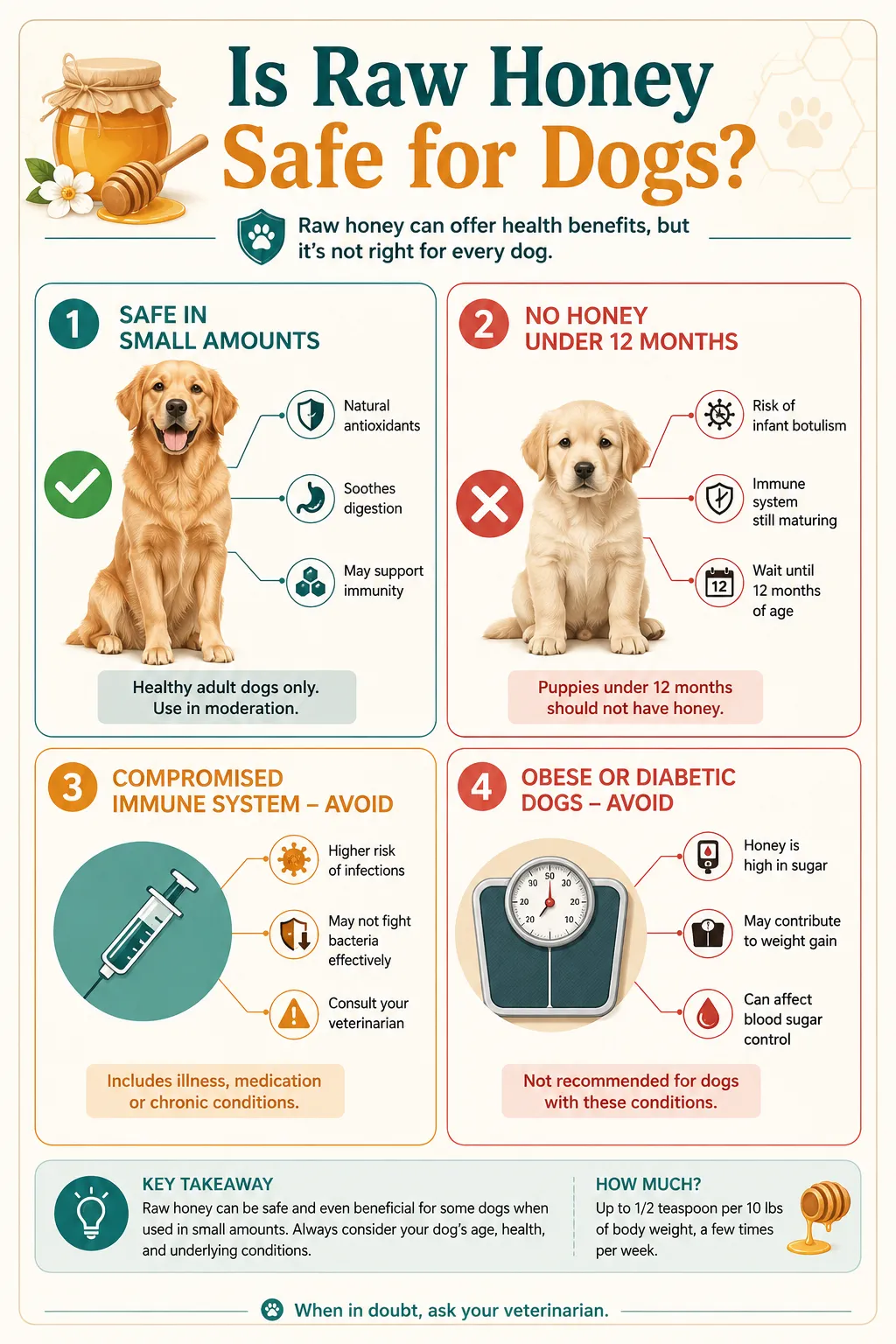
Healthy adult dogs can eat honey without immediate harm when given as an occasional treat. However, the high sugar content alone makes it a food to give sparingly. According to the AKC, honey is packed with natural sugars and calories that can add up fast in a dog’s diet. [5]
Here’s a quick breakdown of which dogs can and can’t have honey:
| Dog Type | Can They Have Honey? |
|---|---|
| Healthy adult dog | Yes, in small amounts |
| Puppy under 12 months | No – botulism risk |
| Diabetic dog | No – high sugar content |
| Obese dog | No – excess calories |
| Dog with compromised immune systems | No – botulism risk |
| Very old or senior dog | Ask your vet first |
The short answer: always check with your vet before giving your dog honey, especially for the first time.
5 Hidden Dangers of Raw Honey for Dogs
Raw honey carries five specific risks that dog owners often overlook. Knowing these dangers helps you make a safer choice for your pet. [1][4][5]
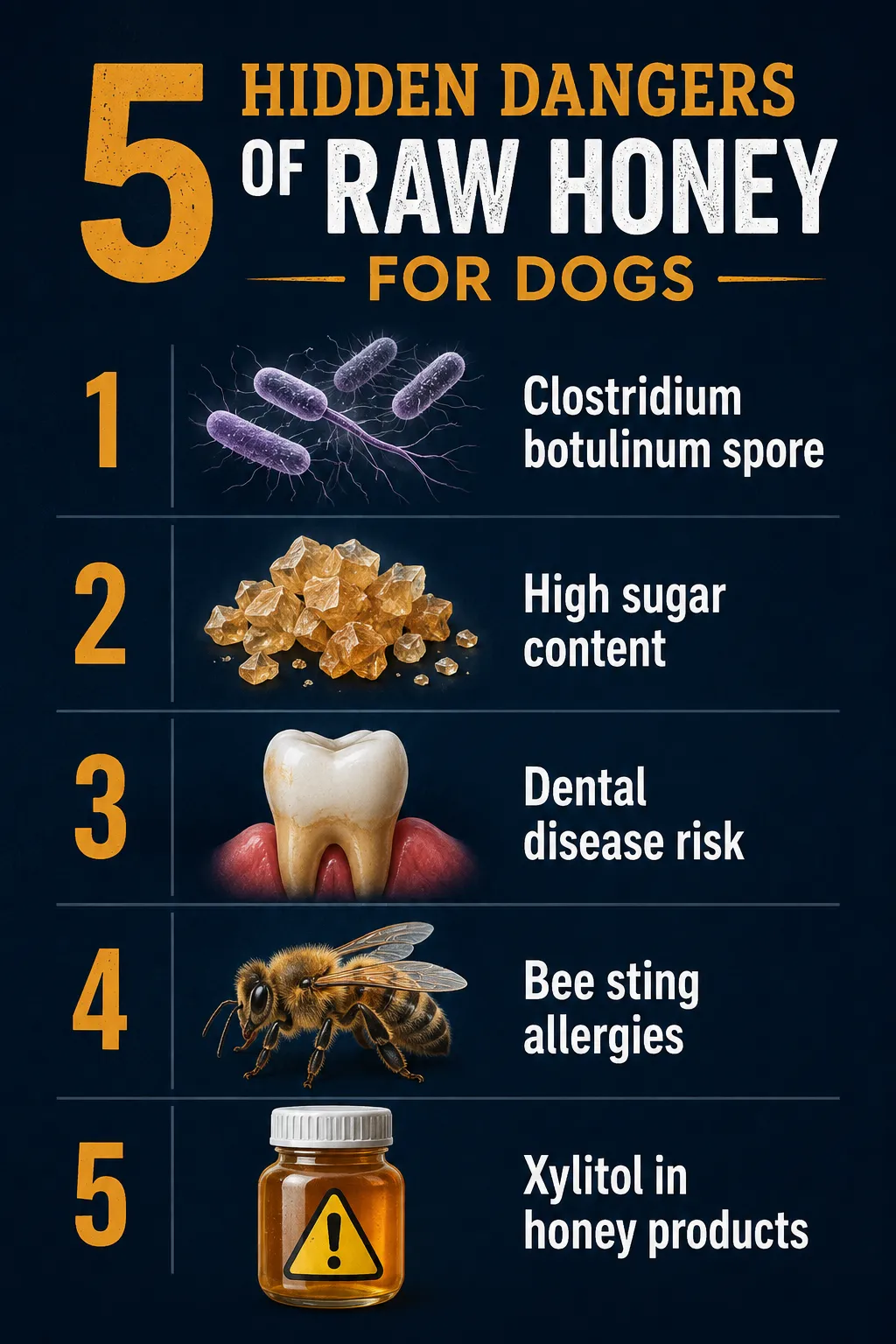
1. Botulism Spores – The Most Serious Risk
Raw honey can contain Clostridium botulinum spores. In healthy adult dogs, these spores usually pass through without causing harm. But in puppies, elderly dogs, and dogs with compromised immune systems, the spores can germinate and produce a toxin that causes botulism – a rare but potentially fatal neuroparalytic illness. [1][4][10]
Signs of botulism in dogs include:
- Progressive muscle weakness
- Difficulty chewing or swallowing
- Drooling
- Distorted vision or eye changes
- Tremors
- Possible respiratory paralysis
This is a veterinary emergency. If your dog shows any of these signs after eating honey, go to a vet or emergency clinic immediately. [4][10]
2. High Sugar Content and Weight Gain
Honey is one of the most concentrated natural sugar sources you can give a dog. Even a small amount of honey adds significant calories and sugar to a dog’s diet. Over time, too much honey contributes to obesity, which is already a major health problem – studies estimate over 50% of dogs in the US are overweight or obese. [5][2]
3. Dental Disease
The high sugar content in honey sticks to teeth and feeds bacteria that cause plaque and cavities. Dogs don’t brush their teeth after eating, which makes this risk even higher. Regular honey treats can quietly damage your dog’s dental health over months. [3][6]
4. Blood Sugar Spikes in Diabetic Dogs
For dogs managing diabetes, even a small amount of honey can cause dangerous blood sugar spikes. Diabetic dogs should never eat honey – the sugar load is simply too unpredictable to manage safely. [2][5]
5. Hidden Xylitol in Honey Products
This one catches many dog owners off guard. Some flavored honeys, honey blends, and “sugar-free” honey products contain xylitol – an artificial sweetener that is acutely toxic to dogs even in tiny amounts. Always read the label before giving any honey product to your dog. Use only plain, pure honey. [5][6][9]
How Much Honey Can Dogs Safely Eat?
Most vets and pet nutrition experts recommend limiting honey to roughly 1 teaspoon per 20 pounds (9 kg) of body weight, given no more than 2-3 times per week. [2][5][9]
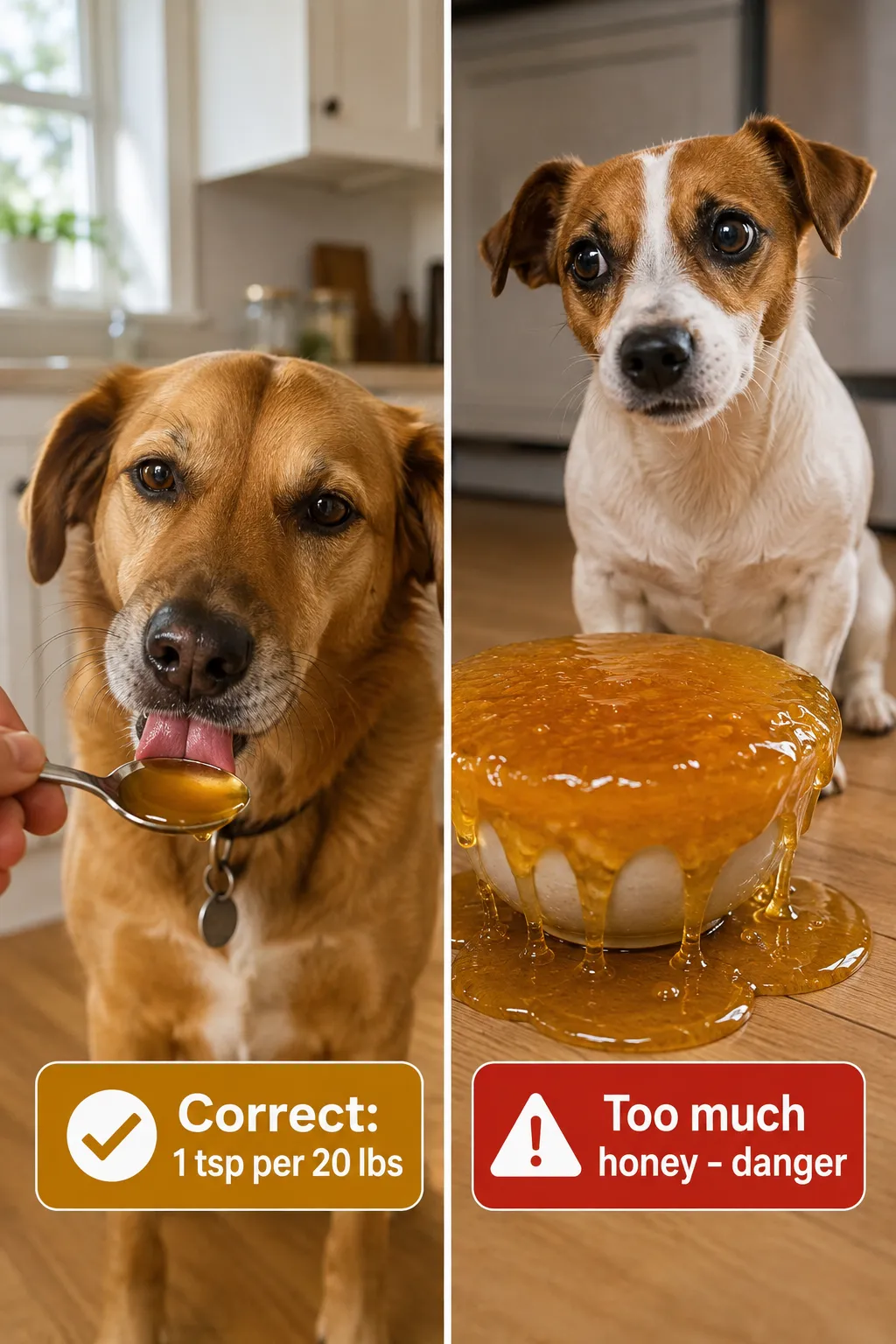
Here’s a simple dosing guide:
| Dog Weight | Max Honey per Serving |
|---|---|
| Under 10 lbs | 1/4 teaspoon |
| 10-20 lbs | 1/2 teaspoon |
| 20-50 lbs | 1 teaspoon |
| Over 50 lbs | 1 teaspoon (do not exceed) |
These are conservative safety guidelines, not medical rules. Less is always better when it comes to adding sugar to a dog’s diet. [9]
Common mistake: Many owners assume that because honey is natural, more is fine. Too much honey – even in a healthy dog – leads to digestive upset, diarrhea, and gradual weight gain. Start with the smallest amount and only increase if your vet approves.
For more ideas on what to safely add to your dog’s meals, see our guide on what you can add to your dog’s dry food.
Can Puppies Have Raw Honey?
Puppies under 12 months must not eat raw honey – or any honey. This is one of the clearest rules in canine nutrition, and it mirrors the long-standing warning for human infants. [1][3][5]
A puppy’s immune system and digestive tract are not fully developed. This means botulism spores in raw honey can germinate and produce toxin before the puppy’s body can neutralize them. [8][10]
What age can puppies start eating raw honey?
Most sources agree that 12 months is the minimum safe age, and even then, only in tiny amounts for healthy dogs. Always get your vet’s advice first. If you’re raising a new puppy, check out our new puppy checklist for more guidance on safe feeding practices.
Is Raw Honey Better Than Processed Honey for Dogs?
Raw honey retains more natural enzymes, antioxidants, and pollen than pasteurized honey – but it also retains more environmental spores, including botulism spores. [1][7]
For healthy adult dogs, raw honey may offer slightly more nutritional benefit. But for at-risk dogs – puppies, immunocompromised dogs, very old dogs – both raw honey and pasteurized honey carry botulism risk and should be avoided entirely. [5][6][7]
Raw honey vs. Manuka honey for dogs: Manuka honey has gained attention for its stronger antimicrobial properties, particularly for wound care. Some vets use medical-grade Manuka honey topically on wounds. However, the same sugar and botulism cautions apply when feeding it orally. [8][6]
Health Benefits of Honey for Dogs – What the Evidence Says
Honey does offer some potential health benefits for dogs, but the evidence in dogs specifically is limited. It should never replace veterinary care. [1][3][6]
Possible benefits include:
- Soothing a cough: A small amount of honey may help ease mild throat irritation and kennel cough symptoms. [1][8]
- Mild anti-inflammatory effects: Honey contains antioxidants and natural compounds with mild anti-inflammatory properties. [3][6]
- Allergy support: Some sources suggest local honey may help dogs with seasonal allergies by exposing them to small amounts of local pollen – similar to natural desensitization. However, this benefit is anecdotal and not proven by clinical studies. [6][5]
- Wound care: Raw honey, particularly Manuka honey, has been used topically on minor dog wounds for its antimicrobial properties. [8]
Important: If your dog has allergies, chronic illness, or takes regular medication, discuss honey with your vet before trying it. You can also explore our list of 15 superfoods for dogs that vets recommend for safer, well-studied options.
How To Safely Give Raw Honey to Your Dog
Giving honey to your dog safely comes down to three things: the right dog, the right amount, and the right type of honey. [1][5][9]
Step-by-Step: Safe Honey for Dogs
- Confirm your dog is eligible – healthy adult, not a puppy, not diabetic, not obese, no compromised immune system
- Choose plain, pure honey – raw or pasteurized, no additives, no xylitol, no flavorings
- Start small – offer 1/4 teaspoon for the first time and watch for any reaction over 24 hours
- Stick to the dosing guide – no more than 1 teaspoon per 20 lbs, 2-3 times per week at most
- Ask your vet – especially if your dog has any ongoing health condition or takes medication
3 Fun Ways to Give Your Dog Honey
- Baked into a homemade doggy treat – mix a small amount of honey into a dog-safe baked treat recipe. Try our mini peanut butter bundt cakes for dogs for a crowd-pleasing option.
- Frozen into a KONG toy – mix honey with plain yogurt or mashed banana, stuff into a KONG, and freeze for a long-lasting enrichment treat.
- Blended into a doggy smoothie – blend a tiny amount of honey with dog-safe fruits like banana or strawberries for a cool summer treat. See our guide on can dogs eat strawberries for safe fruit pairing ideas.
Are There Dogs That Should Never Eat Any Honey?
Yes – several groups of dogs should avoid all honey, including both raw honey and pasteurized honey. [1][2][5]
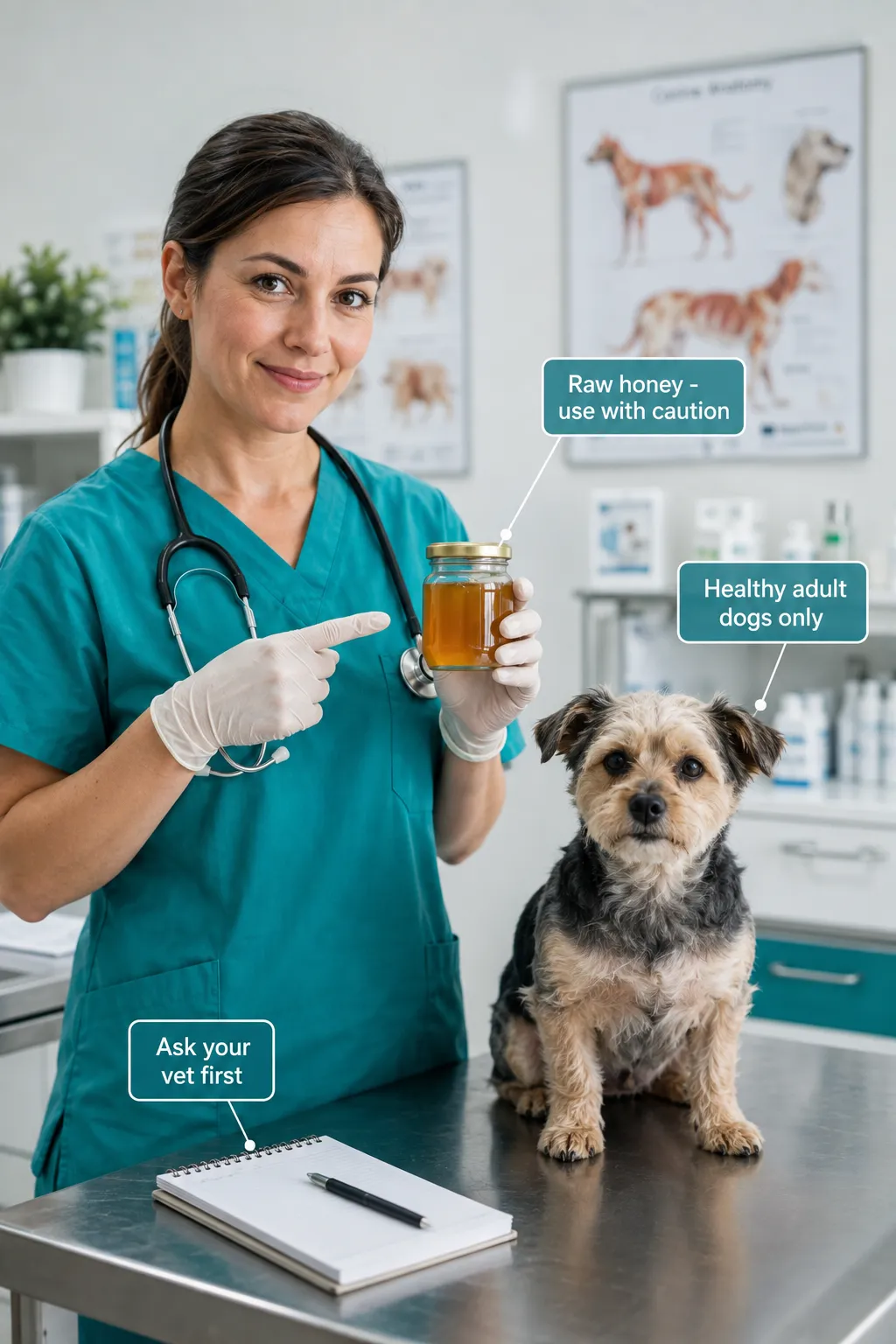
Dogs that should never eat honey:
- Puppies under 12 months – botulism risk from undeveloped immune system [1][3]
- Dogs with compromised immune systems – cannot neutralize botulism spores [1][4][5]
- Diabetic dogs – high sugar content causes dangerous blood sugar spikes [2][5]
- Obese or overweight dogs – excess calories worsen weight issues [2][6]
- Dogs on chemotherapy or immunosuppressive drugs – same risk as immunocompromised dogs [1][5]
- Very old or senior dogs – often have reduced immune function; ask your vet [6]
If your dog falls into any of these categories, the risk simply isn’t worth the benefit. Talk to your vet about safer alternatives.
Can Honey Help with Allergies in Dogs?
Honey may offer mild allergy support for some dogs, but the evidence is not strong. The idea is that local honey contains small amounts of local pollen, which could act as a natural desensitizer for dogs with seasonal allergies – similar to how allergy shots work. [6][5]
However, there are no large clinical studies confirming this effect in dogs. It remains anecdotal advice. If your dog has allergies, a proper vet diagnosis and treatment plan is always the better first step. [3][6]
Can honey be used as an alternative to other medicines and treatments for dogs? No – honey should never replace prescribed medications or veterinary treatment. It can be a gentle supportive addition for healthy dogs, but it is not a medicine. [1][3][8]
What To Do If Your Dog Eats Too Much Honey
If your healthy adult dog eats a larger amount of honey than intended, watch for digestive upset – loose stools, vomiting, or lethargy. These usually resolve within 24 hours. [2][9]
If your puppy, immunocompromised dog, or diabetic dog eats honey, contact your vet immediately – even if they seem fine. Early intervention matters. [4][10]
Emergency signs that need immediate vet care:
- Sudden muscle weakness or collapse
- Difficulty swallowing or breathing
- Excessive drooling
- Tremors or paralysis
These can be early signs of botulism. Do not wait to see if it passes. [4][10]
For more on recognizing when your dog is in distress, see our guide on 10 early signs of pain in dogs.
FAQ: Dogs and Honey
How much raw honey can I give my dog?
For healthy adult dogs, limit raw honey to about 1 teaspoon per 20 pounds (9 kg) of body weight, no more than 2-3 times per week. Start with a smaller amount the first time and watch for any reaction. Never give raw honey to puppies, diabetic dogs, obese dogs, or dogs with compromised immune systems. [2][5][9]
What benefits does raw honey have for dogs?
Raw honey may offer mild antioxidant support, help soothe a cough or minor throat irritation, and provide trace amounts of enzymes and pollen. Some owners use it to support dogs with seasonal allergies. However, evidence in dogs is limited, and these benefits do not outweigh the risks for at-risk dogs. Always treat honey as an occasional treat, not a health supplement. [3][6][8]
Do vets recommend honey for dogs?
Most vets do not actively recommend honey as a regular part of a dog’s diet, but many acknowledge it is safe in small amounts for healthy adult dogs. Vets are more likely to recommend it as a topical aid (such as Manuka honey for minor wounds) than as a dietary supplement. Always consult your vet before adding honey to your dog’s routine, especially if your dog has any health condition. [1][5][8]
Why can’t dogs have raw honey?
Raw honey is not safe for all dogs because it can contain Clostridium botulinum spores, which cause botulism. In puppies, dogs with compromised immune systems, and very old dogs, these spores can germinate and produce a dangerous toxin. Additionally, raw honey’s high sugar content makes it unsuitable for diabetic or obese dogs. Healthy adult dogs can have it in small amounts, but the risks make it off-limits for many. [1][4][10]
Does honey help with a dog’s cough?
A small amount of honey may help soothe mild throat irritation and ease kennel cough symptoms in adult dogs. It coats the throat and has mild antimicrobial properties. However, it is not a cure, and persistent coughing always warrants a vet visit to rule out serious conditions. [1][8]
Can honey be toxic to dogs?
Plain honey is not acutely toxic to healthy adult dogs in small amounts. However, it can be dangerous for puppies and immunocompromised dogs due to botulism spores, and it can cause serious blood sugar problems in diabetic dogs. Honey products containing xylitol are acutely toxic to all dogs. [5][6][9]
Is honey a natural antibiotic for dogs?
Honey, especially Manuka honey, has documented antimicrobial properties and has been used in medical-grade wound dressings for dogs. However, it is not a replacement for prescribed antibiotics. Using honey as a substitute for proper antibiotic treatment can allow infections to worsen. For natural support options, see our homemade antibiotics for dogs guide. [8][6]
Can honey be used to treat a dog’s wounds?
Medical-grade Manuka honey has been used by vets to help treat minor wounds due to its antimicrobial and anti-inflammatory properties. However, you should never apply store-bought honey to open wounds without vet guidance, as it can introduce contaminants. Always consult your vet before treating any wound at home. [8][6]
Conclusion
So, can dogs have raw honey? Yes – but only the right dogs, in the right amounts, and with the right precautions. Healthy adult dogs can enjoy a small amount of honey as an occasional treat, and there are some real health benefits worth knowing about. But the risks are real too, especially for puppies, immunocompromised dogs, diabetic dogs, and obese dogs.
Here’s your action plan:
- Check your dog’s age, weight, and health status before offering any honey
- Use only plain, pure honey – always check for xylitol in any honey product
- Start with the smallest amount and watch for any reaction
- Never give raw honey to puppies under 12 months
- Talk to your vet if you have any doubt – especially if your dog has a health condition
Honey can be a sweet, occasional treat for the right dog. But it’s never a necessity, and it should never replace proper veterinary care. When in doubt, leave it out.
References
[1] Can Dogs Eat Honey – https://www.petmd.com/dog/nutrition/can-dogs-eat-honey
[2] Can Dogs Eat Honey – https://www.spotandtango.com/blog/can-dogs-eat-honey
[3] Can Dogs Eat Honey Benefits Risks And Safe Feeding Practices – https://vetic.in/blog/pet-health/can-dogs-eat-honey-benefits-risks-and-safe-feeding-practices/
[4] Can Dogs Eat Honey – https://www.thedodo.com/dodowell/can-dogs-eat-honey
[5] Can Dogs Eat Honey – https://www.akc.org/expert-advice/nutrition/can-dogs-eat-honey/
[6] Is Honey Safe For Dogs What Are The Benefits And Can It Help Treat Seasonal Allergies – https://www.animalfriends.co.uk/dog/dog-advice/dog-health-problems/is-honey-safe-for-dogs-what-are-the-benefits-and-can-it-help-treat-seasonal-allergies/
[7] Can Dogs Eat Honey A Guide To Raw Honey For Pets – https://www.southwesthoney.com.au/blog/can-dogs-eat-honey-a-guide-to-raw-honey-for-pets
[8] Raw Honey For Dogs – https://www.whole-dog-journal.com/care/raw-honey-for-dogs/
[9] Can Dogs Eat Raw Honey Safety Facts And Dosage Guide – https://spice.alibaba.com/spice-basics/can-dogs-eat-raw-honey–safety-facts-and-dosage-guide
[10] Is Honey Safe For Dogs – https://heavenlyhoneycompany.com/is-honey-safe-for-dogs/