Last updated: August 21, 2026
Quick Answer: The best diy dog conditioner recipes use safe, natural ingredients like coconut oil, aloe vera, oatmeal, and apple cider vinegar. You can mix a basic rinse-out conditioner in under five minutes, and most recipes cost less than a few dollars per batch. These homemade options work well for dry skin, matted fur, and sensitive coats when used every one to four weeks.
Key Takeaways
- 🐾 Coconut oil, aloe vera, oatmeal, and diluted apple cider vinegar are among the safest ingredients for homemade dog conditioner
- 🐾 Most diy dog conditioner recipes take under 10 minutes to make and cost very little per batch
- 🐾 A leave-in conditioner spray with rosemary is one of the most popular natural options for dogs with dull or dry coats
- 🐾 Never use human conditioner on dogs – the pH levels are different and can irritate your dog’s skin
- 🐾 Always patch-test any new recipe on a small area before full application
- 🐾 Homemade conditioner typically lasts one to two weeks when refrigerated
- 🐾 Dogs with allergies, open wounds, or active skin infections should see a vet before you try any DIY grooming product
- 🐾 Essential oils must be heavily diluted or skipped entirely for small dogs, puppies, and sensitive dogs
What Ingredients Are Safe for Homemade Dog Conditioner?
Safe ingredients for homemade dog conditioner include coconut oil, aloe vera gel, raw honey, colloidal oatmeal, apple cider vinegar (diluted), and rosemary hydrosol. These are gentle, non-toxic options that support coat health without harsh chemicals. Always avoid ingredients like tea tree oil, xylitol, macadamia oil, or any artificial fragrances.
Here is a quick reference of the most commonly used safe ingredients:
| Ingredient | Benefit | Notes |
|---|---|---|
| Coconut oil | Moisturizes, reduces shedding | Use unrefined, cold-pressed |
| Aloe vera gel | Soothes itchy skin | Use pure, no additives |
| Raw honey | Softens and adds shine | Small amounts only |
| Colloidal oatmeal | Calms irritated skin | Finely ground works best |
| Apple cider vinegar | Balances pH, deters fleas | Always dilute 1:10 with water |
| Rosemary hydrosol | Adds shine, light scent | Safe for most dogs |
| Chamomile tea | Gentle soothing rinse | Cool before use |
According to PetsRadar’s guide to DIY dog conditioner, these plant-based ingredients are well-tolerated by most dogs and are a solid starting point for any homemade grooming routine.
Avoid these entirely:
- Tea tree oil (toxic to dogs even in small amounts)
- Lavender essential oil in high concentrations
- Eucalyptus oil
- Xylitol (found in some aloe products)
- Artificial dyes or fragrances
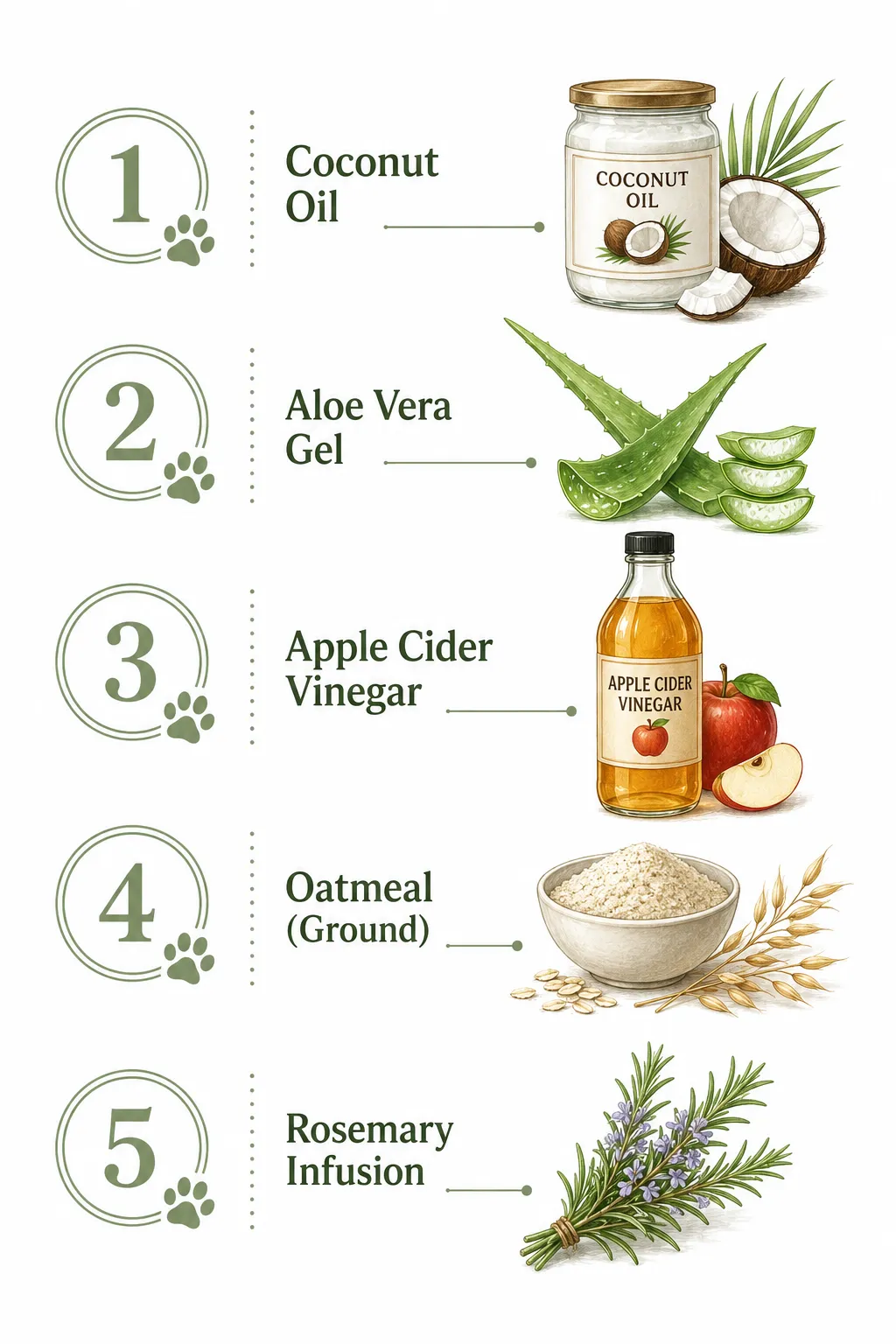
7 DIY Dog Conditioner Recipes You Can Make at Home
These diy dog conditioner recipes cover every common coat concern – from dry itchy skin to matted fur. Each recipe uses simple, affordable supplies you can find at most grocery or health food stores.
Recipe 1 – Classic Coconut Oil Rinse-Out Conditioner
This is one of the simplest diy dog conditioner recipes and works beautifully on dogs with dull, dry coats.
What you’ll need:
- 2 tablespoons unrefined coconut oil
- 1 cup warm water
- 5 drops chamomile essential oil (optional, skip for sensitive dogs)
How to make it:
- Melt the coconut oil gently in a small bowl
- Stir in warm water until blended
- Add chamomile oil if using
- Apply after shampooing, work through coat, wait 3 minutes, rinse well
This recipe is especially good for large dogs that need extra moisture. Dogs weigh more and have more surface area, so double the batch for dogs over 50 lbs.
Recipe 2 – Oatmeal and Aloe Dog Conditioner for Itchy Skin
This is the go-to recipe for dogs with dry, itchy skin. AnimalWised’s guide to homemade hair conditioner for dogs confirms that colloidal oatmeal is one of the most effective natural soothing agents for canine skin conditions.
What you’ll need:
- 1/2 cup colloidal oatmeal (finely ground)
- 1/4 cup pure aloe vera gel
- 1 cup warm water
How to make it:
- Blend oatmeal into a fine powder if not already ground
- Mix with aloe vera gel and warm water
- Apply to damp coat after shampooing
- Leave on for 5 minutes, then rinse thoroughly
This recipe is suitable for dogs of any size. For dogs less than 20 lbs, use half the amount.
Recipe 3 – Rosemary Leave-In Conditioner Spray
A rosemary leave-in conditioner is one of the most popular diy dog conditioner recipes right now. Mountain Rose Herbs’ leave-in conditioner recipe for dogs is a well-known source for this formula, and it has been updated as recently as 2026 to include rosemary hydrosol as the base.
What you’ll need:
- 1 cup rosemary hydrosol (or strong rosemary tea, cooled)
- 1 tablespoon aloe vera gel
- 1 teaspoon fractionated coconut oil
How to make it:
- Combine all items in a small spray bottle
- Shake well before each use
- Mist lightly over your dog’s dry or damp coat after bathing
- Work through with your fingers or a brush – no rinsing needed
This dog conditioner spray is great between baths to add shine and reduce static. It works especially well on medium to large dogs with longer coats.
💡 Quick tip: This leave-in conditioner is the recipe most often recommended for dogs with bark-related skin irritation from outdoor environments.
Recipe 4 – Apple Cider Vinegar and Coconut Oil Conditioner
This two-ingredient rinse is fast, free of fuss, and genuinely effective. GoEcoPaw’s sustainable pet conditioner guide recommends this combination for its pH-balancing and coat-smoothing properties.
What you’ll need:
- 2 tablespoons raw apple cider vinegar
- 1 tablespoon melted coconut oil
- 1.5 cups warm water
How to make it:
- Mix all items together in a bowl or bottle
- Apply to your dog’s coat after shampooing
- Massage gently for 2 minutes
- Rinse completely – the vinegar smell fades as it dries
Note: This offer of a two-ingredient recipe applies to dogs without open skin sores. The acidity of vinegar can sting on broken skin.
Recipe 5 – Honey and Aloe Vera Deep Conditioning Mask
This is a richer recipe, closer to a weekly hair mask for dogs with very dry or damaged coats. It is one of the diy dog conditioner recipes that works well as a seasonal treatment – especially after summer sun or winter dryness.
What you’ll need:
- 2 tablespoons raw honey
- 2 tablespoons pure aloe vera gel
- 1 tablespoon coconut oil
How to make it:
- Warm honey slightly to make it easier to mix
- Blend all items together
- Apply generously to damp coat
- Cover with a warm towel for 10 minutes
- Rinse thoroughly with warm water
This mask is best used as a one-time monthly treatment rather than a weekly routine. It is especially good for large dogs with thick double coats.
Recipe 6 – Pumpkin and Yogurt Seasonal Conditioner
This food-based conditioner is a fun seasonal option. Pumpkin contains beta-carotene and zinc, both of which support skin health in dogs according to Cuteness’s homemade dog conditioner guide.
What you’ll need:
- 2 tablespoons plain canned pumpkin (no spices, no xylitol)
- 2 tablespoons plain full-fat yogurt
- 1 teaspoon coconut oil
How to make it:
- Mix all items until smooth
- Apply to damp coat after shampooing
- Leave on for 5 minutes
- Rinse well
This recipe is suitable for dogs without dairy sensitivities. Skip the yogurt if your dog has a known dairy issue and replace it with aloe vera gel.
Recipe 7 – Chamomile and Oat Leave-In Spray for Sensitive Skin
This gentle formula is one of the best diy dog conditioner recipes for dogs with sensitive or allergy-prone skin. Simply Earth’s homemade fur and skin conditioner guide highlights chamomile as a top choice for calming reactive skin.
What you’ll need:
- 1 cup strong chamomile tea (cooled completely)
- 1 tablespoon colloidal oatmeal
- 1 teaspoon aloe vera gel
How to make it:
- Brew chamomile tea, steep for 10 minutes, cool fully
- Strain out any tea particles
- Stir in oatmeal and aloe vera gel
- Pour into a spray bottle
- Mist over your dog’s coat and brush through – no rinsing needed
This is one of the few recipes safe enough to use on puppies over 8 weeks, though always check with your vet first.
Best DIY Dog Conditioner for Dry Itchy Skin
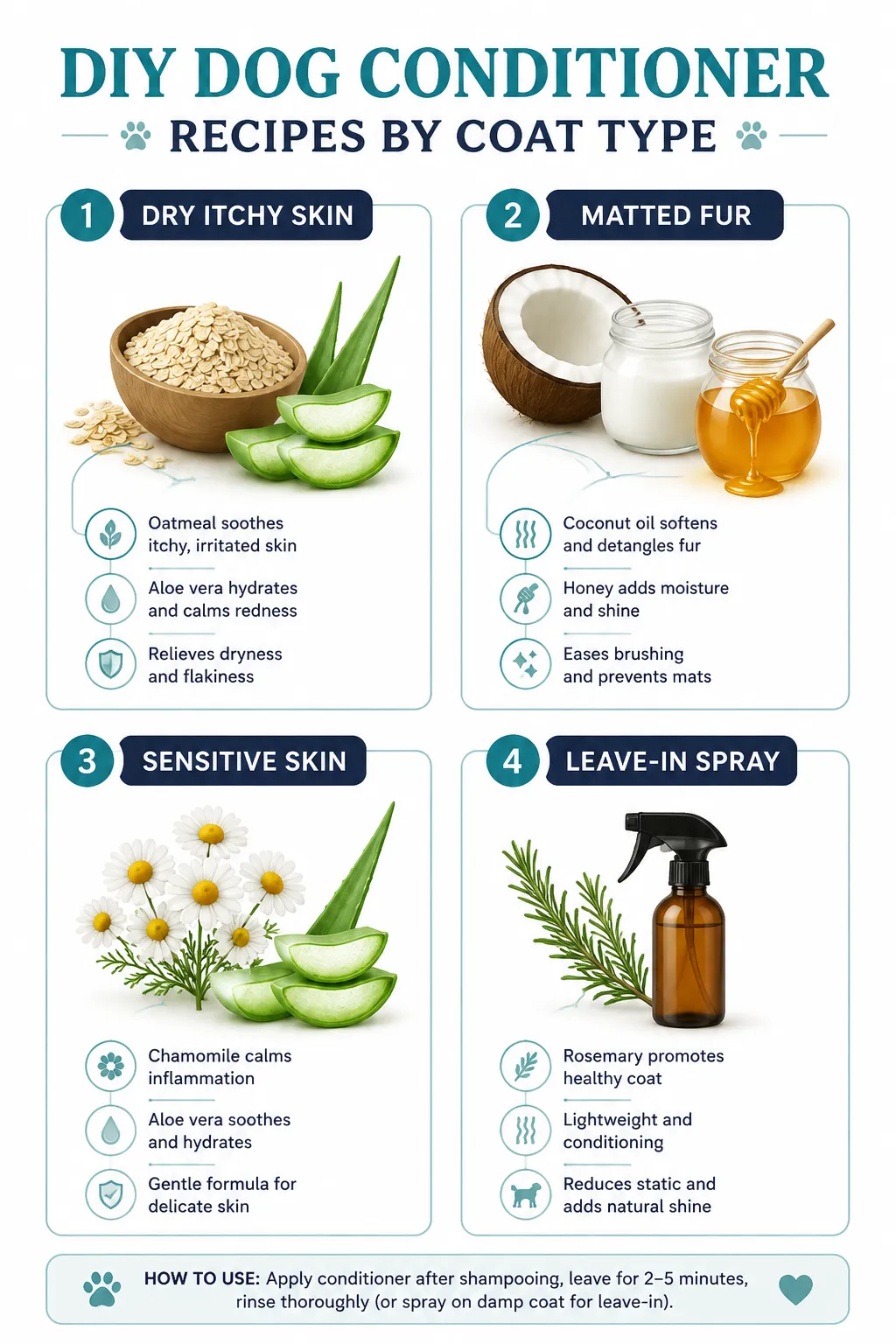
The best homemade conditioner for dogs with dry, itchy skin combines colloidal oatmeal and aloe vera gel – these two ingredients together reduce inflammation and restore moisture to the skin barrier. Recipe 2 (oatmeal-aloe) and Recipe 7 (chamomile-oat spray) are both strong choices for this condition.
Key things to look for in a recipe for itchy skin:
- Oatmeal – forms a protective barrier on skin
- Aloe vera – reduces redness and irritation
- Chamomile – calms inflammation
- No essential oils – these can worsen irritation on already-sensitive skin
If your dog’s itching is severe or comes with hair loss, redness, or swelling, skip the DIY approach and check out natural ways to support your dog’s immune system while also consulting your vet.
DIY Dog Conditioner for Matted Fur
For matted fur, the best approach is a detangling leave-in conditioner spray applied before brushing. Coconut oil and honey are the most effective natural detanglers because they coat the hair shaft and reduce friction.
Best recipe for matted fur: Mix 1 tablespoon melted coconut oil, 1 teaspoon raw honey, and 1 cup warm water in a spray bottle. Mist generously onto the matted area, wait 5 minutes, then use a wide-tooth comb to gently work through the mat from the ends inward.
Tips for matted coats:
- Never pull through a mat dry – always apply conditioner first
- Work in small sections
- For large dogs with severe matting, a professional groomer may be needed first
- Use a detangling spray every few days to prevent mats from forming again
A dog detangling spray used regularly between baths is one of the best preventive tools for long-haired breeds.
Can I Make Dog Conditioner with Coconut Oil?
Yes, coconut oil is one of the safest and most effective bases for homemade dog conditioner. It moisturizes the coat, reduces shedding, and has natural antimicrobial properties. Use unrefined, cold-pressed coconut oil for the best results.
Coconut oil works in three main ways for dogs:
- As a rinse-out conditioner – melted and diluted with water
- As a deep conditioning mask – applied directly to dry patches
- As part of a leave-in spray – in very small amounts mixed with water
The key is dilution. Pure coconut oil applied in large amounts can leave a greasy residue, especially on dogs with fine or short coats. For a size guide, use about 1 teaspoon per 10 lbs of body weight when making a rinse-out formula.
Dogs weigh differently, so adjust the batch size accordingly. For dogs less than 15 lbs, use half the standard recipe amount.
Is Apple Cider Vinegar Safe in Dog Conditioner?
Apple cider vinegar is safe in dog conditioner when properly diluted – the standard ratio is 1 part vinegar to 10 parts water. It helps balance the skin’s pH, reduces dandruff, and can deter fleas naturally. Never apply undiluted ACV to your dog’s coat or skin.
When to skip apple cider vinegar:
- Dogs with open sores or raw skin
- Dogs with known yeast overgrowth (ACV can sometimes worsen this)
- Puppies under 12 weeks
Tally Pet’s guide to DIY dog shampoo and safe tailored recipes notes that ACV is a valid addition to grooming routines when used correctly, but it is not suitable for all dogs.
How Often Should I Use DIY Dog Conditioner?
Most dogs benefit from a rinse-out conditioner every two to four weeks, applied after their regular bath. Leave-in sprays can be used more frequently – once or twice a week is fine for most dogs.
Frequency guide by coat type:
- Short, smooth coats (Beagles, Boxers) – once a month is plenty
- Medium coats (Labradors, Golden Retrievers) – every two to three weeks
- Long or double coats (Huskies, Collies) – every one to two weeks
- Curly or wavy coats (Poodles, Doodles) – every one to two weeks
- Sensitive or itchy skin – weekly leave-in spray, rinse-out monthly
Over-conditioning can make the coat greasy and attract dirt, so more is not always better.
How Long Does Homemade Dog Conditioner Last?
Most homemade dog conditioners last five to seven days at room temperature and up to two weeks when stored in the refrigerator. Recipes containing fresh aloe vera or yogurt should always be refrigerated and used within one week.
Storage tips:
- Use a clean glass jar or BPA-free plastic bottle
- Label with the date made
- Shake or stir before each use
- Discard if you notice any change in smell or color
- Spray bottles work best for leave-in formulas
Because there are no preservatives in these recipes, making small batches more often is better than making a large batch and letting it sit.
Does Homemade Dog Conditioner Work as Well as Store-Bought?
Homemade dog conditioner works well for maintenance grooming and mild coat concerns, but it may not match the performance of veterinary-grade or medicated store-bought products for serious skin conditions. For everyday softening, shine, and detangling, most diy dog conditioner recipes perform comparably to mid-range commercial options.
Where DIY wins:
- No harsh sulfates or synthetic fragrances
- Cheaper per use
- Fully customizable for your dog’s specific needs
- Free of artificial preservatives
Where store-bought wins:
- Medicated formulas for diagnosed skin conditions
- Longer shelf life
- Consistent texture and pH
For dogs with diagnosed conditions like seborrhea, mange, or fungal infections, a vet-recommended product is the valid choice. For general coat care, homemade works great.
How to Apply Homemade Dog Conditioner Properly
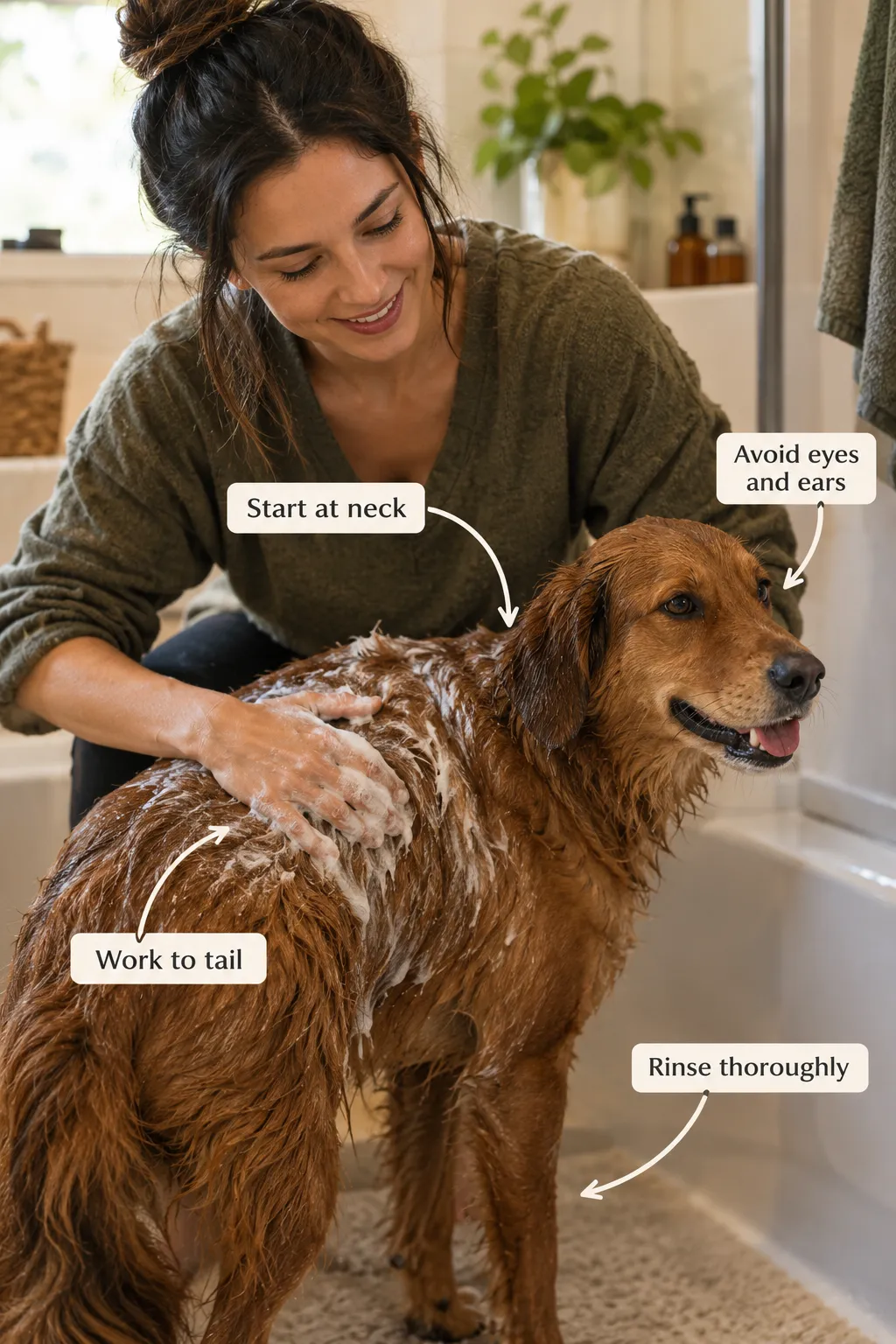
Apply homemade dog conditioner to a freshly shampooed, damp coat – not soaking wet. Work from the neck toward the tail, avoiding the eyes, ears, and mouth. Leave rinse-out formulas on for three to five minutes before rinsing thoroughly with warm water.
Step-by-step application:
- Shampoo your dog first and rinse completely
- Squeeze out excess water so the coat is damp, not dripping
- Apply conditioner starting at the neck
- Work section by section toward the tail
- Massage gently into the coat – don’t scrub
- For leave-in spray, mist evenly and brush through
- For rinse-out, wait the recommended time, then rinse fully
- Towel dry and brush while slightly damp
Common mistake: Applying conditioner to a soaking wet coat dilutes the formula too much and reduces effectiveness.
What If My Dog Has an Allergic Reaction to Homemade Conditioner?
If your dog shows signs of an allergic reaction – redness, swelling, hives, excessive scratching, or facial swelling – rinse the conditioner off immediately with plain water and contact your vet. Always patch-test any new recipe on a small area of skin 24 hours before full application.
Signs of a reaction to watch for:
- Redness or rash at the application site
- Swelling, especially around the face
- Excessive licking or scratching
- Watery eyes or sneezing
- Lethargy after application
If your dog says something is wrong through these signals, trust it. Skip the recipe and try a simpler formula with fewer ingredients.
For dogs with a history of skin allergies, the oatmeal-chamomile recipe (Recipe 7) is the safest starting point. You can also explore natural remedies for sick dogs for additional guidance on gentle home care.
DIY Dog Conditioner for Sensitive Skin
The best diy dog conditioner recipes for sensitive skin use only two or three ingredients and skip all essential oils. Chamomile, colloidal oatmeal, and aloe vera are the gold standard for reactive or allergy-prone dogs.
Sensitive skin recipe (quick version):
- 1 cup cooled chamomile tea
- 1 tablespoon colloidal oatmeal
- 1 teaspoon pure aloe vera gel
Mix, strain, bottle, and use as a leave-in spray. This is one of the gentlest options available and is a valid choice for dogs who have reacted to commercial grooming products.
Tips for sensitive dogs:
- Always use fragrance-free ingredients
- Avoid honey if your dog has a history of food sensitivities
- Skip ACV if the skin is broken or raw
- Use cool or lukewarm water – hot water worsens inflammation
Cheapest Ingredients for Making Dog Conditioner at Home
The most affordable ingredients for homemade dog conditioner are coconut oil, apple cider vinegar, and oatmeal – all available at grocery stores for just a few dollars. A full batch of most recipes costs under $2 and can be made with supplies you likely already have at home.
Budget breakdown (approximate, 2026 prices):
- Coconut oil (16 oz jar) – around $6-8, makes roughly 20 batches
- Apple cider vinegar (32 oz) – around $4, makes 30+ batches
- Colloidal oatmeal (8 oz) – around $5, makes 15+ batches
- Aloe vera gel (8 oz) – around $5, makes 20+ batches
- Chamomile tea bags – around $3 for 20 bags
This makes DIY grooming one of the most cost-effective ways to care for your dog’s coat. Even the gift of a well-conditioned, shiny coat doesn’t have to cost much.
For more budget-friendly natural dog care, check out these DIY dog toothpaste recipes and DIY dog paw balm that use many of the same ingredients.
Can I Use Human Conditioner on Dogs Instead?
No – human conditioner should not be used on dogs. Human hair products are formulated for a skin pH of around 4.5 to 5.5, while a dog’s skin pH is closer to 6.2 to 7.4. Using human conditioner on dogs regularly can disrupt their skin barrier, leading to dryness, irritation, and increased risk of infection.
This is a matter of dog skin biology, not just preference. Even “natural” or “gentle” human conditioners contain ingredients that are not suitable for dogs, including certain preservatives and fragrance compounds.
The only valid exception is a true emergency – if you have nothing else available, a single use of a fragrance-free, minimal-ingredient human conditioner is unlikely to cause harm. But it should not become a regular habit.
Looking for Other Pet Care Recipes and Natural Grooming Tips?
If you enjoy making your own grooming products, there are plenty of other DIY options worth exploring. Natural dog care extends well beyond the bath – from what goes on their coat to what goes in their bowl.
Here are some related guides you might find useful:
- 7 DIY probiotic dog treat recipes for gut health support
- 10 healing massage points for dogs to relieve stress and tension naturally
- Natural ways to boost your dog’s immune system
- DIY dog paw balm recipe that takes 5 minutes
These resources pair well with a regular grooming routine and help you build a more complete natural care plan for your dog.
Terms and Conditions for DIY Grooming Promotions and Offers
When you shop for ingredients online, it pays to understand the terms and conditions of any promotion or offer you use. Many retailers run free shipping promotions and gift-with-purchase deals on natural pet supplies.
Here are some common terms to know:
- Free shipping applies to orders over a set pre-tax threshold – free shipping applies to orders over a certain amount after discounts are applied at checkout
- One-time use codes – most promotional codes are one-time use only and cannot be combined with other offers or promotions
- While supplies last – many free gift offers and discounted items are valid while supplies last
- Eligible items – not all products qualify; always check which items are eligible before you order
- Conditions subject to change – promotion terms and conditions are subject to change without notice
- Applied at checkout – discounts are typically applied at checkout, not before
For example, a shop might offer 30% off ship now items from a food and treats collection, or 25% off ship now from a puppy bowl collection with a valid code. Always read the size guide and size chart for any dog supplies you order, since size matters for items like dog bags, harnesses, and chews.
If you need help with an order, customer service is usually reachable at a number like 800 879 3337 or through support at an email like support mountainroseherbs com. The service 800 879 number and 879 3337 support line are examples of the kind of contact info reputable retailers provide. The 3337 support mountainroseherbs format is typical of how these contact details appear on herbal and pet supply sites. Always verify current contact details on the retailer’s website, as conditions subject to change apply.
Note: These terms apply to third-party retailers where you might shop for ingredients. They are not specific to any single promotion and are provided as general guidance only.
Size Guide for DIY Dog Conditioner Recipes
The right batch size for your diy dog conditioner recipes depends on your dog’s size and coat length. A small dog needs far less product than a large breed with a thick double coat.
Dog size guide for batch sizing:
| Dog Size | Weight Range | Recommended Batch Size |
|---|---|---|
| Small | Under 20 lbs | 1/2 standard recipe |
| Medium | 20-50 lbs | 1 standard recipe |
| Large | 50-90 lbs | 1.5x standard recipe |
| Extra Large | Over 90 lbs | 2x standard recipe |
Dogs weigh differently even within breeds, so use this as a starting point. A size dog like a Labrador (around 55-80 lbs) typically needs one full batch per bath. Large dogs with thick coats may need more.
The size quot system used by groomers is similar – they scale product amounts by coat density, not just weight. A fluffy 40 lbs Chow Chow needs more conditioner than a short-coated 40 lbs Boxer.
FAQ
What can I use as a substitute for dog conditioner?
You can substitute commercial dog conditioner with diluted coconut oil, plain aloe vera gel, or a chamomile tea rinse. These are safe, gentle, and widely available. For a quick fix, mix 1 tablespoon of coconut oil with 1 cup of warm water and apply after shampooing. Always rinse thoroughly and avoid using human conditioner as a regular substitute.
What is a good conditioner for dogs with itchy skin?
The best conditioner for dogs with itchy skin contains colloidal oatmeal and aloe vera gel – both are proven to soothe irritation and restore the skin barrier. A chamomile-oat leave-in spray is another excellent option. Avoid recipes with essential oils or apple cider vinegar on broken or raw skin, as these can worsen irritation. If itching is severe, consult your vet before trying any home remedy.
Can I put coconut oil hair conditioner on my dog?
You can use plain, unrefined coconut oil on your dog’s coat, but human coconut oil hair conditioner products are not recommended. These products often contain fragrances, preservatives, and pH-adjusting ingredients formulated for human skin, which sits at a different pH than dog skin. Use pure coconut oil diluted in water instead – it delivers the same moisturizing benefits without the risk of skin irritation.
What is the best natural conditioner for my dog’s coat?
The best natural conditioner depends on your dog’s coat type. For dry or itchy skin, an oatmeal-aloe rinse is the top choice. For shine and detangling, a rosemary leave-in spray works well. For matted fur, a coconut oil and honey spray applied before brushing is most effective. All of these use simple, non-toxic ingredients and can be made at home in minutes with supplies from any grocery store.
Conclusion
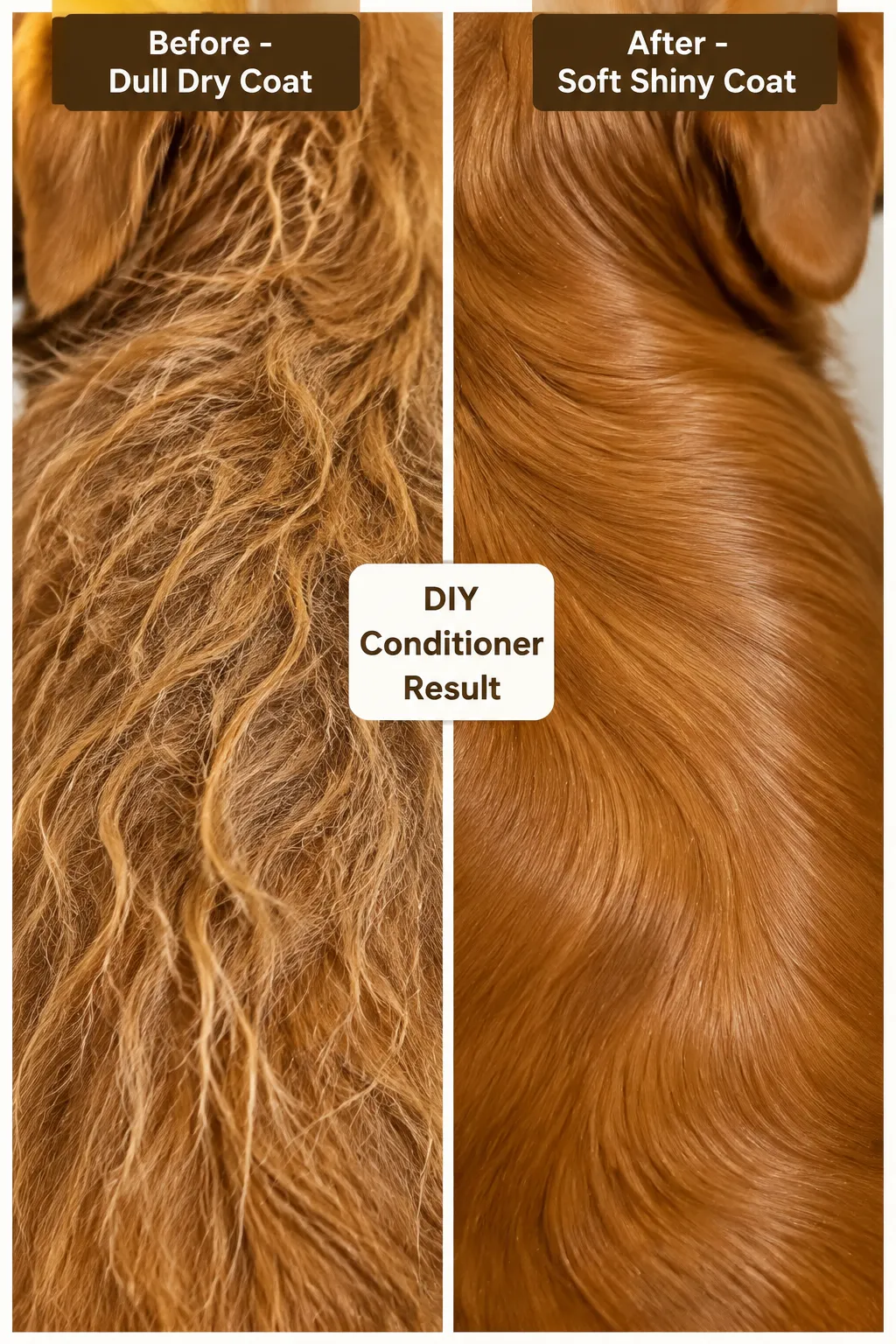
Making your own diy dog conditioner recipes is one of the easiest ways to upgrade your dog’s grooming routine without spending a lot. Most recipes use five ingredients or fewer, cost almost nothing per batch, and are free of the synthetic chemicals found in many commercial products.
Start with the recipe that best matches your dog’s coat type – the oatmeal-aloe rinse for itchy skin, the rosemary leave-in spray for everyday shine, or the coconut oil mask for deep conditioning. Always patch-test first, store leftovers in the fridge, and pay attention to how your dog’s coat responds over the first few uses.
Your next steps:
- Pick one recipe from this list that matches your dog’s main coat concern
- Gather your supplies – most are already in your kitchen
- Do a patch test 24 hours before full application
- Apply after your dog’s next bath and note the difference in coat feel
- Adjust the recipe or frequency based on results
With a little consistency, you will notice a real difference in your dog’s coat within a few weeks – softer, shinier fur and a happier pup at bath time.