Last updated: October 29, 2026
One ingredient. That’s all it takes to turn a nervous, gassy, itchy dog into one who actually looks forward to treat time. Cooked chicken liver, nothing else, is the simplest fix I’ve found for dogs who react to the fillers, grains, and eggs packed into most store-bought biscuits.
Homemade Chicken Liver Dog Treats for Sensitive Stomachs work because they strip treat-making down to a single, identifiable protein. No wheat, no dairy, no egg binders, no mystery “animal digest.” Just liver, cooked thoroughly, cut small, and watched closely.
Quick Answer
Homemade Chicken Liver Dog Treats for Sensitive Stomachs are a single-ingredient, grain-free, egg-free snack made by simmering or baking chicken liver plain, then slicing and dehydrating or baking it low and slow. They work well for many sensitive dogs because there’s only one protein to react to, but they’re not safe for dogs with a confirmed chicken allergy, and they should be introduced in tiny amounts with a 24-48 hour wait to watch for stomach upset.
Key Takeaways
- Chicken liver is a naturally rich source of taurine and vitamin B12, but it’s a supplement to the diet, not a meal replacement, according to The Farmer’s Dog.
- Start with one tiny piece and wait 24-48 hours before offering more, per guidance from PetsCare.
- Cook liver to an internal temperature of at least 165°F (74°C), with no salt, onion, or garlic, as outlined in a 2026 food-safety review from IR MSU.
- Dogs with a confirmed chicken allergy should avoid chicken liver entirely, and need a novel protein like turkey or beef instead.
- Treats keep about 3-4 days refrigerated or up to 3 months frozen; they should never sit at room temperature for more than 2 hours after cooking.
- A single named protein (just liver) makes it far easier for you and your vet to spot problem ingredients, according to Chef Kitty’s sensitive-stomach treat guide.
- One or two liver treats per week is a reasonable ceiling for most dogs; it’s a rich food, not a daily staple.
- You don’t need a dehydrator. A low oven works fine for homemade chicken liver treats.
What Makes Chicken Liver Good for Dogs With Sensitive Stomachs
Chicken liver is gentle on many sensitive dogs because it’s a single, easily digestible protein with no grains, dairy, or additives to trigger a reaction. It also delivers naturally occurring taurine and vitamin B12, nutrients that support heart and nerve function, according to The Farmer’s Dog.
That said, liver is still an organ meat, which means it’s dense and rich. A few things to keep in mind:
- It’s meant as an occasional treat, not a daily food.
- Chicken liver is generally considered “gentler” than beef liver for dogs new to organ meats, per Chef Kitty.
- Beef liver’s lower fat content can be a better pick for dogs prone to pancreatitis.
Choose chicken liver if: your dog tolerates chicken-based foods fine and you want a simple, limited-ingredient treat. Choose beef liver instead if: your dog needs tighter fat control or has had chicken reactions before.
How Do I Know if My Dog Has a Sensitive Stomach or Allergies
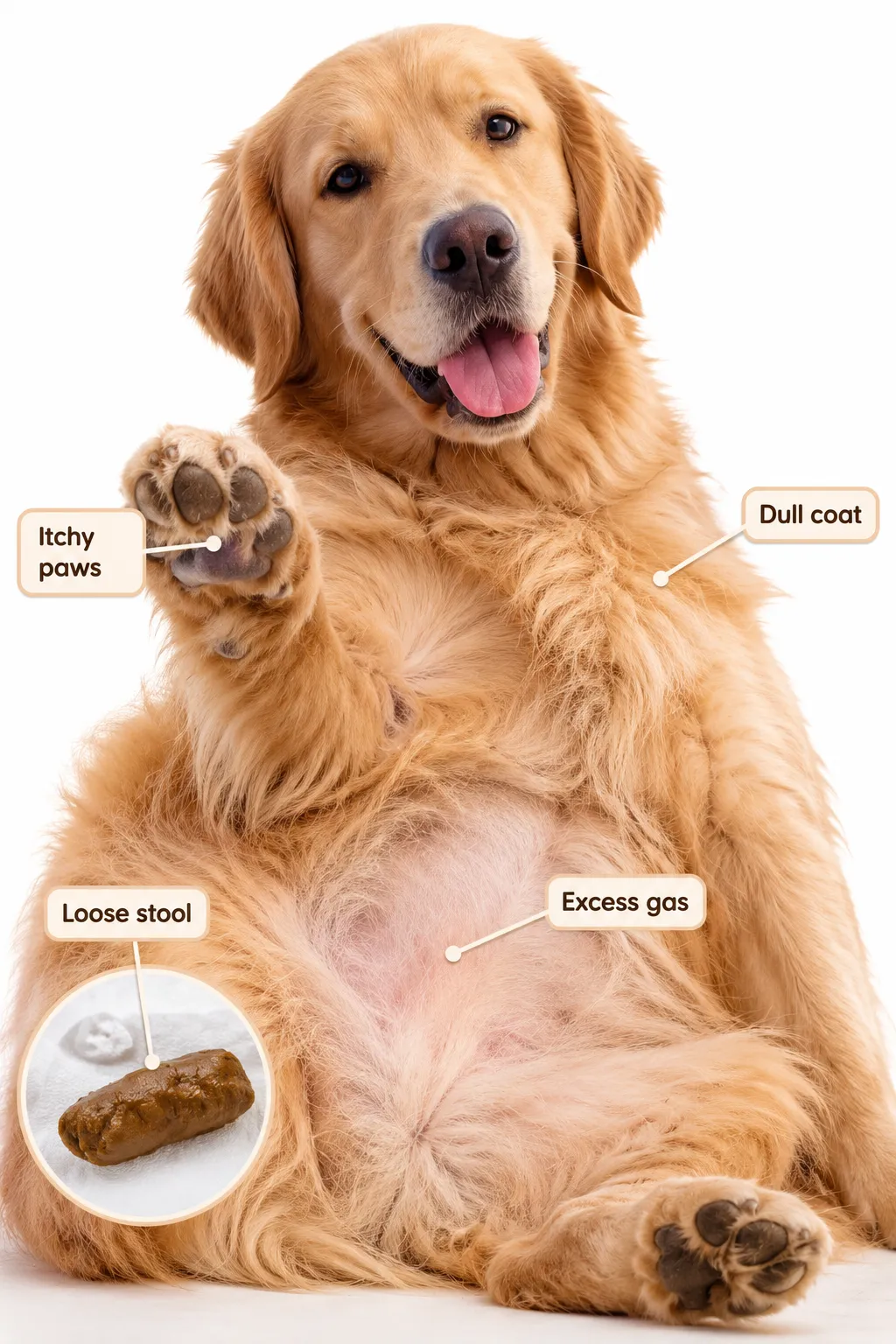
A sensitive stomach usually shows up as digestive symptoms like soft stool or gas, while a true allergy often adds skin or breathing issues on top. The two aren’t the same thing, and treating them the same way can backfire.
Watch for:
- Loose stool, vomiting, or excess gas after eating (sensitive stomach)
- Itchy skin, paw licking, ear infections, or hives (possible allergy)
- Facial swelling or trouble breathing (emergency, not a sensitivity)
If you’re seeing skin symptoms specifically, our French Bulldog allergies survival guide breaks down how allergy symptoms differ from simple food intolerance in more detail, and it applies beyond just Frenchies.
Edge case: some dogs show both. In that case, an elimination diet supervised by a vet, not home trial and error, is the only reliable way to sort out which ingredient is the actual culprit.
Homemade vs Store-Bought Chicken Liver Dog Treats: Which Is Better
Homemade wins on ingredient control, but store-bought single-protein freeze-dried liver treats win on convenience and shelf life. Neither is automatically “better” for every dog.
| Factor | Homemade | Store-bought single-protein |
|---|---|---|
| Ingredient transparency | Full control | Depends on label |
| Shelf life | Days (fridge) or months (freezer) | Often 12+ months |
| Cost per treat | Usually lower | Usually higher |
| Time investment | 1-2 hours active prep | None |
Single-ingredient options, whether homemade or store-bought freeze-dried liver, are consistently recommended for sensitive dogs because the short ingredient list makes allergy tracking simple, per Chef Kitty.
Common mistake: assuming “grain-free” on a store bag means single-ingredient. Many grain-free biscuits still contain eggs, peas, or multiple proteins that can still trigger a sensitive dog.
Grain-Free, Egg-Free Dog Treat Recipes Besides Chicken Liver
Chicken liver isn’t the only limited-ingredient option, and rotating proteins helps prevent new sensitivities from developing. Good alternatives include other organ meats, plain dehydrated muscle meat, and simple produce-based treats.
Worth trying:
- Chicken feet treats for joint support and a crunchy texture
- Beef lung treats as a lighter, lower-fat option
- Oven-baked jerky using a single novel protein
- Pumpkin oat treats if your dog isn’t sensitive to oats specifically
Why Do My Homemade Dog Treats Keep Falling Apart or Crumbling
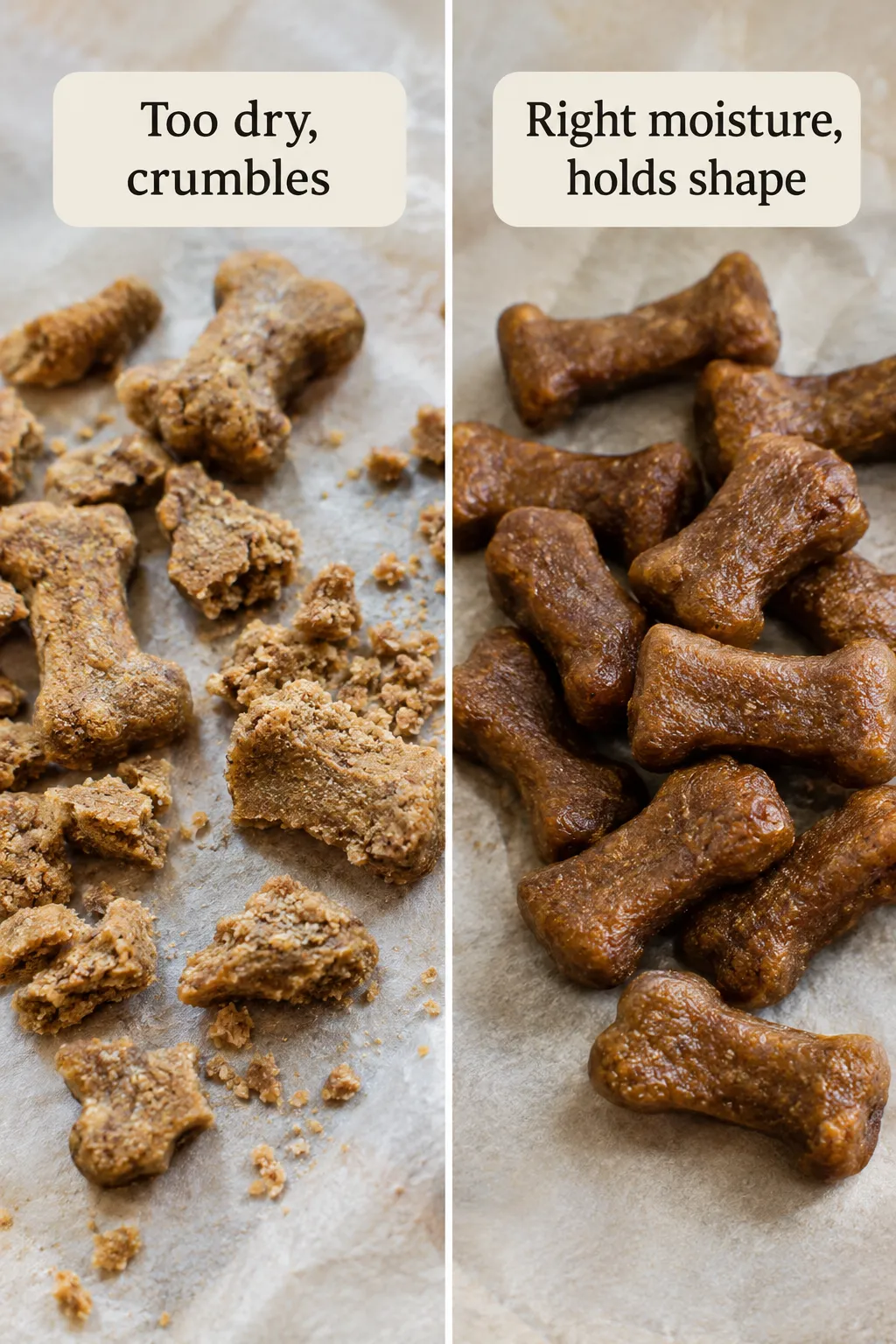
Treats crumble when the liver is dried too long, cut too thin, or cooled before it’s fully set. This is the single most common complaint with homemade liver treats.
Fix it by:
- Cutting liver into pieces at least 1/4 inch thick before drying
- Checking treats at the minimum cook time, then adding time in short bursts
- Letting treats cool completely on the tray before handling
- Storing in a single layer so pieces don’t crush each other
Quick example: if your treats crumble the moment you touch them while still warm, they’re not actually done falling apart from being overdried, they just need to finish cooling and firming up first.
Are Chicken Liver Treats Safe for Puppies With Allergies
Chicken liver can be appropriate for puppies in very small amounts, but puppies with suspected allergies need the same caution as adult dogs, just with smaller portions. A puppy’s digestive system is also still developing, so go slower than you would with an adult dog.
- Offer a pea-sized piece first, not a whole treat
- Wait a full 48 hours before any second offering
- Skip liver entirely if the puppy has already shown reactions to chicken in food
If you’re also working on training routines, our puppy potty training guide covers how treat timing fits into early training without overloading a young stomach.
What Dogs Should Not Eat Chicken Liver Treats
Dogs with a confirmed chicken allergy, high cholesterol concerns, or certain medication interactions should avoid chicken liver, often entirely. This isn’t a “cut back” situation for those dogs, it’s an avoid-completely one.
Avoid chicken liver if your dog:
- Has a documented chicken protein allergy
- Is on certain antibiotics or MAO inhibitor medications without vet clearance
- Has chronic pancreatitis and needs strict fat limits
- Is mid-elimination diet for suspected food allergies
Owners managing complex medical histories should talk to a vet or veterinary nutritionist before adding any liver treat, according to guidance referenced by IR MSU’s cooking safety review.
How Long Do Homemade Chicken Liver Dog Treats Last
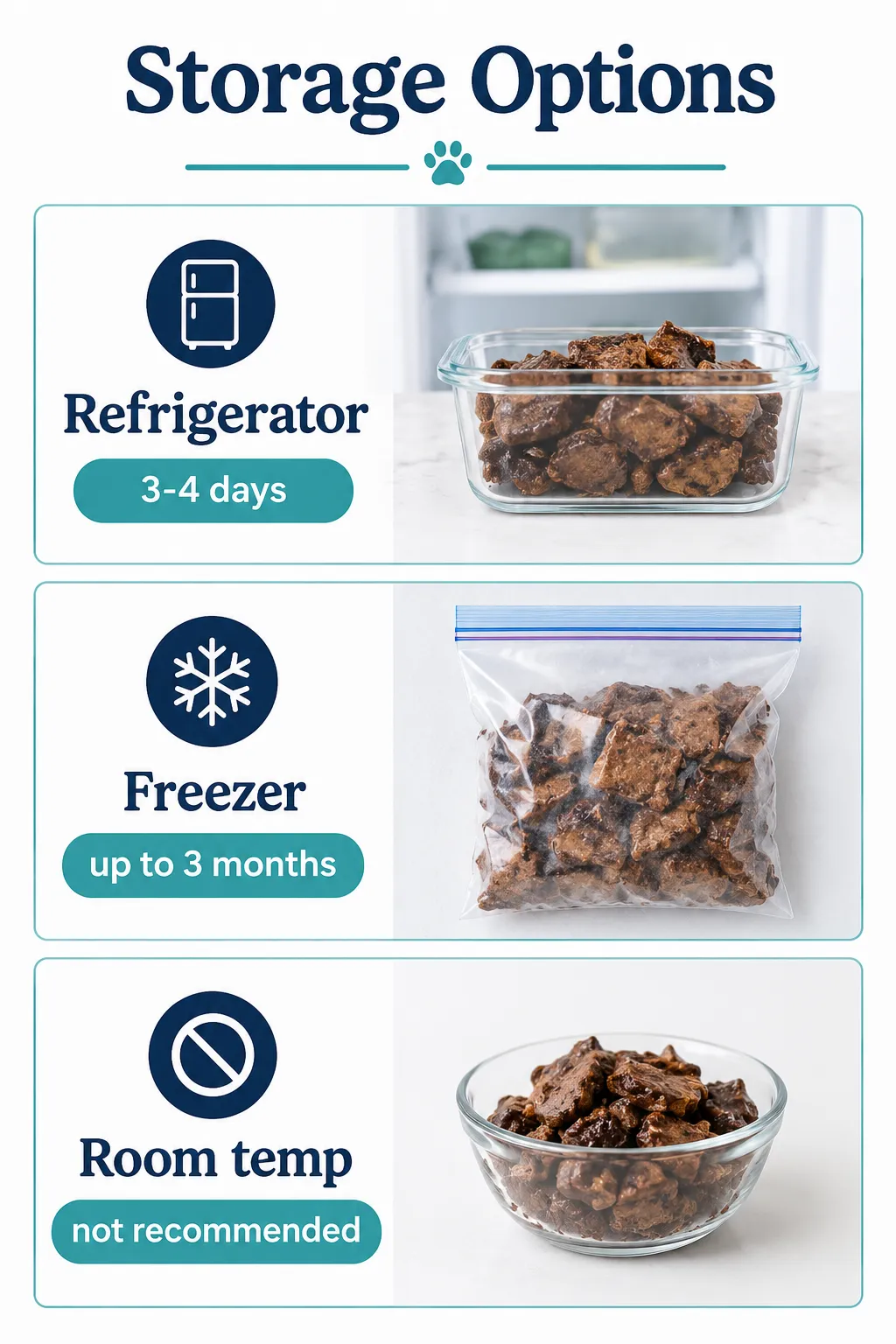
Homemade chicken liver treats last about 3-4 days refrigerated or up to 3 months frozen, following standard cooked-poultry storage guidance from IR MSU. They should never sit out longer than 2 hours after cooking.
- Refrigerator: 3-4 days in an airtight container
- Freezer: up to 3 months, portioned into small bags
- Room temperature: not recommended beyond 2 hours
Decision rule: if you’re making a big batch, freeze most of it in small daily-use portions right away rather than trying to stretch a fridge batch past 4 days.
Can I Make Chicken Liver Treats Without a Dehydrator
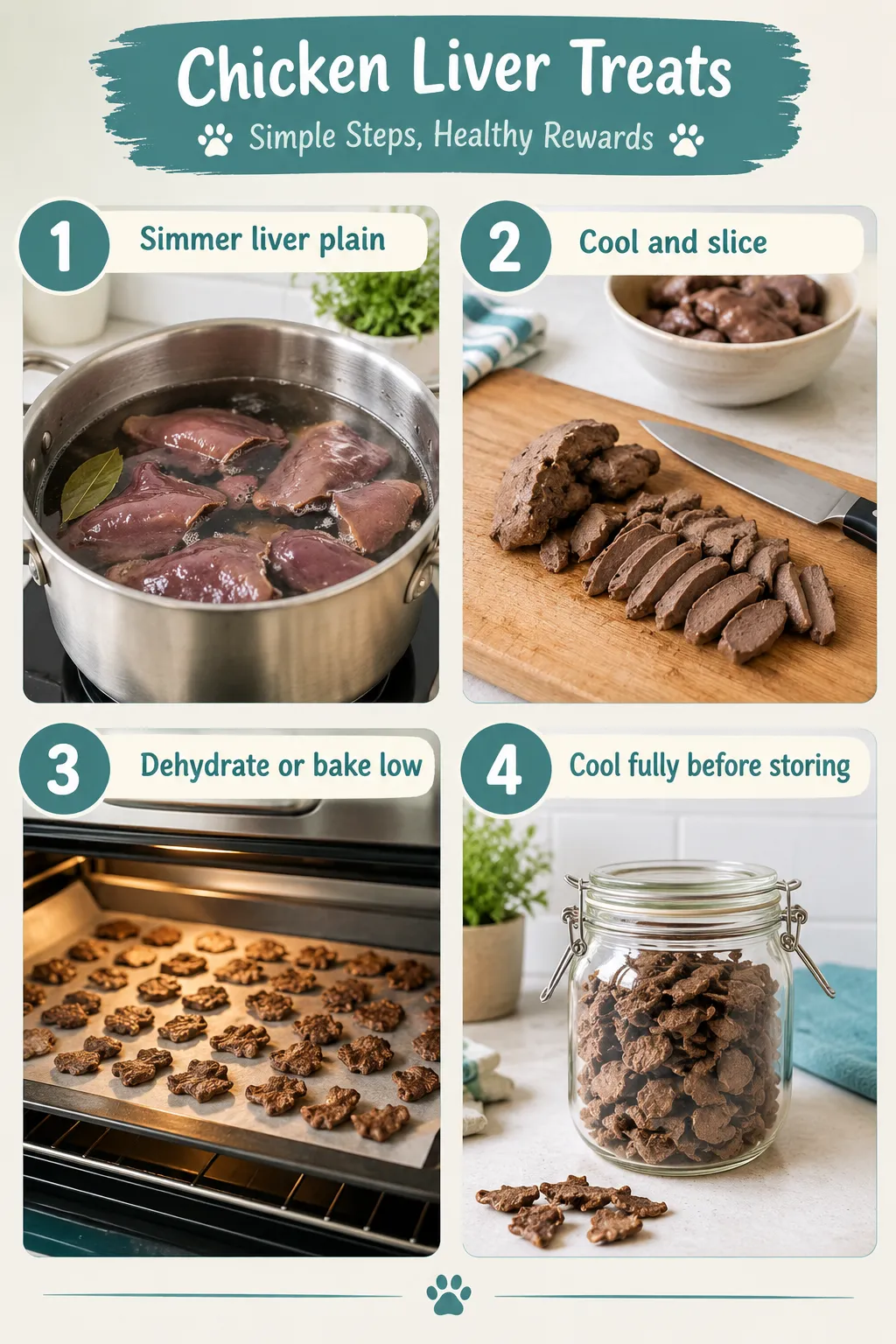
Yes, a low oven does the job just as well as a dehydrator for homemade chicken liver treats. You just need patience and a low temperature.
Basic oven method:
- Simmer liver in plain water until cooked through to 165°F (74°C) internally
- Slice into 1/4-inch pieces once cooled enough to handle
- Bake at 200-225°F for 2-3 hours, flipping halfway
- Cool completely on the tray before storing
For more oven-based treat ideas that work the same way, check out our air fryer dog treats guide, which uses a similar low-and-slow approach.
What Should I Do if My Dog Gets Sick From Chicken Liver Treats
Stop feeding chicken liver immediately and call your vet if you see vomiting, diarrhea, hives, facial swelling, or trouble breathing. These are signals the treat needs to come out of rotation, not just be reduced.
- Mild upset (soft stool, one-off vomit): pause treats, monitor 24 hours
- Repeated vomiting or diarrhea: call your vet same day
- Facial swelling, hives, or breathing trouble: this is an emergency, go to an emergency vet immediately
Severe reactions can escalate to anaphylaxis and may need emergency treatment, so don’t wait it out at home if symptoms are serious, per safety guidance summarized by PetsCare.
Common Mistakes People Make When Making Dog Treats at Home
The biggest mistakes are seasoning the liver, skipping the cooking temperature check, and introducing too much too fast. All three are easy to avoid once you know to watch for them.
- Adding salt, garlic, or onion for flavor (all unsafe for dogs)
- Not checking internal temperature, risking undercooked liver
- Giving a full treat on day one instead of a small test piece
- Skipping the 24-48 hour wait before a second treat
I made this mistake myself the first time I batch-cooked liver for my own dog. I handed over a full piece right away because she seemed fine with everything else. She wasn’t fine with that much liver at once, and I learned the small-piece rule the hard way.
How Many Chicken Liver Treats Can I Give My Dog Per Day
Most dogs do best with liver treats limited to once or twice per week, not daily, because organ meat is rich and can cause stomach upset in larger or more frequent amounts. Within that, portion size still matters based on your dog’s weight.
- Small dogs: one small piece per treat session
- Medium dogs: two to three small pieces
- Large dogs: three to four small pieces
This follows the “occasional treat” framing used across current organ meat guidance from The Farmer’s Dog and Chef Kitty.
Do Homemade Dog Treats Need to Be Refrigerated or Frozen
Yes, homemade chicken liver treats need refrigeration or freezing because they contain no preservatives and can spoil quickly at room temperature. This is different from many store-bought treats, which are shelf-stable by design.
- Never leave cooked liver treats out more than 2 hours
- Use the fridge for treats you’ll finish within 3-4 days
- Freeze anything you won’t use within that window
If you like batch-prepping multiple treat types at once, our guide to freezer-friendly homemade wet dog food uses the same portion-and-freeze logic.
Best Alternatives to Chicken Liver for Dogs With Sensitive Stomachs
If chicken liver doesn’t agree with your dog, beef liver, turkey, or plain pumpkin-based treats are solid next steps. The goal is still the same: one clear ingredient, cooked plainly, introduced slowly.
- Beef liver: lower fat, good for pancreatitis-prone dogs
- Turkey: a common novel protein for chicken-sensitive dogs
- Pumpkin-based treats: good fiber option, check out our pumpkin dog treats roundup
- Probiotic treats: useful alongside protein treats, see our DIY probiotic dog treat recipes
FAQ
Is chicken liver bad for dogs with sensitive stomachs?
Not inherently, but it must be cooked plainly, introduced slowly, and kept to small portions, per PetsCare.
Can puppies eat chicken liver treats?
Yes, in tiny amounts, but puppies with known allergies need the same caution and smaller portions than adults.
How do I cook chicken liver safely for dogs?
Simmer or bake until it reaches an internal temperature of 165°F (74°C), with no added seasoning.
Do I need a dehydrator for homemade liver treats?
No, a low oven at 200-225°F for 2-3 hours works just as well.
How often can I give my dog chicken liver treats?
Once or twice per week is a reasonable guideline for most dogs.
What are signs my dog is allergic to chicken liver?
Hives, facial swelling, itchy skin, vomiting, or difficulty breathing are signs to stop immediately and call a vet.
Can I freeze homemade chicken liver treats?
Yes, they keep well frozen for up to about 3 months.
Is beef liver a better choice than chicken liver?
It can be, especially for dogs needing lower fat intake or those sensitive to chicken specifically.
Conclusion
Homemade Chicken Liver Dog Treats for Sensitive Stomachs come down to a few simple rules: one ingredient, thorough cooking, small portions, and a watchful eye for the first couple of days. That’s it.
Start with a single test piece this week. Watch your dog’s stool and energy for 48 hours. If all’s well, build up slowly, and store the rest properly in the fridge or freezer. If anything looks off, stop and call your vet rather than guessing.
For more limited-ingredient ideas, browse our 7 irresistible chicken liver recipes for dogs for variations beyond the basic dried treat.