Last updated: November 9, 2026
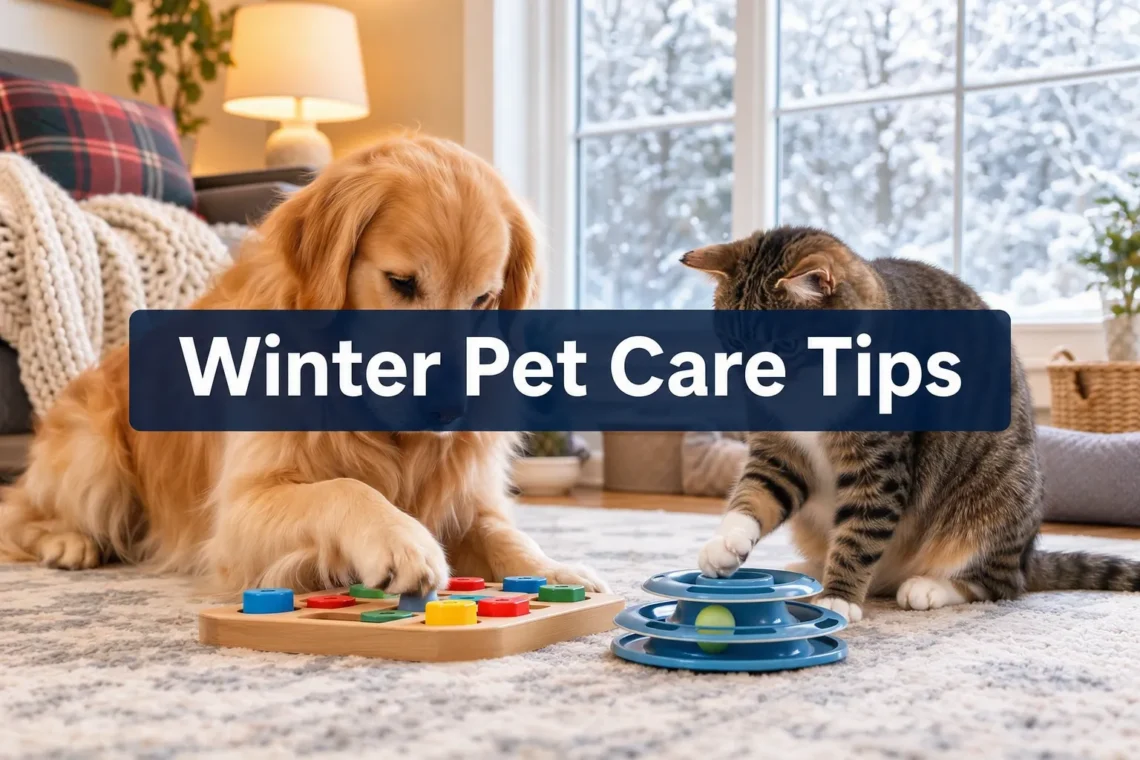
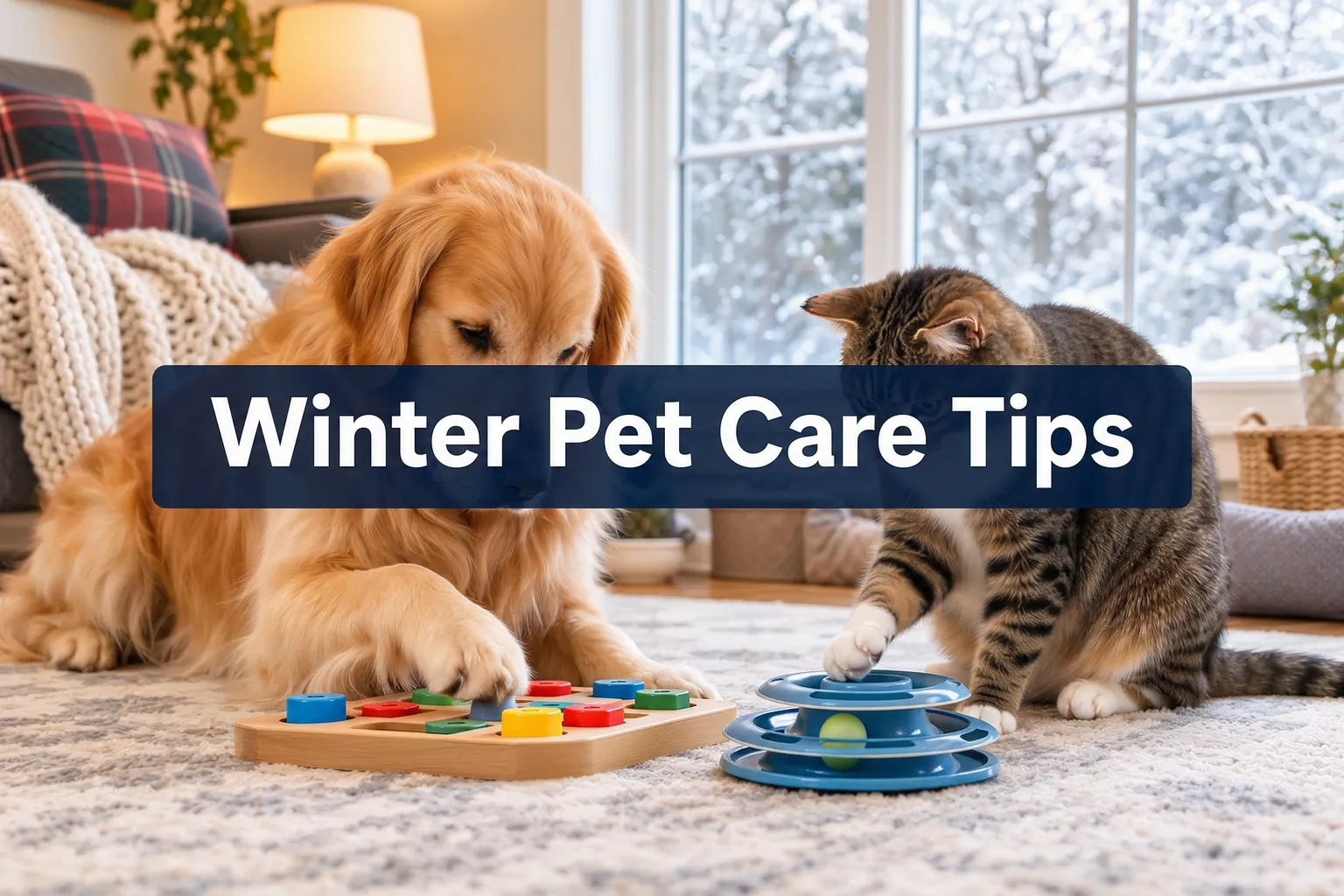
A dog who gets 20 fewer minutes outside each day in January doesn’t just lose exercise. He loses the smells, sounds, and problem-solving that keep his brain busy. That’s the real cost of winter for most pets, and it’s why winter pet care tips now stretch far beyond coats and boots.
When daylight shrinks and temperatures drop below freezing, pets spend more hours indoors with less to do. Good winter pet care tips focus on mental stimulation as much as physical warmth, because a bored pet is often a destructive, anxious, or overweight pet by spring. This guide covers practical indoor enrichment ideas dog owners and cat owners can use right now, from DIY puzzle feeders to safe indoor exercise routines.
Quick Answer
Indoor enrichment means giving pets activities that engage their senses, brains, and bodies when outdoor time is limited by cold weather. Think puzzle feeders, scent games, short indoor training sessions, and rotating toys. Vets and groups like the ASPCA and American Humane recommend shorter outdoor walks paired with more structured indoor play once temperatures fall, especially for small or short-coated dogs.
Key Takeaways
- Indoor enrichment covers puzzle feeders, scent work, training games, and rotating toys, not just walks.
- Dogs still need daily mental stimulation even when outdoor time shrinks in winter months.
- Cats benefit from vertical space, window perches, and “indoor hunting” setups year-round, especially in cold weather.
- Below about 20°F (-6°C), outdoor time should be sharply limited for most pets, according to cold weather safety guidance.
- DIY enrichment toys like muffin-tin puzzles cost little and work for dogs, cats, and small pets alike.
- Senior and anxious pets need gentler, shorter enrichment sessions, not high-energy games.
- Lack of stimulation can lead to weight gain, destructive chewing, and mood changes in pets.
- Small pets like rabbits and hamsters need enrichment too, even though they live indoors already.
What Counts as Indoor Enrichment for Pets?
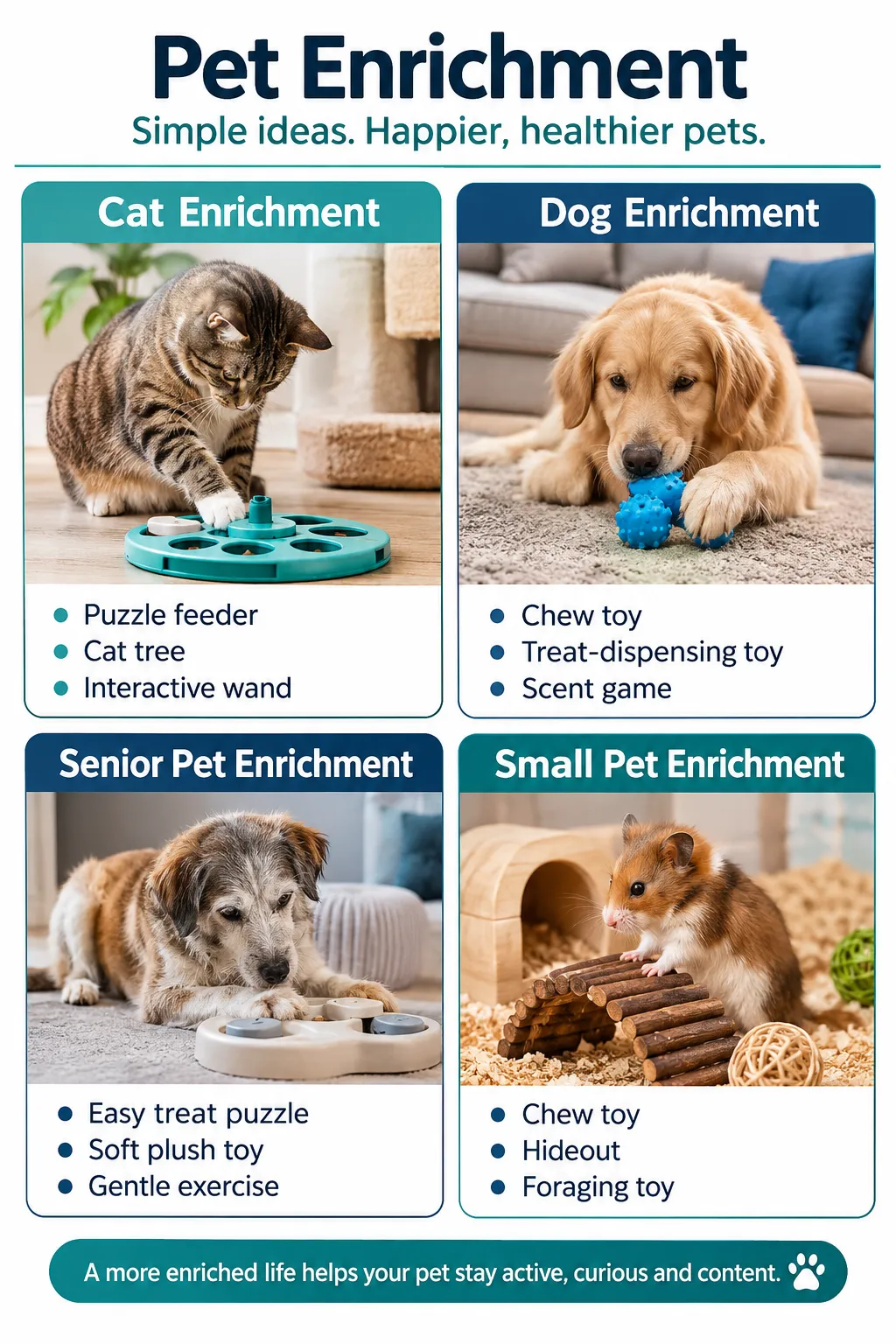
Indoor enrichment is any activity that engages a pet’s senses, brain, or body without requiring a trip outside. It includes food puzzles, scent games, climbing structures, training drills, and supervised play with other pets or people.
The goal isn’t just to burn energy. It’s to recreate the kind of problem-solving and sensory input pets normally get outdoors. A dog sniffing a trail in the park and a dog sniffing treats hidden in a towel are using the same part of the brain.
Common categories of indoor enrichment:
- Food-based: puzzle feeders, snuffle mats, frozen treats
- Scent-based: hide-and-seek games, scent trails
- Physical: tug, fetch down a hallway, stairs climbing
- Cognitive: training new tricks, nose work, obstacle courses
- Social: supervised play with other pets, interactive time with family
Groups like Animal Trust point out that enrichment matters most when outdoor access is limited, which is exactly the situation most pet owners face during dark winter months.
How Do I Keep My Dog Entertained During Winter?
Keep a dog entertained in winter by mixing short, safe outdoor walks with daily indoor games that use food, scent, or training. A 15-minute indoor session can tire a dog mentally almost as much as a 30-minute walk.
Rotate a few of these through the week:
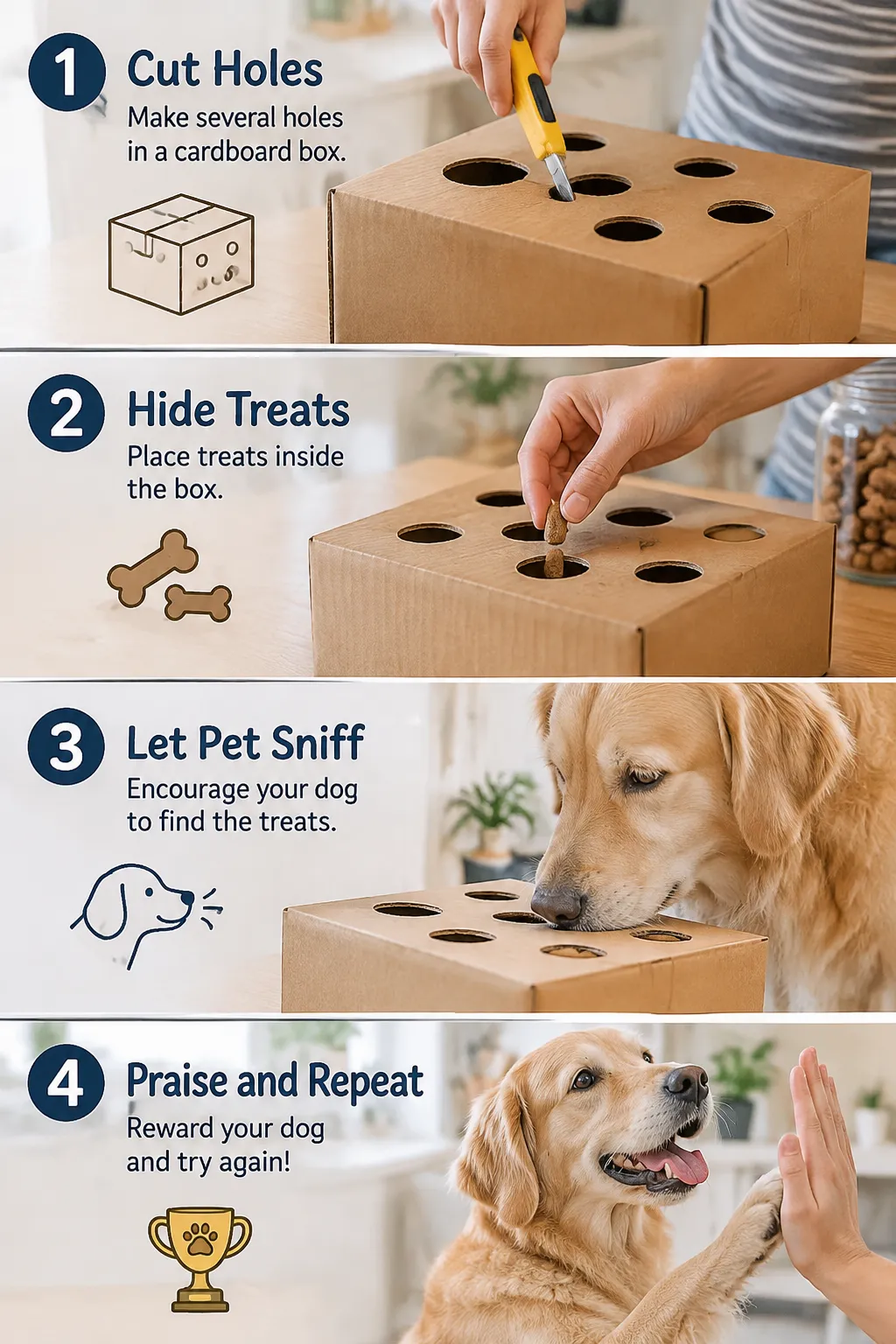
- Hide treats around a room and release your dog to find them.
- Teach one new cue or trick per week (five minutes a day is enough).
- Set up a mini obstacle course using couch cushions and boxes.
- Play tug or fetch down a hallway or staircase.
- Use a flirt pole indoors for quick bursts of chase.
If you’re also dealing with a puppy this winter, our guide to potty training a puppy in winter covers how to balance indoor time with necessary outdoor breaks.
Can Pets Get Depressed From Less Sunlight and Cold Weather?
Pets can show mood and behavior changes during winter months, though true clinical depression isn’t well documented in animals the way it is in people. Reduced activity, less sunlight, and more time indoors can lead to lethargy, irritability, or attention-seeking behavior in some pets.
Vets at resources like GreatPetCare note that dogs and cats who get noticeably less exercise in winter often show more restlessness or clinginess. This isn’t a formal diagnosis, but it’s a pattern pet owners report often enough that it’s worth watching for.
Watch for: decreased appetite, excessive sleeping beyond normal, increased whining, or new destructive habits. If these persist, contact your vet rather than assuming it’s “just winter.”
Best Interactive Toys to Keep Pets Busy Indoors
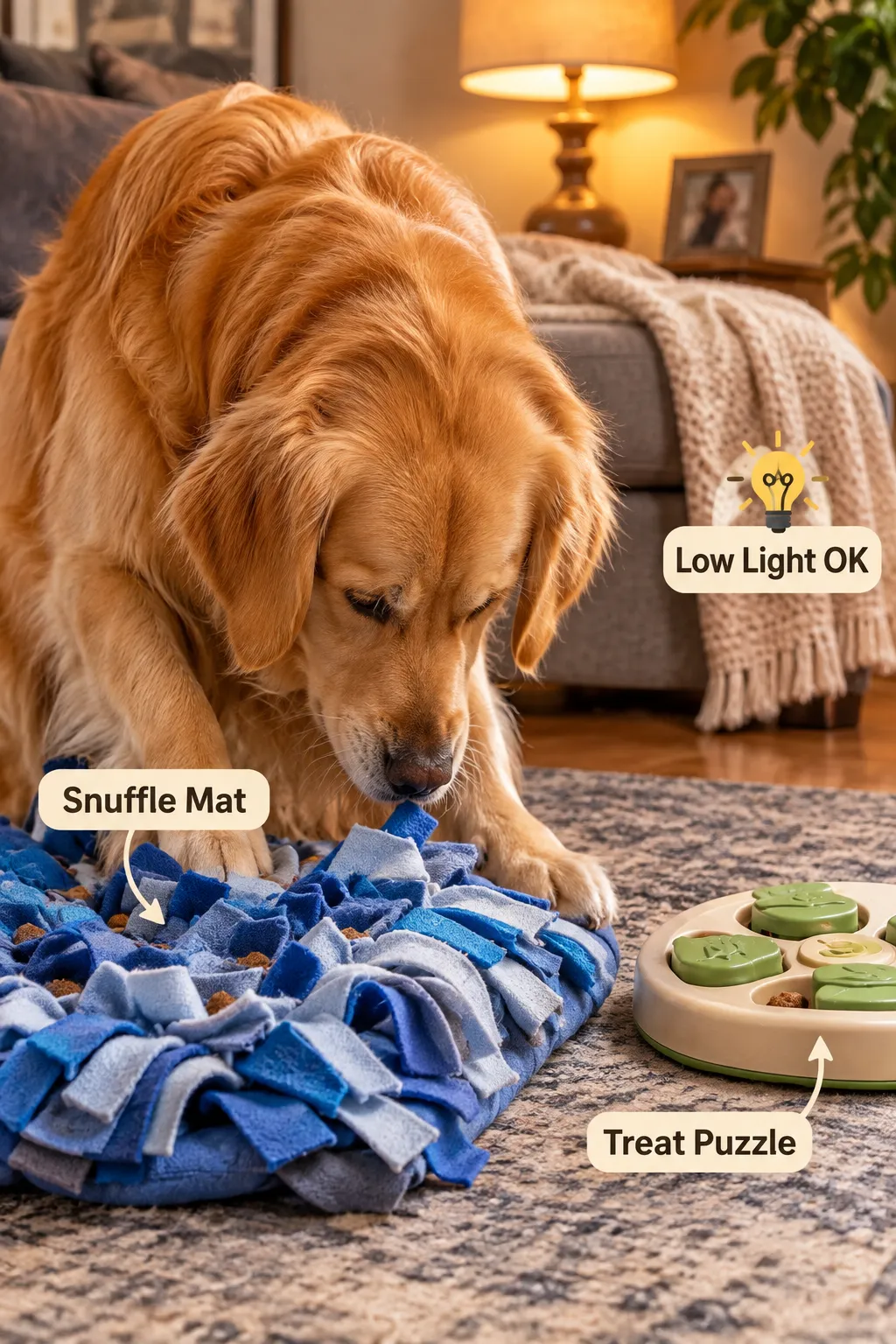
The best interactive toys for winter are ones that require effort to get a reward, like treat-dispensing balls, snuffle mats, and puzzle boards with sliding pieces. These keep a pet occupied longer than a toy that just squeaks.
Good categories to have on hand:
- Treat-dispensing balls: roll to release kibble
- Snuffle mats: fabric strips hide treats, mimic foraging
- Puzzle boards: sliding or lifting pieces hide treats underneath
- Lick mats: smear with peanut butter or wet food, freeze for longer engagement
- Flirt poles: good for indoor chase games with dogs
Rotate toys weekly so pets don’t get bored of the same object. A toy that’s been put away for two weeks feels new again.
Is Indoor Enrichment Different for Cats Versus Dogs?
Yes, cats and dogs need different styles of enrichment even though both benefit from mental stimulation. Cats lean toward vertical space, hunting simulation, and independent play, while dogs generally need more interactive, trainer-led activities.
For cats:
- Window perches for bird and outdoor watching
- Cat trees or shelves for climbing
- Feather wands and laser pointers for hunting simulation
- Puzzle feeders scaled to cat-sized portions
For dogs:
- Training sessions and obedience games
- Tug, fetch, and chase games
- Social play with people or other dogs
- Scent work and hide-and-seek
The RSPCA notes that keeping cats inside and cozy during cold weather is a core winter recommendation, since cats are more prone to wandering off and getting chilled or lost outdoors.
How to Make DIY Puzzle Feeders and Enrichment Toys at Home
You can build an effective puzzle feeder at home in under ten minutes using a muffin tin, tennis balls, and treats. Place treats in the muffin cups and cover each with a tennis ball; your pet has to move the balls to get the reward.
Other easy DIY options:
- Towel roll: scatter treats in a towel, roll it up, let your dog unroll it.
- Cardboard box puzzle: cut flaps and holes, hide treats inside layers of boxes.
- Frozen Kong: stuff with wet food or peanut butter, freeze overnight.
- Egg carton game: hide treats in an empty carton, close the lid.
These cost almost nothing and reuse household items, which makes them ideal for weekly rotation.
How Much Exercise Do Pets Actually Need Indoors?
Most adult dogs need at least 30 to 60 minutes of combined activity a day, and indoor enrichment can cover a meaningful share of that when weather keeps walks short. Cats generally need two to three short play sessions of 10-15 minutes daily.
The MSPCA suggests keeping outdoor walks brief in extreme cold and making up the difference with indoor games, training, and play. This doesn’t replace all outdoor time, but it fills the gap on the coldest days.
Decision rule: if it’s below 20°F (-6°C) or there’s a wind chill warning, swap a long walk for two short bathroom breaks plus 20 minutes of indoor enrichment.
Indoor Enrichment Ideas for Senior Dogs or Anxious Pets
Senior and anxious pets need lower-intensity enrichment focused on comfort and predictability rather than high-energy games. Short scent games, gentle lick mats, and calm training sessions work better than chase games or loud toys.
Good options:
- Snuffle mats at floor level (no jumping required)
- Short, slow scent trails using treats
- Lick mats with calming, familiar flavors
- Gentle grooming sessions as bonding and enrichment combined
Our guide on how to care for senior dogs covers additional comfort strategies for older pets during cold months, including joint support and warmth.
Free or Cheap Ways to Enrich Your Pet Indoors in Winter
You don’t need to spend money on enrichment. Hiding treats in a towel, playing hide-and-seek with family members, or rotating existing toys costs nothing and works just as well as store-bought puzzles.
Free ideas:
- Hide-and-seek with family members calling the pet’s name
- Teaching a new trick using treats you already have
- Rotating toys your pet hasn’t seen in a few weeks
- Letting a cat watch birds from a window perch
If you want more budget-friendly ideas across pet care, check our DIY recipe guide for treats you can make at home using pantry staples.
What Happens If Pets Don’t Get Enough Mental Stimulation?
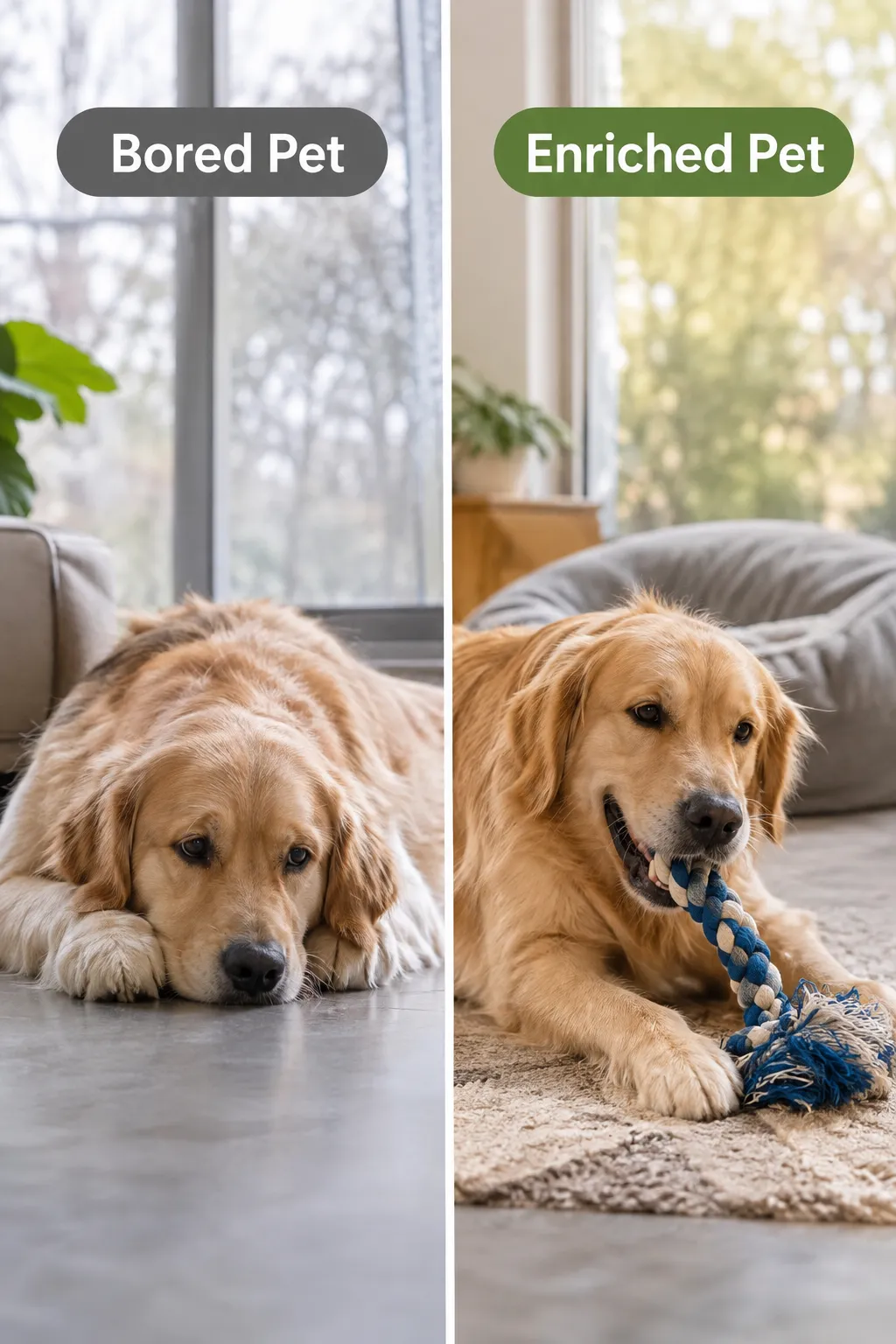
Pets who don’t get enough mental stimulation in winter often develop destructive habits, weight gain, or increased anxiety. Chewing furniture, excessive barking, and over-grooming are common signs in under-stimulated pets.
The Orange County animal safety guidance and similar regional resources note that reduced activity combined with holiday food and treats can quickly lead to winter weight gain in pets. Combining enrichment with portion control keeps both body and mind in check.
How Often Should I Do Indoor Enrichment Activities With My Pet?
Daily enrichment, even just 15-20 minutes, is enough to make a real difference for most pets. Consistency matters more than duration.
A simple weekly rhythm:
- Daily: one puzzle feeder or scent game at mealtime
- 3-4x per week: a short training session
- Weekly: rotate toys, introduce something new
Indoor Enrichment for Small Pets Like Rabbits and Hamsters
Rabbits, hamsters, and other small pets need enrichment too, since they’re often indoors year-round already but can still get bored in winter when household routines change. Chew toys, cardboard tunnels, and foraging boxes work well.
- Rabbits: hay-stuffed cardboard tubes, digging boxes filled with shredded paper
- Hamsters: tunnels, wheel time, scattered seeds in bedding for foraging
Common Mistakes People Make With Indoor Activities
The biggest mistake is offering the same toy every day until the pet loses interest entirely, then assuming the pet “just doesn’t like toys.” Rotation and novelty matter more than toy quantity.
Other mistakes:
- Skipping outdoor time completely instead of shortening it
- Placing a pet’s bed too close to a space heater or fireplace, a real hypothermia and burn risk
- Ignoring skin and paw issues caused by dry winter air and indoor heating
- Giving too many treats during enrichment games without adjusting meals
Do Indoor Cats Need Winter Enrichment or Just Indoor Dogs?
Indoor cats need winter enrichment just as much as dogs, even though cats already spend most of their time inside. Shorter daylight hours and less window activity can still reduce a cat’s natural stimulation.
Keeping cats inside and cozy, as the RSPCA recommends, doesn’t mean leaving them to nap all day. Window perches, scheduled play with wand toys, and rotating puzzle feeders help indoor cats stay mentally sharp through the darkest months.
Keep Your Pet Healthy & Safe This Winter With a Wellness Check
A winter wellness check with your veterinary clinic can catch joint pain, dry skin, or weight changes before they become bigger problems. Many clinics, like those referenced by Cornell’s seasonal safety guidance, recommend a checkup heading into the coldest stretch of the year.
Bring up:
- Skin and coat dryness from indoor heating
- Weight changes from reduced activity
- Joint stiffness, common in senior dogs during cold weather
- Hydration habits, since many pets drink less water in winter
If you notice limping, excessive scratching, or sudden lethargy, seek veterinary care rather than waiting it out. Most clinics post emergency contact numbers and extended winter hours, similar to a 24-hour emergency line like 203-595-2777 that some veterinary medical centers maintain for after-hours concerns.
Table: Winter Enrichment at a Glance
| Pet Type | Best Enrichment | Time Needed |
|---|---|---|
| Dog | Puzzle feeders, training, tug | 20-40 min/day |
| Cat | Window perch, wand play, hunting puzzles | 15-30 min/day |
| Senior Pet | Lick mats, gentle scent games | 10-15 min/day |
| Small Pet | Foraging boxes, chew tunnels | 10-15 min/day |
FAQ
What counts as indoor enrichment for pets?
Indoor enrichment includes food puzzles, scent games, training sessions, climbing structures, and supervised social play that engage a pet’s brain and body without going outside.
How do I keep my dog entertained during winter?
Mix short safe outdoor walks with daily indoor games like hide-and-seek, puzzle feeders, and short training sessions to keep a dog mentally and physically engaged.
Can pets get depressed from less sunlight and cold weather?
Pets can show mood changes like lethargy or clinginess during winter months, though this isn’t the same as clinical depression in humans. Contact your vet if changes persist.
What are the best interactive toys to keep pets busy indoors?
Treat-dispensing balls, snuffle mats, puzzle boards, and lick mats are among the most effective interactive toys for indoor enrichment.
Is indoor enrichment different for cats versus dogs?
Yes. Cats generally benefit from vertical space and hunting simulation, while dogs need more interactive, trainer-led activities like fetch and obedience games.
How can I make DIY puzzle feeders at home?
Use a muffin tin with tennis balls covering treats, a rolled towel with scattered treats, or a frozen stuffed Kong toy, all inexpensive options made from items already at home.
How much exercise do pets actually need indoors?
Most dogs need 30 to 60 minutes of combined activity daily, and cats need two to three short 10-15 minute play sessions, which indoor enrichment can help fulfill during cold weather.
What happens if pets don’t get enough mental stimulation?
Under-stimulated pets often develop destructive chewing, weight gain, excessive barking, or increased anxiety over time.
Conclusion
Winter pet care tips don’t have to stop at boots and sweaters. The real work happens indoors, with puzzle feeders, scent games, and a few minutes of training each day. These habits keep pets physically healthy and mentally sharp when outdoor time is limited by cold, dark days.
Start small: pick one DIY puzzle feeder and one training game this week, then build from there. Pair indoor enrichment with shorter, safer outdoor walks, and don’t hesitate to contact your vet if you notice unusual lethargy, skin issues, or weight changes. For more cold-weather guidance, see our tips on winter dog walking essentials and puppy-proofing your home for a safer indoor season.