

Last updated: July 31, 2026
Quick Answer: Easy-to-digest homemade dog food uses simple, gentle ingredients like cooked chicken, plain brown rice, pumpkin, and eggs to reduce digestive stress in sensitive dogs. These recipes are especially helpful for dogs with upset stomachs, kidney disease, food allergies, or chronic diarrhea. Always check with your vet before switching your dog to a homemade diet full-time.
Key Takeaways
- The best easy-to-digest homemade dog food recipes rely on lean proteins, plain cooked grains, and low-fiber vegetables.
- Dogs with sensitive stomachs do best when food is introduced slowly over 7-10 days.
- Brown rice, cooked chicken, eggs, pumpkin, and sweet potato are among the top vet-recommended ingredients for digestive health.
- Homemade dog food should be nutritionally complete – most recipes need added supplements like calcium and omega-3s.
- A vet or board-certified veterinary nutritionist should review any long-term homemade diet plan.
- Homemade food typically lasts 3-4 days in the fridge and up to 3 months in the freezer.
- Senior dogs, dogs with kidney disease, and dogs recovering from illness benefit most from fresh, homemade meals.
- Bone broth is a great hydration booster and digestion aid for dogs with kidney disease or poor appetites.
What Makes Dog Food Easy to Digest
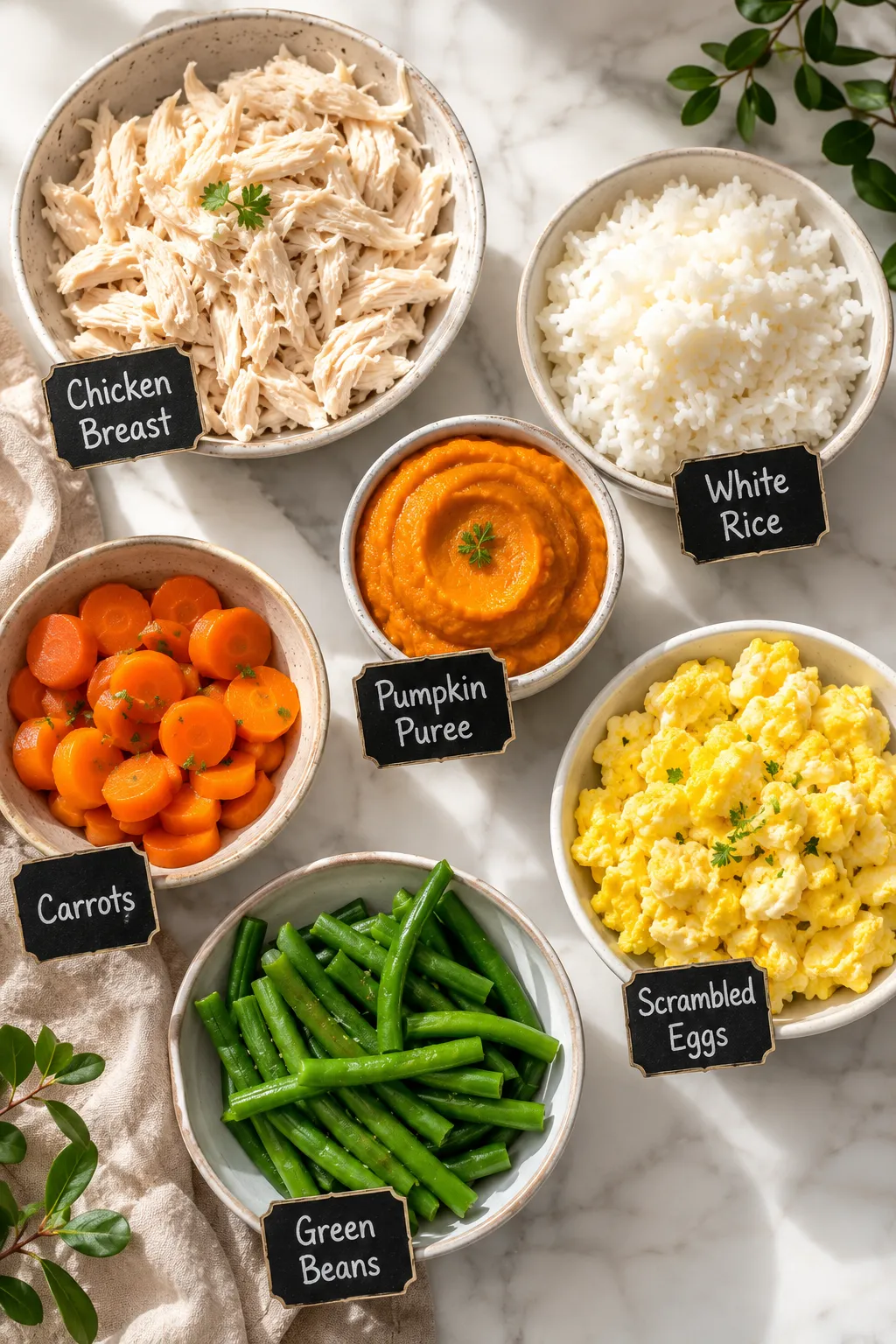
The most digestible dog food contains lean protein, simple cooked carbohydrates, and low-fat ingredients that don’t stress the gut. Foods that are highly processed, high in fat, or loaded with artificial additives are much harder for a dog’s digestive system to break down.
When we talk about easy-to-digest homemade dog food, we’re really talking about meals that are as close to whole, natural food as possible. Think plain cooked chicken, white or brown rice, pumpkin puree, and scrambled eggs. These are gentle on the stomach and easy for dogs to absorb.
The Science Behind Digestibility
According to the American Kennel Club, digestibility in dog food refers to how much of the food a dog can actually absorb and use. A highly digestible food means less waste, better nutrient absorption, and a healthier gut overall.
Here’s what makes a food easy to digest for dogs:
- Low fat content – Fat slows digestion and can trigger pancreatitis in sensitive dogs.
- Lean protein – Chicken breast, turkey, and eggs are easier to process than red meats.
- Simple carbohydrates – Plain cooked rice, oatmeal, and sweet potato are gentle on the gut.
- Minimal fiber – Too much fiber can cause gas and loose stools in dogs with sensitive stomachs.
- No artificial additives – Preservatives, colorings, and flavor enhancers can irritate the digestive tract.
Why Kibble Can Be Hard on Some Dogs
Many commercial dog foods contain rendered by-products, high levels of fat, and synthetic preservatives. For a dog with a sensitive stomach, these ingredients can cause chronic loose stools, gas, vomiting, or poor coat condition.
That’s one reason so many dog owners – like the community at thismessisours – have switched to homemade meals. Meg, the creator behind thismessisours, says the change was life-changing for her dog. And she’s not alone. Thousands of dog owners reply to her posts saying the same thing.
Our Journey with a Dog with Kidney Disease
Kidney disease is one of the most common reasons dog owners start making homemade food. A dog with kidney disease needs a carefully controlled diet – lower in phosphorus, moderate in high-quality protein, and higher in moisture.
When a dog is diagnosed with chronic kidney disease (CKD), the vet often says commercial kibble just doesn’t cut it anymore. That’s when homemade food becomes not just a preference, but a necessity.
Why Homemade Food Helps Dogs with Kidney Disease
The American Animal Hospital Association (AAHA) says nutrition is a cornerstone of managing chronic kidney disease in dogs. A homemade diet gives you full control over phosphorus, sodium, and protein levels in a way that most commercial foods don’t.
Meg from thismessisours says she started making homemade dog food after her dog was diagnosed with kidney disease. She says the transformation was remarkable – better energy, improved coat, and fewer bad days. Her recipe became the foundation of what many people now know as the Easy Homemade Dog Food recipe on her site.
The comments section on her posts is full of people who reply with stories just like hers. One reader says, “Thank you so much, this recipe saved my dog’s life.” Another says, “I’ve been making this for about a year now and my dog is doing so much better.”
Hydration is VERY Important for Dogs with Kidney Disease
Dogs with kidney disease need much more water than healthy dogs. Their kidneys struggle to concentrate urine, so they need extra fluid intake to stay hydrated and flush toxins.
Here’s how to boost hydration in your dog’s diet:
- Add warm water or broth to every meal – This increases total fluid intake without any effort.
- Make bone broth – A dog-friendly bone broth recipe is one of the best ways to add moisture and minerals to a kidney dog’s diet.
- Use wet food or fresh food – Fresh homemade food contains about 70-80% moisture, compared to only 10% in dry kibble.
- Offer multiple water bowls – Place them around the house so your dog always has easy access.
💧 Pro tip: A dog with kidney disease should drink about 1 ounce of water per pound of body weight per day. A 20-pound dog needs at least 20 ounces of water daily.
What About a Raw Diet? Let’s Get That Out of the Way First
When people find out you make your own dog food at home, they almost always ask about raw diets. It’s a fair question, and it’s worth addressing directly before we get into the recipes.
A raw diet – often called BARF (Biologically Appropriate Raw Food) – involves feeding dogs uncooked meat, raw bones, and sometimes raw vegetables. Supporters say it’s more natural and closer to what dogs ate before domestication.
The Case For and Against Raw Feeding
The honest answer is that raw diets can work for some healthy dogs, but they carry real risks – especially for dogs with digestive issues, kidney disease, or compromised immune systems.
The FDA has issued guidance saying raw pet food diets can be dangerous because they may contain harmful bacteria like Salmonella and Listeria. These bacteria can make both dogs and their owners sick.
For dogs with sensitive stomachs or kidney disease, the risks are even higher:
- Raw meat is harder to digest than cooked meat for dogs with gut issues.
- Raw bones can splinter and cause intestinal blockages or perforations.
- Bacterial contamination is a serious concern for immunocompromised dogs.
So for this article, we’re focusing on cooked, easy-to-digest homemade dog food – the kind that’s safe, gentle, and vet-friendly.
Best Ingredients for Dogs with Sensitive Stomachs
The best ingredients for a dog with a sensitive stomach are lean, cooked, and simple. Chicken breast, plain brown rice, white rice, pumpkin, sweet potato, eggs, and plain Greek yogurt are all excellent choices that vets commonly recommend.
Choosing the right ingredients is the most important step in making easy-to-digest homemade dog food. The wrong ingredients – even healthy ones – can trigger flare-ups in a sensitive dog.
Top Ingredients to Use
Here’s a breakdown of the best ingredients for sensitive stomachs and why they work:
Proteins:
- Cooked chicken breast – Lean, mild, and highly digestible. One of the most recommended proteins for dogs with upset stomachs.
- Cooked turkey – Similar to chicken, low in fat, easy on the gut.
- Scrambled or hard-boiled eggs – Eggs are one of the most digestible protein sources available. Dogs love them, and they’re packed with amino acids.
- Cooked white fish – Mild and easy to digest, great for dogs that don’t do well with poultry.
Carbohydrates:
- White rice – The classic bland diet staple. Easy to digest and gentle on inflamed intestines.
- Brown rice – Slightly more nutritious than white rice, with more fiber. Can dogs eat brown rice? Yes! Brown rice is safe and healthy for most dogs. It provides B vitamins, magnesium, and antioxidants. Just cook it thoroughly so it’s soft and easy to chew.
- Plain oatmeal – Soothing for the gut, good source of soluble fiber.
- Sweet potato – Naturally sweet, rich in beta-carotene, and easy to digest when cooked and mashed.
Vegetables:
- Plain pumpkin puree – One of the best natural remedies for both diarrhea and constipation in dogs. Rich in soluble fiber that regulates digestion.
- Steamed carrots – Gentle, slightly sweet, and easy to digest when cooked soft.
- Zucchini – Low calorie, easy to digest, and most dogs love it.
- Green beans – Good source of fiber and vitamins, safe for most dogs.
Extras:
- Plain Greek yogurt – Contains probiotics that support gut health. Use plain, unsweetened varieties only.
- Bone broth – Adds hydration, minerals, and flavor. Great for picky eaters and dogs with kidney disease.
Ingredients to Avoid
Some ingredients are toxic or just too hard on a sensitive stomach:
| Avoid | Why |
|---|---|
| Onions and garlic | Toxic to dogs – can cause anemia |
| Grapes and raisins | Toxic – can cause kidney failure |
| Xylitol | Extremely toxic – found in some peanut butters |
| High-fat meats | Can trigger pancreatitis |
| Spices and seasoning | Irritates the digestive tract |
| Corn and soy | Common allergens for sensitive dogs |
| Raw bones | Risk of splintering and bacterial contamination |
For a complete guide on what dogs can and can’t eat safely, check out this helpful resource on what dogs can eat and what to avoid.
Can Dogs Eat Brown Rice? Homemade Meals That Your Pups Will Love
Yes, dogs can eat brown rice, and it’s actually a great addition to homemade dog food recipes. Brown rice is a whole grain that provides more fiber, vitamins, and minerals than white rice, making it a nutritious base for homemade meals.
Brown rice is one of the most popular ingredients in homemade dog food, and for good reason. It’s filling, nutritious, and most dogs love the taste and texture.
Brown Rice vs. White Rice for Dogs
Both are safe for dogs, but they serve slightly different purposes:
- White rice is better for dogs with active diarrhea or an upset stomach because it’s lower in fiber and easier to digest quickly.
- Brown rice is better for everyday feeding because it has more nutrients and provides sustained energy.
Many homemade dog food recipes use a combination of both. For example, you might use white rice during a flare-up, then transition to brown rice once your dog is feeling better.
A Simple Brown Rice and Chicken Recipe
This is one of the most beloved recipes in the homemade dog food community. It’s the kind of recipe that Meg from thismessisours says she makes weekly for her dogs.
Ingredients:
- 2 cups cooked brown rice
- 1 cup cooked, shredded chicken breast (no seasoning)
- 1/2 cup steamed carrots, diced
- 1/2 cup steamed green beans, chopped
- 1/4 cup plain pumpkin puree
Instructions:
- Cook the brown rice according to package directions. Let it cool.
- Boil or bake chicken breast with no seasoning. Shred into small pieces.
- Steam carrots and green beans until soft.
- Combine all ingredients in a large bowl.
- Add pumpkin puree and mix well.
- Store in an airtight container in the fridge for up to 4 days.
Cook time: About 30 minutes. Total time: 35 minutes including cooling.
This recipe makes about 4-5 cups of food, which is roughly 2-3 days of meals for a medium-sized dog depending on their size and daily caloric needs.
Can Dogs Eat Eggs? The Incredible, Edible Treat All Dogs Love
Yes, dogs can eat eggs, and eggs are actually one of the most nutritious and easy-to-digest protein sources you can add to homemade dog food. Cooked eggs provide high-quality protein, essential amino acids, and vitamins like B12 and riboflavin.
Eggs are a superstar ingredient in homemade dog food recipes. They’re cheap, easy to prepare, and dogs absolutely love them. Whether you scramble them, hard-boil them, or mix them into a recipe, eggs are a great addition to any easy-to-digest homemade dog food.
How to Serve Eggs to Dogs
- Scrambled eggs – Cook in a non-stick pan with no butter, oil, or seasoning. Plain scrambled eggs are perfect for dogs with upset stomachs.
- Hard-boiled eggs – Easy to chop and add to any recipe. Great for meal prep.
- Poached eggs – Another low-fat option that’s easy on the digestive system.
Important: Always cook eggs before feeding them to your dog. Raw eggs can contain Salmonella, and raw egg whites contain avidin, a protein that blocks biotin absorption.
According to the American Kennel Club, eggs are safe for dogs in moderation. One egg per day is generally fine for most adult dogs, but check with your vet if your dog has specific health conditions.
Egg and Pumpkin Scramble Recipe
This is a quick, easy recipe that works great as a meal or a topper for regular food.
Ingredients:
- 2 eggs
- 2 tablespoons plain pumpkin puree
- 1/4 cup cooked white rice
Instructions:
- Scramble the eggs in a non-stick pan with no oil or seasoning.
- Add pumpkin puree and stir to combine.
- Mix with cooked white rice.
- Let cool completely before serving.
This makes about 1 cup of food – a good meal for a small dog or a topper for a larger dog.
How to Make Homemade Dog Food for Digestive Issues – 11 Recipes
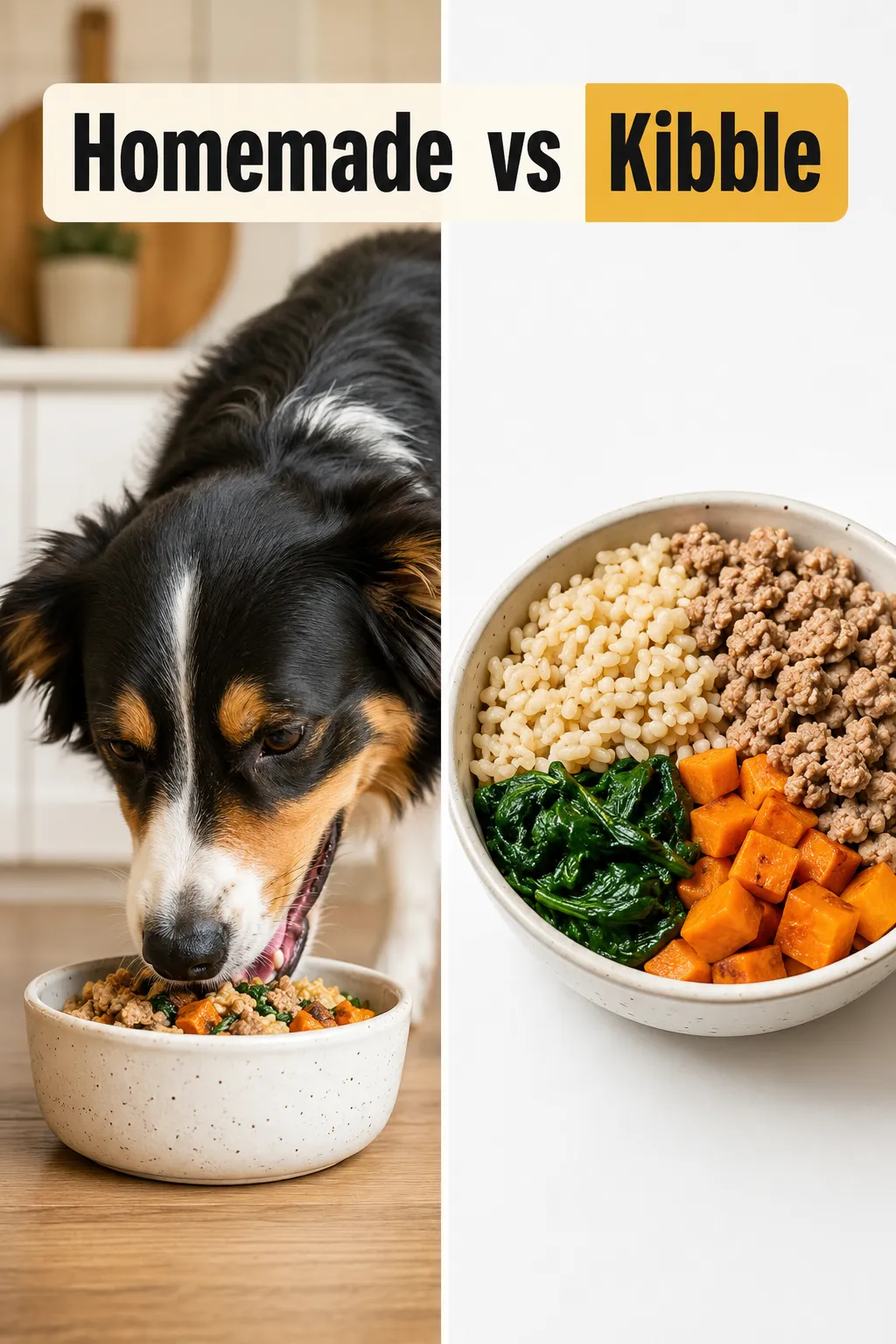
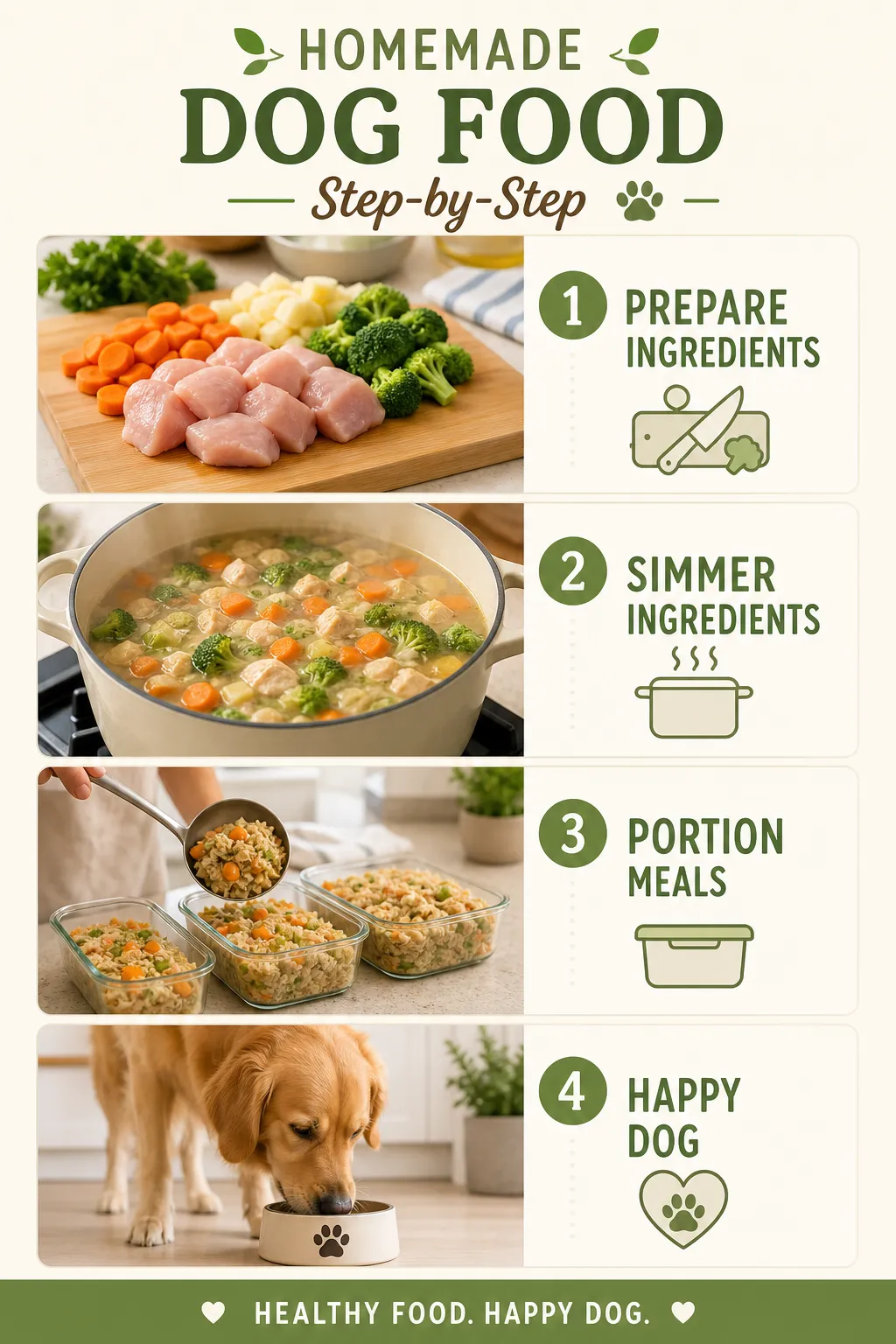
Making easy-to-digest homemade dog food for a dog with digestive issues comes down to choosing gentle ingredients, cooking everything thoroughly, and keeping portions appropriate for your dog’s size and health needs. Here are 11 recipes that are gentle, nutritious, and dogs love.
These are the recipes that the homemade dog food community – including readers who reply to posts on sites like thismessisours – says have made the biggest difference for their dogs.
Recipe 1: Classic Chicken and White Rice Bland Diet
This is the go-to recipe when your dog has an upset stomach. It’s simple, gentle, and almost universally tolerated.
Ingredients:
- 1 pound boneless, skinless chicken breast
- 2 cups white rice
- 4 cups water
Instructions:
- Boil chicken breast in water until fully cooked (about 20 minutes).
- Remove chicken and shred into small pieces.
- Cook white rice in the chicken broth left in the pot.
- Combine shredded chicken with cooked rice.
- Let cool completely before serving.
Cook time: 25 minutes. Total time: 30 minutes.
Feeding note: Feed small amounts frequently rather than one large meal. For a 20-pound dog, about 1 cup per day divided into 2-3 small meals is a good starting point.
Recipe 2: Turkey, Sweet Potato, and Pumpkin Bowl
Turkey is one of the leanest proteins available, and sweet potato adds natural sweetness and beta-carotene. This recipe is a favorite among dogs love homemade meals.
Ingredients:
- 1 pound ground turkey (cooked, no seasoning)
- 1 cup mashed sweet potato
- 1/4 cup plain pumpkin puree
- 1 cup cooked brown rice
Instructions:
- Brown ground turkey in a pan with no oil or seasoning. Drain any fat.
- Bake or microwave sweet potato until soft. Mash well.
- Combine turkey, sweet potato, pumpkin puree, and brown rice.
- Mix thoroughly and let cool before serving.
Cook time: 30 minutes. Total time: 35 minutes.
Storage: Store in an airtight container in the fridge for up to 4 days, or freeze in portion-sized bags for up to 3 months.
This recipe makes about 4 cups of food. It’s a great recipe for dogs transitioning off a bland diet back to regular meals.
Recipe 3: Egg and Oatmeal Breakfast Bowl
This is a fantastic morning recipe for dogs that do well with eggs and need a gentle, filling start to the day.
Ingredients:
- 2 eggs, scrambled (no butter or oil)
- 1/2 cup plain cooked oatmeal
- 1 tablespoon plain pumpkin puree
- 1 teaspoon plain Greek yogurt
Instructions:
- Scramble eggs in a dry non-stick pan.
- Cook plain oatmeal with water (no milk, no sugar).
- Combine eggs, oatmeal, pumpkin puree, and Greek yogurt.
- Mix well and let cool before serving.
This makes about 1 cup of food – perfect for a small dog or as a topper for a larger dog.
Recipe 4: Salmon and Sweet Potato Recipe
Fish is an excellent protein source for dogs with food sensitivities to chicken or turkey. Salmon is rich in omega-3 fatty acids, which support both gut health and skin health.
Ingredients:
- 1 can (14.75 oz) wild-caught salmon in water, drained
- 1 cup mashed sweet potato
- 1/2 cup cooked white rice
- 1/4 cup steamed zucchini, diced
Instructions:
- Drain canned salmon and check for any large bones (small soft bones are fine).
- Mash sweet potato until smooth.
- Combine salmon, sweet potato, cooked white rice, and zucchini.
- Mix well and serve at room temperature.
Cook time: 20 minutes. Total time: 25 minutes.
This recipe is a great option for dogs with chicken allergies or sensitivities. It’s also a recipe that dogs love because of the strong, appealing smell of salmon.
Recipe 5: Chicken, Pumpkin, and Carrot Slow Cooker Recipe
This is the recipe Meg from thismessisours says she makes most often. It’s easy to make in bulk, and the slow cooker does most of the work.
Ingredients:
- 2 pounds boneless, skinless chicken thighs
- 2 cups brown rice
- 1 cup plain pumpkin puree
- 1 cup diced carrots
- 1/2 cup green beans, chopped
- 4 cups low-sodium chicken broth or water
Instructions:
- Add all ingredients to a slow cooker.
- Cook on low for 6-8 hours or on high for 3-4 hours.
- Shred chicken with two forks.
- Stir everything together until well combined.
- Let cool completely before portioning.
Cook time: 6-8 hours (slow cooker). Total time: About 8 hours.
This recipe makes about 8-10 cups of food. Portion into daily servings and freeze what you won’t use within 4 days.
For more slow cooker dog food ideas, check out these vet-approved crockpot dog food recipes.
Recipe 6: Ground Beef and Vegetable Rice Bowl
This recipe is a good option for dogs that prefer red meat, but it’s made with lean ground beef to keep the fat content low.
Ingredients:
- 1 pound lean ground beef (90% lean or higher)
- 2 cups cooked white rice
- 1/2 cup steamed carrots, diced
- 1/2 cup steamed spinach, chopped
- 1/4 cup plain pumpkin puree
Instructions:
- Brown ground beef in a pan with no seasoning. Drain all fat thoroughly.
- Cook white rice and let cool.
- Steam carrots and spinach until soft.
- Combine all ingredients and mix well.
- Let cool before serving.
Important: Always drain beef fat completely. Excess fat is a major trigger for pancreatitis and digestive upset in dogs.
Recipe 7: Turkey and Zucchini with Brown Rice
This is a lighter recipe that works well for dogs that need to lose a little weight while still eating a fresh food diet.
Ingredients:
- 1 pound ground turkey
- 1 cup cooked brown rice
- 1 cup diced zucchini, steamed
- 1/2 cup plain pumpkin puree
- 2 eggs, scrambled
Instructions:
- Cook ground turkey in a pan with no oil or seasoning. Drain fat.
- Scramble eggs separately with no butter or oil.
- Steam zucchini until soft.
- Combine turkey, brown rice, zucchini, pumpkin puree, and eggs.
- Mix well and let cool before serving.
This recipe is low in calories and high in protein – a great combination for dogs that need a lighter diet.
Recipe 8: Chicken and Oatmeal Comfort Bowl
Oatmeal is one of the most soothing foods for a dog’s digestive system. This recipe combines the digestive benefits of oatmeal with the lean protein of chicken.
Ingredients:
- 1 pound cooked chicken breast, shredded
- 1 cup plain cooked oatmeal
- 1/4 cup plain pumpkin puree
- 1/4 cup steamed carrots, mashed
Instructions:
- Cook chicken breast with no seasoning and shred.
- Cook oatmeal with water (no milk, no sugar, no flavoring).
- Combine all ingredients and mix well.
- Let cool before serving.
This recipe is especially good for dogs recovering from stomach illness or surgery.
Recipe 9: Fish and Rice Easy Homemade Dog Food Recipe
White fish like cod or tilapia is one of the most gentle proteins for dogs with digestive issues. This is a simple, clean recipe that even the pickiest dogs tend to enjoy.
Ingredients:
- 1 pound cod or tilapia fillet, cooked
- 2 cups cooked white rice
- 1/2 cup steamed peas
- 1/4 cup plain pumpkin puree
Instructions:
- Bake or poach fish with no seasoning until fully cooked.
- Flake fish into small pieces, removing any bones.
- Combine fish, cooked white rice, peas, and pumpkin puree.
- Mix well and let cool before serving.
This is a great recipe for dogs with multiple food sensitivities, as fish and rice are among the least allergenic combinations available.
Recipe 10: Senior Dog Chicken and Bone Broth Bowl
This recipe is specifically designed for senior dogs who need easy-to-digest, moisture-rich food. Senior dogs often have reduced kidney function and need extra hydration.
Ingredients:
- 1 pound cooked chicken breast, shredded
- 1 cup cooked white rice
- 1/2 cup plain pumpkin puree
- 1 cup dog-friendly bone broth (see recipe below)
- 1/4 cup steamed carrots, mashed
Instructions:
- Combine all ingredients in a bowl.
- Add warm bone broth to create a soupy consistency.
- Serve warm (not hot) to encourage eating.
This recipe is especially good for senior dogs that have lost interest in food or have trouble chewing. The bone broth adds flavor, hydration, and minerals that support joint and kidney health.
For more ideas tailored to older dogs, see these homemade dog food recipes for senior dogs.
Recipe 11: Pumpkin and Egg Recovery Recipe
This is the simplest recipe on the list, and it’s perfect for a dog that’s just recovering from vomiting or diarrhea and needs something very gentle.
Ingredients:
- 2 eggs, scrambled (no butter or oil)
- 1/2 cup plain pumpkin puree
- 1/4 cup plain cooked white rice
Instructions:
- Scramble eggs in a dry non-stick pan.
- Combine with pumpkin puree and white rice.
- Mix well and serve at room temperature.
This makes about 1 cup of food. Feed small amounts every few hours rather than one large meal.
Dog-Friendly Bone Broth Recipe
Bone broth is one of the best additions to any easy-to-digest homemade dog food plan. It’s rich in collagen, gelatin, and minerals, and it provides a significant hydration boost for dogs that don’t drink enough water on their own.
Making bone broth at home is easy and much cheaper than buying commercial versions. Plus, you can make sure it contains no onions, garlic, or other ingredients that are toxic to dogs.
Simple Dog-Friendly Bone Broth Recipe
Ingredients:
- 2-3 pounds raw or cooked chicken bones (or beef marrow bones)
- 8-10 cups water
- 2 tablespoons apple cider vinegar (helps extract minerals from bones)
- 1/2 cup diced carrots (optional)
- 1/2 cup diced celery (optional)
Instructions:
- Place bones in a large pot or slow cooker.
- Add water and apple cider vinegar.
- Add carrots and celery if using.
- Bring to a boil, then reduce to a simmer.
- Simmer for 12-24 hours (or 8-10 hours in a slow cooker on low).
- Strain out all bones and solids – this is very important. Never feed cooked bones to dogs, as they can splinter.
- Let cool and refrigerate.
- Skim off any fat that solidifies on top.
- Store in the fridge for up to 5 days, or freeze in ice cube trays for up to 3 months.
Cook time: 12-24 hours. Total time: About 24 hours including cooling.
For a detailed guide on making bone broth for dogs, check out this homemade bone marrow broth recipe.
How to Use Bone Broth
- Pour over dry kibble to encourage eating and add hydration.
- Mix into homemade food recipes for extra flavor and moisture.
- Freeze in ice cube trays and give as a cool treat on hot days.
- Add to water bowl for dogs that don’t drink enough.
Homemade Dog Food Seasoning – What’s Safe and What Isn’t
Homemade dog food should never contain the seasonings we use in human food. No salt, no garlic, no onion powder, no pepper, no herbs like oregano or thyme. Dogs have different metabolisms than humans, and many common seasonings are toxic or irritating to their digestive systems.
This is one of the most important rules in making homemade dog food, and it’s one that new home cooks sometimes overlook.
Safe “Seasonings” for Dog Food
While traditional seasonings are off the table, there are a few safe additions that can make homemade food more appealing:
- Plain pumpkin puree – Adds sweetness and improves palatability.
- Bone broth – Adds rich flavor without any harmful ingredients.
- Plain Greek yogurt – A small dollop adds creaminess and probiotics.
- A tiny drizzle of fish oil – Adds omega-3s and makes food smell more appealing to dogs.
What to Absolutely Avoid
- Salt – Even small amounts can cause sodium ion poisoning in dogs.
- Garlic and onion – Both are toxic to dogs and can cause hemolytic anemia.
- Nutmeg – Toxic to dogs.
- Xylitol – Found in some artificial sweeteners, extremely toxic.
- Pepper and hot spices – Irritate the digestive tract.
The rule of thumb: if you wouldn’t feed it to a baby, don’t feed it to your dog.
How Much Homemade Dog Food Should I Feed My Dog Daily
The general guideline is to feed adult dogs about 2-3% of their ideal body weight per day in homemade food. For a 30-pound dog, that’s roughly 0.6 to 0.9 pounds (or about 1.5 to 2 cups) of homemade food per day, split into two meals.
Getting the portions right is just as important as getting the recipe right. Too little food leads to malnutrition; too much leads to obesity and digestive stress.
Feeding Guidelines by Dog Size
Here’s a general starting point. Always adjust based on your dog’s activity level, age, and health condition:
| Dog Weight | Daily Food Amount | Meals Per Day |
|---|---|---|
| Under 10 lbs | 1/4 to 1/2 cup | 2-3 |
| 10-25 lbs | 1/2 to 1.5 cups | 2 |
| 25-50 lbs | 1.5 to 2.5 cups | 2 |
| 50-75 lbs | 2.5 to 3.5 cups | 2 |
| Over 75 lbs | 3.5 to 4.5 cups | 2 |
These are estimates. The best way to determine the right amount is to work with your vet and monitor your dog’s weight over time.
How Many Meals Per Day
Most adult dogs do well with 2 meals per day. Dogs with digestive issues often do better with 3 smaller meals per day, as smaller portions are easier on the gut.
A reader on thismessisours says: “I started feeding him 3 small meals per day instead of 2, and it made a huge difference. Thank you so much for that tip, Meg!”
Another reader replies: “Same here! My dog was vomiting every morning on 2 meals a day. Switched to 3 and it stopped completely.”
When Your Dog Has an Upset Stomach
When your dog has an upset stomach, reduce the amount of food and switch to the bland diet recipes (Recipe 1 or Recipe 11 from above). Feed small amounts every 3-4 hours rather than one or two large meals.
If your dog is vomiting or has diarrhea, withhold food for 12-24 hours (but always provide water), then reintroduce food slowly with the bland diet. If symptoms persist for more than 48 hours, see your vet.
For more guidance on helping a sick dog, see our guide on what to give a sick dog naturally.
How Long to Feed a Bland Diet to Dogs – and When to Start Transitioning Back
A bland diet should be fed for 2-5 days after symptoms resolve, not just until the dog seems better. Most vets recommend staying on the bland diet for at least 48-72 hours after the last episode of vomiting or diarrhea.
Rushing the transition back to regular food is one of the most common mistakes dog owners make. The gut needs time to heal, and going back to rich food too soon can trigger a relapse.
When to Start Transitioning Back
Start transitioning back to regular food when:
- Your dog has had no vomiting for at least 48 hours.
- Stools are firm and normal for at least 2 days.
- Your dog is alert, active, and interested in food.
- Your dog is drinking water normally.
How to Transition Back Gradually
Don’t switch back to regular food all at once. A gradual transition over 7-10 days is much gentler on the digestive system:
- Days 1-3: 75% bland diet, 25% regular food.
- Days 4-6: 50% bland diet, 50% regular food.
- Days 7-9: 25% bland diet, 75% regular food.
- Day 10: 100% regular food.
This same gradual approach applies when you’re first switching your dog from commercial kibble to homemade food. A sudden switch can cause digestive upset even in healthy dogs.
Easy to Digest Dog Food for Dogs with Diarrhea
For dogs with diarrhea, the most effective easy-to-digest foods are plain cooked white rice, boiled chicken breast, plain pumpkin puree, and plain scrambled eggs. These ingredients firm up stools, soothe the intestinal lining, and provide gentle nutrition without stressing the gut.
Diarrhea is one of the most common reasons dog owners search for homemade dog food recipes. It can be caused by dietary indiscretion (eating something they shouldn’t), stress, a sudden food change, or an underlying health condition.
The Pumpkin Trick
Plain canned pumpkin (not pumpkin pie filling) is one of the most effective natural remedies for dog diarrhea. It contains soluble fiber that absorbs excess water in the intestines and firms up loose stools.
According to the American Kennel Club, 1-4 tablespoons of plain pumpkin puree per meal can help resolve mild diarrhea in dogs. The exact amount depends on your dog’s size.
Diarrhea Relief Recipe
Ingredients:
- 1 cup plain cooked white rice
- 1/2 cup boiled chicken breast, shredded
- 2 tablespoons plain pumpkin puree
Instructions:
- Combine all ingredients.
- Feed in small amounts every 3-4 hours.
- Continue for 2-3 days or until stools firm up.
Important: If diarrhea contains blood, is accompanied by vomiting, or lasts more than 48 hours, see your vet immediately.
Can I Feed My Dog Homemade Food Instead of Kibble
Yes, you can feed your dog homemade food instead of commercial kibble, but only if the diet is nutritionally complete and balanced. A homemade diet that lacks essential nutrients like calcium, phosphorus, or certain vitamins can cause serious health problems over time.
This is one of the most common questions in the homemade dog food community, and the answer is nuanced.
The Pros of Switching to Homemade Food
- Full ingredient control – You know exactly what goes into every meal.
- Higher moisture content – Fresh food contains 70-80% moisture vs. 10% in kibble.
- No artificial preservatives – Homemade food is free from the synthetic additives found in many commercial foods.
- Better palatability – Most dogs love fresh food and will eat more enthusiastically.
- Tailored nutrition – You can adjust the recipe based on your dog’s specific health needs.
The Cons to Consider
- Time and effort – Making homemade food takes more time than opening a bag of kibble.
- Cost – Fresh ingredients can be more expensive than budget kibble (but comparable to premium brands).
- Nutritional balance – Getting the balance right requires research and often vet guidance.
- Storage – Homemade food has a shorter shelf life than commercial food.
The Verdict
If you’re willing to put in the time and work with your vet or a veterinary nutritionist, homemade food can be excellent for your dog. Many dogs – especially those with sensitive stomachs, kidney disease, or food allergies – do much better on fresh, homemade meals.
Meg from thismessisours says she’s been making homemade food for her dogs for years and wouldn’t go back. Her community on Instagram is full of people who say the same thing.
Do I Need to Add Supplements to Homemade Dog Food
Yes, most homemade dog food recipes need supplements to be nutritionally complete. At minimum, most homemade diets need added calcium (since most recipes don’t include bones), omega-3 fatty acids, and a multivitamin formulated for dogs.
This is one of the most important things to understand about making homemade dog food. A recipe that looks healthy to us can still be deficient in key nutrients that dogs need.
Essential Supplements for Homemade Dog Food
Here are the supplements most commonly recommended by veterinary nutritionists:
- Calcium – The most critical supplement for homemade diets. Without bones in the recipe, dogs don’t get enough calcium. Add ground eggshell powder (about 1/2 teaspoon per pound of food) or a calcium supplement.
- Omega-3 fatty acids – Fish oil is the best source. Add about 1000mg per 30 pounds of body weight per day.
- Vitamin D – Often deficient in homemade diets. A good dog multivitamin usually covers this.
- Zinc – Important for skin, coat, and immune function.
- Iodine – Important for thyroid function. A small amount of kelp powder can help.
For a complete guide on what vitamins to add to homemade dog food, check out this resource on vitamins to add to homemade dog food.
Working with a Vet
The best approach is to have a board-certified veterinary nutritionist review your recipe and recommend specific supplements. The American College of Veterinary Nutrition has a directory of board-certified specialists who can help.
Many readers who reply to Meg’s posts on thismessisours say that getting a vet review was the most important step they took. One reader says, “My vet helped me add the right supplements and now my dog’s bloodwork is better than it’s ever been. Thank you so much for pushing us to work with our vets!”
Is Homemade Dog Food Cheaper Than Commercial Food
Homemade dog food can be cheaper than premium commercial food, but it’s typically more expensive than budget kibble. The cost depends heavily on the ingredients you choose, where you shop, and how much you make at a time.
Many dog owners are surprised to find that making homemade food is more affordable than they expected, especially when they buy ingredients in bulk or use less expensive proteins like chicken thighs, eggs, and canned fish.
Cost Comparison
Here’s a rough breakdown for a 30-pound dog eating homemade food:
- Chicken breast – About $3-4 per pound. One pound makes roughly 2 days of food for a 30-pound dog.
- Brown rice – About $1 per pound. Very economical.
- Vegetables – Carrots, zucchini, and green beans are all very affordable.
- Eggs – About $3-5 per dozen. Very cost-effective protein.
- Total estimated cost – About $2-4 per day for a 30-pound dog.
Compare that to premium commercial dog food, which can cost $3-6 per day for the same size dog. Budget kibble is cheaper at $1-2 per day, but the ingredient quality is often much lower.
Ways to Save Money on Homemade Dog Food
- Buy chicken thighs instead of breast – they’re cheaper and still lean enough for most dogs.
- Buy in bulk and freeze portions.
- Use eggs as a protein source several times per week – they’re one of the cheapest high-quality proteins available.
- Shop sales and stock up on rice and canned pumpkin when prices are low.
- Make large batches and freeze in weekly portions.
For more budget-friendly ideas, check out these homemade dog food recipes on a budget.
What to Avoid When Making Dog Food at Home
The most important things to avoid when making homemade dog food are toxic ingredients (onions, garlic, grapes, xylitol), high-fat meats without draining, raw or cooked bones that can splinter, and nutritional imbalances from not adding the right supplements.
Making mistakes with homemade dog food can be serious, so it’s worth going over the most common ones in detail.
The Most Common Mistakes
1. Using toxic ingredients
This is the most dangerous mistake. Always double-check every ingredient before adding it to a recipe. Common toxic foods include onions, garlic, grapes, raisins, macadamia nuts, chocolate, and xylitol.
2. Not draining fat from meat
High-fat food is a major trigger for pancreatitis in dogs. Always drain ground beef and turkey thoroughly, and remove skin from chicken before cooking.
3. Adding seasoning
Never add salt, pepper, garlic powder, onion powder, or any other seasoning to dog food. Dogs don’t need it, and many seasonings are harmful.
4. Not adding supplements
A recipe that looks complete to us is often missing key nutrients like calcium and omega-3s. Don’t skip the supplements.
5. Switching too fast
A sudden switch from kibble to homemade food can cause digestive upset even in healthy dogs. Always transition gradually over 7-10 days.
6. Not consulting a vet
This is the mistake that can have the most serious long-term consequences. A vet or veterinary nutritionist should review any long-term homemade diet plan.
What Vegetables Are Safe in Homemade Dog Food
The safest vegetables for dogs include carrots, green beans, peas, zucchini, sweet potato, pumpkin, spinach, broccoli (in small amounts), and cucumber. These are all easy to digest, nutritious, and well-tolerated by most dogs.
Vegetables add fiber, vitamins, and minerals to homemade dog food, but not all vegetables are safe. Knowing which ones to use and which to avoid is essential.
Safe Vegetables for Dogs
- Carrots – Rich in beta-carotene and fiber. Great cooked or raw.
- Green beans – Low calorie, high fiber, safe for most dogs.
- Peas – Good source of protein and vitamins. Use fresh or frozen, not canned (too much sodium).
- Zucchini – Very easy to digest, low calorie.
- Sweet potato – Rich in vitamins A, B6, and C. Cook and mash before serving.
- Pumpkin – One of the best vegetables for digestive health.
- Spinach – Rich in iron and antioxidants. Use in small amounts only – too much can cause kidney issues in dogs prone to stones.
- Broccoli – Safe in small amounts, but can cause gas in large quantities.
- Cucumber – Very hydrating, low calorie, easy to digest.
Vegetables to Avoid
- Onions and leeks – Toxic.
- Garlic – Toxic, even in small amounts.
- Avocado – Contains persin, which can cause vomiting and diarrhea.
- Wild mushrooms – Many varieties are toxic.
- Rhubarb – Toxic to dogs.
- Corn on the cob – The cob is a choking and blockage hazard.
For a complete guide to dog-safe vegetables, see our article on the best vegetables for dogs.
What Kind of Snacks Can I Feed My Dog with Kidney Disease
Dogs with kidney disease need low-phosphorus, low-sodium snacks that are easy to digest and don’t stress the kidneys. Good options include small pieces of cooked chicken, plain rice cakes, blueberries, watermelon (seedless), and cucumber slices.
Snacks are an important part of any dog’s day, but for a dog with kidney disease, the wrong snack can do real damage. The goal is to find treats that are low in phosphorus and protein while still being enjoyable.
Best Snacks for Dogs with Kidney Disease
- Cooked chicken breast pieces – Small amounts of lean, cooked chicken are fine as a treat.
- Blueberries – Low phosphorus, antioxidant-rich, and most dogs love them.
- Watermelon – Seedless, rind removed. Great hydration boost and low phosphorus.
- Cucumber slices – Very hydrating and gentle on the kidneys.
- Plain rice cakes – Low phosphorus and easy to digest.
- Bone broth ice cubes – A great treat that also boosts hydration.
Snacks to Avoid for Kidney Dogs
- Commercial dog treats – Most are high in phosphorus and sodium.
- Dairy products – High in phosphorus.
- High-protein treats – Too much protein stresses the kidneys.
- Salty snacks – Sodium increases kidney workload.
A vet should always be consulted about the specific dietary needs of a dog with kidney disease. What works for one dog may not work for another, depending on the stage of the disease.
How Long Does Homemade Dog Food Last in the Fridge
Homemade dog food lasts 3-4 days in the refrigerator when stored in an airtight container. For longer storage, homemade dog food can be frozen for up to 2-3 months in sealed freezer bags or containers.
Proper storage is critical for food safety. Unlike commercial kibble, homemade food doesn’t contain preservatives, so it spoils much faster.
Storage Tips
- Use airtight containers – Glass containers with tight lids are ideal.
- Cool completely before storing – Never put hot food directly in the fridge, as it raises the temperature and can cause bacterial growth.
- Label with the date – Always write the date on containers so you know when to use them by.
- Freeze in portions – Freeze individual daily portions so you can thaw just what you need.
- Thaw safely – Thaw frozen dog food in the refrigerator overnight, not on the counter.
Signs That Homemade Dog Food Has Gone Bad
- Off smell – fresh dog food should smell like cooked meat and vegetables, not sour or rotten.
- Visible mold.
- Slimy texture.
- Color changes.
If in doubt, throw it out. Food poisoning in dogs is a serious issue and much easier to prevent than treat.
Is Homemade Dog Food Better Than Prescription Diet Food
Homemade dog food can be as good as or better than prescription diet food when it’s properly balanced and vet-reviewed. However, prescription diets are formulated to precise nutritional standards for specific health conditions, so they have an advantage in consistency and reliability.
This is a question many dog owners ask when their vet prescribes a commercial therapeutic diet for kidney disease, pancreatitis, or food allergies.
When Prescription Diets Make Sense
Prescription diets are a good choice when:
- You don’t have time to make homemade food consistently.
- Your dog’s condition requires very precise nutrient control.
- Your vet strongly recommends it for a specific medical reason.
- You’re just starting out and need a reliable baseline.
When Homemade Food May Be Better
Homemade food may be a better option when:
- Your dog refuses to eat the prescription diet.
- Your dog has multiple food sensitivities that make commercial foods difficult.
- You want full control over ingredient quality.
- Your dog has done poorly on commercial foods despite trying multiple brands.
The key is always to work with your vet. Many vets are supportive of homemade diets when they’re done correctly. Meg from thismessisours says her vet was her biggest supporter once she showed him the recipe and the results.
Can Puppies Eat Easy-to-Digest Homemade Food
Puppies can eat homemade food, but their nutritional needs are very different from adult dogs. Puppies need much higher levels of protein, fat, calcium, and phosphorus to support rapid growth, so standard adult homemade recipes are not appropriate for puppies without significant modification.
If you want to feed your puppy homemade food, it’s essential to work with a veterinary nutritionist to create a recipe that meets puppy-specific nutritional requirements.
What Puppies Need More Of
- Protein – Puppies need about 22% protein in their diet vs. 18% for adults.
- Fat – Puppies need about 8% fat vs. 5% for adults.
- Calcium and phosphorus – Critical for bone development. The ratio must be precise.
- DHA – An omega-3 fatty acid essential for brain and eye development.
Safe Homemade Foods for Puppies (Short-Term)
If your puppy has an upset stomach and needs a bland diet for a day or two, these foods are safe:
- Plain cooked chicken breast (no seasoning)
- Plain white rice
- Plain scrambled eggs
But this should only be a short-term solution. Long-term puppy feeding requires a properly balanced recipe reviewed by a vet.
For new puppy owners, check out our first week with a new puppy survival guide for more helpful tips.
What Vets Say About Homemade Dog Food – E-E-A-T Signals and Expert Guidance
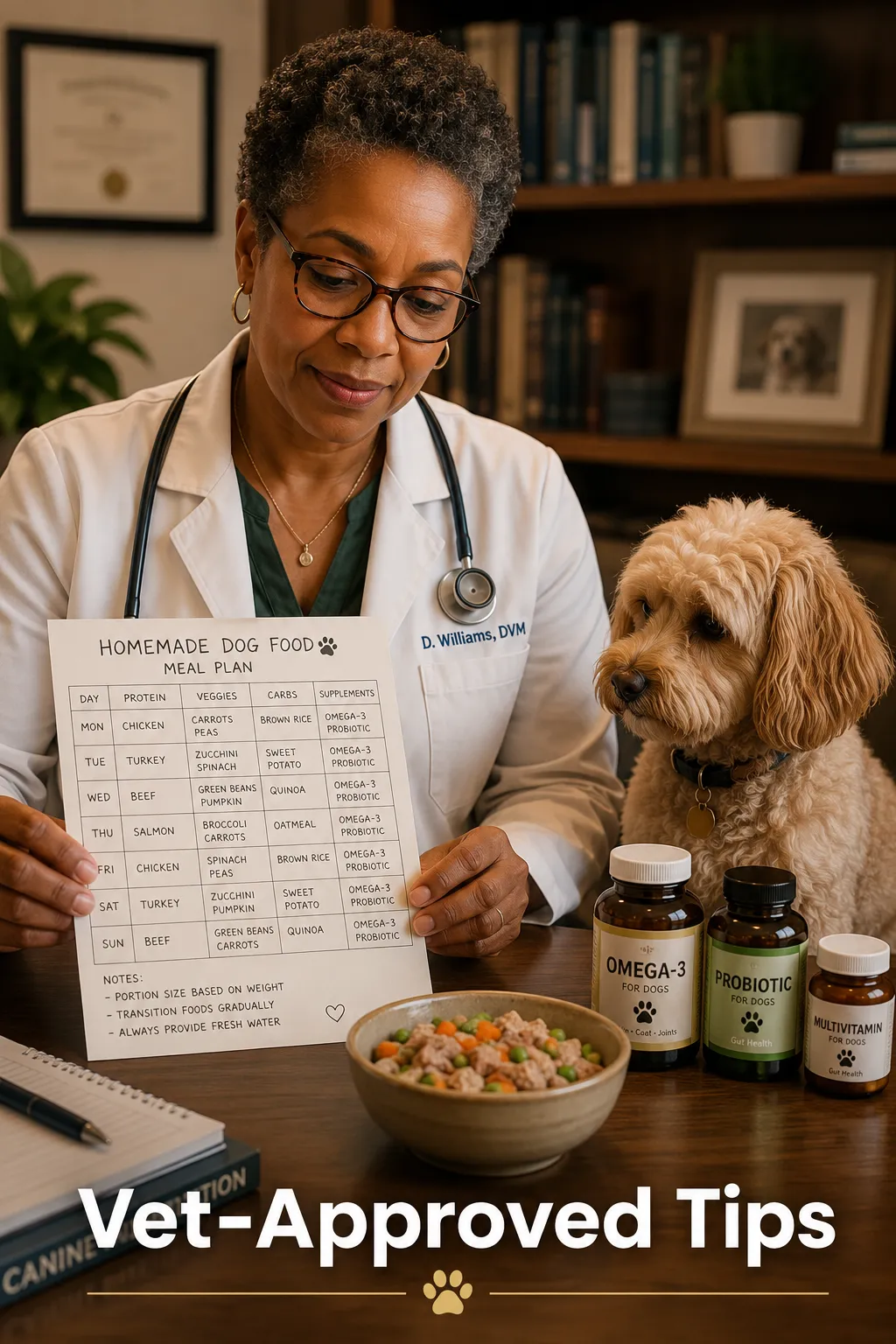
Veterinarians generally support homemade dog food when it’s nutritionally complete, properly supplemented, and reviewed by a professional. The main concern vets have is that most home-cooked diets are nutritionally unbalanced without proper guidance.
A study published in the Journal of Nutritional Science found that the majority of home-prepared dog food recipes available online were nutritionally incomplete. This is why vet involvement is so important.
What Vets Recommend
- Consult a board-certified veterinary nutritionist – They can create or review a recipe tailored to your dog’s specific needs.
- Add supplements – Especially calcium, omega-3s, and a dog-specific multivitamin.
- Get regular bloodwork – Dogs on homemade diets should have bloodwork done every 6-12 months to check for nutritional deficiencies.
- Transition slowly – Any diet change should happen over 7-10 days.
- Use a balanced recipe – Look for recipes that have been reviewed by a veterinary nutritionist.
Vet-Approved Resources
- The American College of Veterinary Nutrition (ACVN) – Find a board-certified veterinary nutritionist near you.
- BalanceIT – A tool created by a veterinary nutritionist to help balance homemade dog food recipes.
- PetDiets.com – Another resource created by veterinary nutritionists for homemade pet food.
Reader Interactions – What the Community Says
The homemade dog food community is one of the most passionate and helpful groups of dog lovers online. Sites like thismessisours have built huge followings of people who reply to each other’s questions, share their experiences, and celebrate their dogs’ health improvements.
Here’s a sampling of the kinds of comments and interactions that make this community so special:
What Readers Are Saying
A reader named Eliza Clendenin says: “I started making this recipe after my dog was diagnosed with kidney disease, and the difference has been incredible. He has so much more energy now.”
Another reader replies: “Thank you so much for sharing this. My dog has been struggling with digestion for years and this recipe has been a game changer.”
One commenter says, “I’ve been following thismessisours for about a year now and every recipe has been a hit. My dog literally dances when he sees me getting out the ingredients.”
Meg from thismessisours says she reads every single comment and reply. She says the community feedback is what keeps her motivated to keep creating new recipes.
Comments from Different Years
The community has been active for years. Looking back through the comments:
- A reader says October 2020 was when they first tried the recipe and their dog’s coat improved within a month.
- Another says September 2020 was when they made the switch and never looked back.
- One says February 2021 was the turning point for their dog’s kidney disease management.
- A reader says November 2020 was when their vet first approved the recipe.
- Another says August 2020 was when they started and says the recipe is still their go-to in 2026.
- One says January 2021 was when they added bone broth to the recipe and saw even better results.
- A reader says June 2021 was when they started adding supplements based on their vet’s recommendation.
- Another says August 2021 was when their senior dog really started thriving on homemade food.
- A commenter says October 2022 was when they expanded to making multiple recipes per week.
- One reader says August 2024 was when they introduced the salmon recipe and their dog went crazy for it.
The thismessisours community says that seeing others’ success stories is what gives them the confidence to try homemade food for their own dogs.
About Meg and thismessisours – The Story Behind the Recipes
Meg is the creator behind thismessisours, a popular food and lifestyle blog that has become one of the most trusted sources for homemade dog food recipes online. Her journey into making homemade dog food started when her dog was diagnosed with kidney disease, and she couldn’t find a commercial food that worked well.
Meg says she spent months researching, testing recipes, and working with her vet to create a food her dog would actually eat and thrive on. The result was the Easy Homemade Dog Food recipe that has now been made by thousands of dog owners around the world.
She shares her recipes on Instagram, her blog, and through her active community of followers who reply to her posts with their own stories and results.
Meg thismessisours says: “I never expected this to become what it is. I just wanted to help my dog. Now I get messages every day from people saying thank you, their dog is doing so much better. That’s everything to me.”
The reply meg thismessisours gets most often? “Thank you so much – this recipe saved my dog.”
Eliza Clendenin says August was when she first connected with Meg’s community, and she’s been a regular contributor to the comments section ever since. Eliza Clendenin says the community support is what kept her going through the difficult early days of managing her dog’s kidney disease.
Trending Homemade Dog Food Recipes – What’s Popular Right Now in 2026
The homemade dog food movement has grown significantly in recent years. In 2026, more dog owners than ever are making fresh food for their dogs, driven by concerns about commercial food recalls, ingredient quality, and the desire to give their dogs the best possible nutrition.
What’s Trending
- Fresh food delivery services – Companies like The Farmers Dog have made fresh dog food mainstream, and many owners are now making DIY versions at home. Check out these DIY Farmers Dog food recipes for inspiration.
- Bone broth additions – Adding bone broth to every meal is one of the biggest trends in homemade dog food right now.
- Probiotic-rich foods – Greek yogurt, kefir, and fermented vegetables are being added to recipes for gut health support.
- Anti-inflammatory ingredients – Turmeric (in tiny amounts), blueberries, and salmon are popular for their anti-inflammatory properties.
- Batch cooking – Making a week’s worth of food at once and freezing it is the most popular approach for busy dog owners.
Want More Recipes?
The homemade dog food world is full of amazing recipes beyond the 11 we’ve covered here. Here are some great places to explore:
- Homemade dog food recipes for sensitive stomachs – 7 recipes that actually work for dogs with chronic digestive issues.
- Homemade chicken dog food recipes – 5 chicken-based recipes your dog will love.
- Ground turkey crockpot dog food – Easy slow cooker recipes with ground turkey.
- Homemade dog food breakfast recipes – 5 ideas for starting your dog’s day right.
FAQ – People Also Ask
What is the easiest food for dogs to digest?
The easiest foods for dogs to digest are plain cooked chicken breast, white rice, scrambled eggs, and plain pumpkin puree. These ingredients are low in fat, easy on the gut lining, and well-tolerated by most dogs including those with sensitive stomachs. They form the basis of the classic bland diet recommended by vets for dogs recovering from digestive upset.
What is the healthiest recipe for homemade dog food?
The healthiest homemade dog food recipe combines lean protein (like chicken or turkey), a digestible carbohydrate (like brown rice or sweet potato), and a variety of dog-safe vegetables (like carrots, peas, and pumpkin). It should also include calcium supplementation and omega-3 fatty acids. The recipe should be reviewed by a vet or veterinary nutritionist to ensure it meets your dog’s complete nutritional needs.
What dog food is good for sensitive stomach and digestion?
For dogs with sensitive stomachs, the best food options are homemade meals made with plain cooked chicken, white rice, and pumpkin puree, or commercial foods with limited ingredients and a single protein source. Avoid foods with artificial additives, high fat content, corn, soy, or wheat. Probiotics from plain Greek yogurt can also help support gut health in sensitive dogs.
What do vets recommend for homemade dog food?
Vets recommend that homemade dog food be nutritionally complete and balanced, which usually means adding supplements like calcium, omega-3 fatty acids, and a dog-specific multivitamin. They also recommend working with a board-certified veterinary nutritionist to review the recipe, transitioning gradually from commercial food, and getting regular bloodwork to monitor for nutritional deficiencies. Most vets support homemade diets when done correctly.
Conclusion – Your Next Steps to Better Dog Nutrition
Making easy-to-digest homemade dog food is one of the most loving things you can do for a dog with tummy issues. It gives you control over every ingredient, allows you to tailor the diet to your dog’s specific health needs, and most importantly, it can make a real difference in your dog’s quality of life.
Here’s a quick action plan to get started:
- Talk to your vet first. Before making any major diet change, get your vet’s input – especially if your dog has a health condition like kidney disease or pancreatitis.
- Start with the bland diet. If your dog has an upset stomach right now, start with Recipe 1 (chicken and white rice) and go from there.
- Transition slowly. Move from kibble to homemade food over 7-10 days to avoid digestive upset.
- Add supplements. Don’t skip the calcium and omega-3s. They’re essential for long-term health.
- Join the community. Sites like thismessisours and communities on Instagram are full of dog owners who reply to questions and share their experiences. You’re not alone in this.
- Make bone broth. It’s easy, cheap, and one of the best things you can add to your dog’s diet for hydration and gut health.
- Monitor and adjust. Watch your dog’s weight, coat, energy level, and stool quality. These are your best indicators of whether the diet is working.
The homemade dog food community – from Meg thismessisours to Eliza Clendenin and thousands of other dog lovers – says the same thing: once you see the results, you’ll never go back.
Your dog deserves fresh, real food. And with these 11 easy-to-digest homemade dog food recipes, you have everything you need to get started today.
For more homemade dog food inspiration, check out our complete collection of homemade dog food recipes for sensitive stomachs and our guide to superfoods for dogs that vets recommend.