Last updated: August 19, 2026
Quick Answer: Most healthy adult dogs need 30 to 60 minutes of walking per day, split across two or more outings. But the right amount depends on your dog’s breed, age, and fitness level – and yes, it is entirely possible to walk your dog too much. Watch for lagging, limping, paw pad damage, and behavioral changes after walks as early warning signs you’ve gone too far.
Key Takeaways
- Adult dogs generally need 30 to 60 minutes of daily walking, but high-energy breeds may need 90 minutes or more.
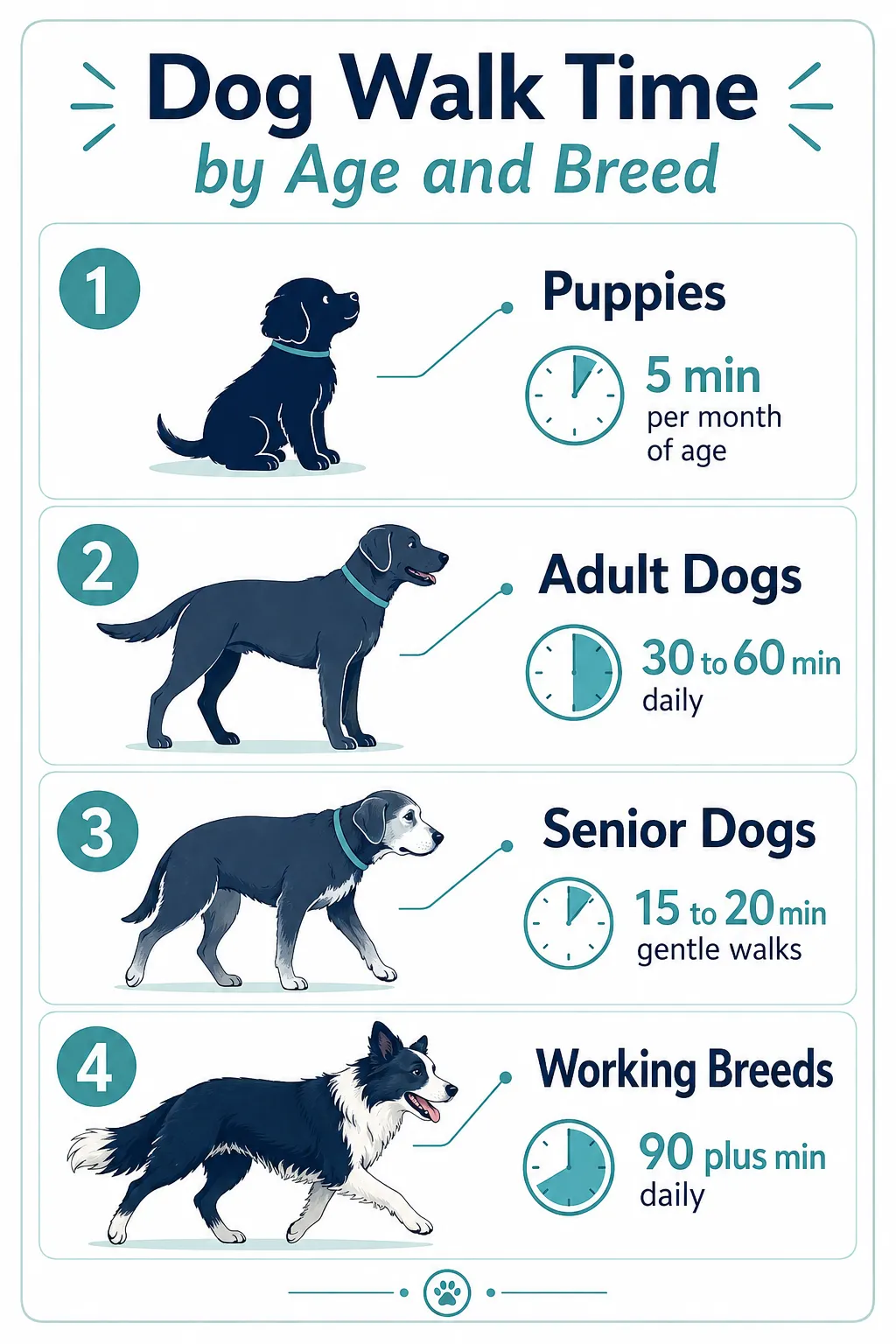
- Puppies should follow the 5-minute rule: 5 minutes of walking per month of age, up to twice per day.
- Senior dogs do best with shorter, more frequent walks rather than one long outing.
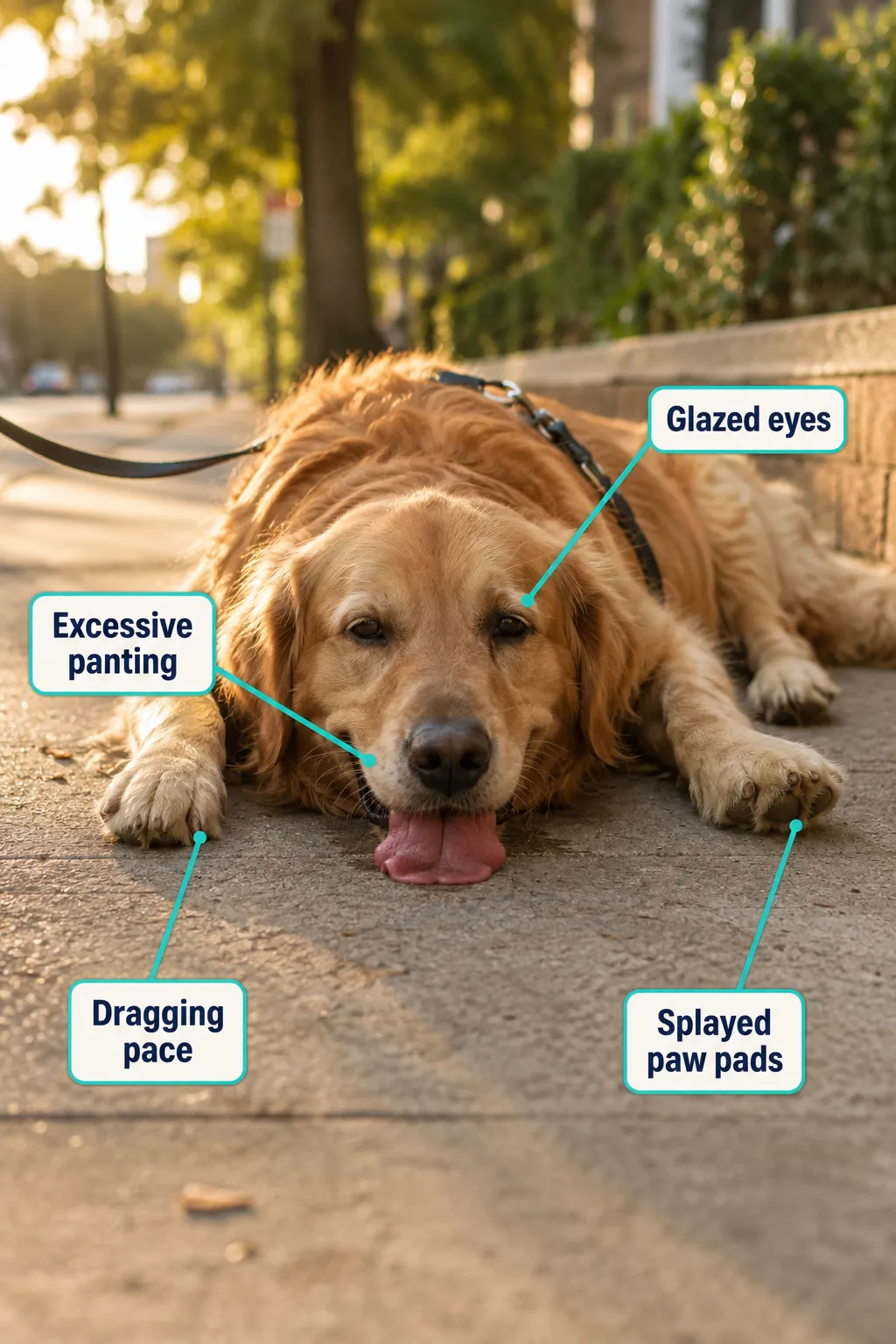
- Signs your dog is getting too much exercise include excessive panting, limping, lagging behind, and sore paw pads.
- Dog breed matters enormously – a Greyhound and a Shih Tzu have very different exercise needs.
- Walking your dog too little can cause signs your dog is lonely and destructive behavior at home.
- One long walk is not always better than two or three shorter ones, especially for puppies and senior dogs.
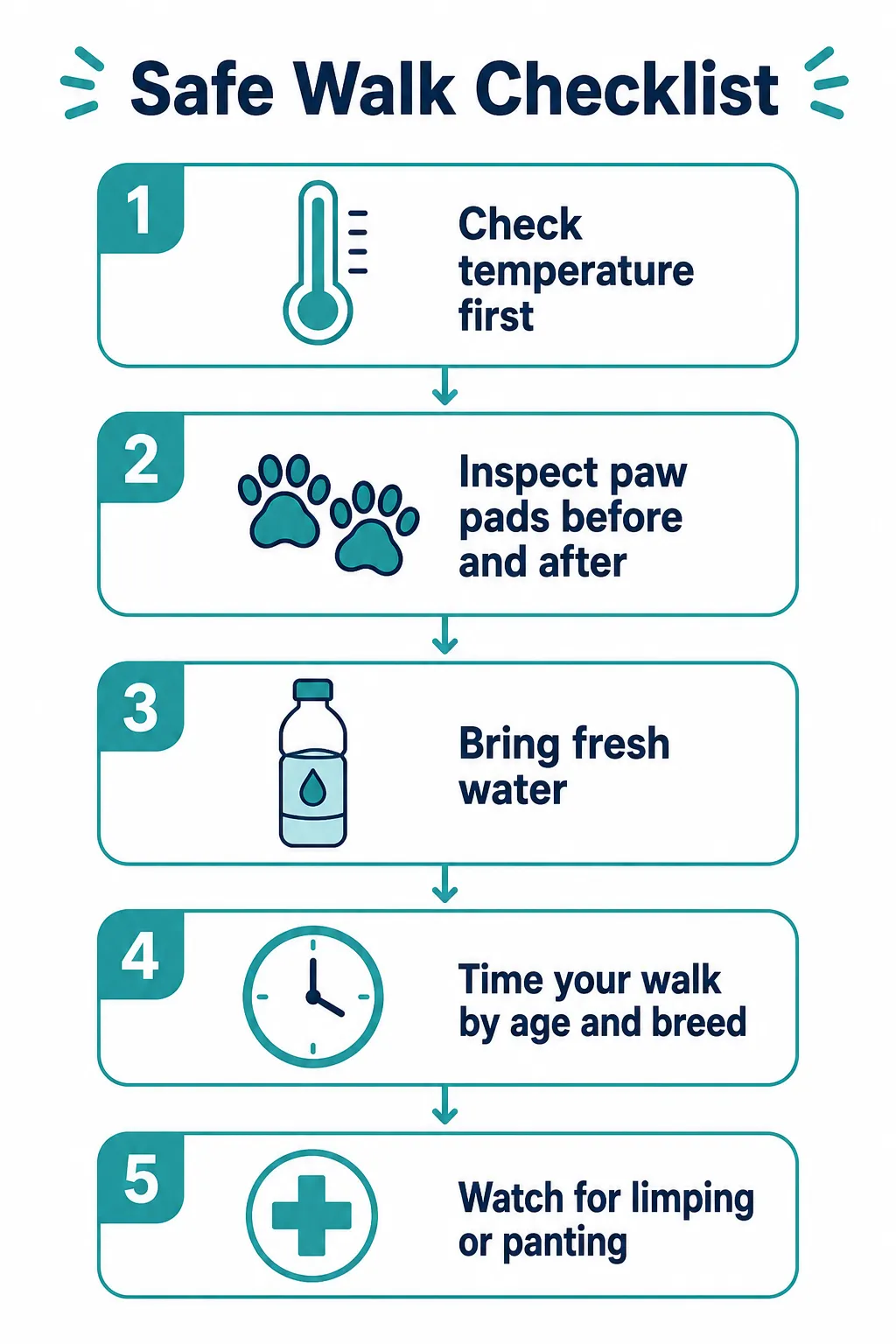
- Always bring water, check paw pads before and after walks, and watch the temperature before heading out.
How Long Should You Walk Your Dog Per Day?
Most adult dogs need between 30 and 60 minutes of walking daily, though some high-energy breeds thrive on 90 minutes or more. The exact amount depends on your dog’s breed, age, current fitness level, and overall health.
A good starting point for a typical medium-sized adult dog is two walks per day – one in the morning and one in the evening – each lasting 20 to 30 minutes. That covers basic exercise needs, mental stimulation, and bathroom breaks.
Here’s a quick breakdown by dog type:
| Dog Type | Daily Walk Time | Frequency |
|---|---|---|
| High-energy breeds (Border Collie, Husky) | 60-90+ min | 2-3 walks |
| Medium-energy breeds (Labrador, Spaniel) | 45-60 min | 2 walks |
| Low-energy breeds (Basset Hound, Bulldog) | 20-30 min | 1-2 walks |
| Small breeds (Chihuahua, Maltese) | 20-30 min | 1-2 walks |
| Brachycephalic breeds (Pug, Bulldog) | 15-20 min | 1-2 short walks |
According to vet-advised frequency tips from AskAVet, most dogs benefit from at least two walks per day, and skipping walks regularly can lead to weight gain, boredom, and anxiety.
How Much Exercise Does My Dog Need by Age?
A dog’s exercise needs change significantly across their life stages. Puppies need careful limits, adult dogs need consistent daily activity, and senior dogs need gentle, shorter outings.
Exercising Your Puppy
Puppies have soft, developing joints that are vulnerable to damage from too much exercise. The widely used guideline is 5 minutes of walking per month of age, up to twice per day. So a 3-month-old puppy should walk no more than 15 minutes per session.
This isn’t just a suggestion – overwalking puppies can cause lasting joint damage, especially in larger breeds. Build exercise tolerance slowly and let your puppy set the pace.
- ✅ Keep walks short and sniff-friendly
- ✅ Avoid hard surfaces like concrete for extended periods
- ✅ Watch for signs of fatigue: sitting down mid-walk, lagging, or panting
- ❌ Never force a puppy to keep up with an adult dog’s pace
Adult Dogs – Building Exercise Tolerance
Healthy adult dogs (roughly 1 to 7 years, depending on breed) can handle longer, more varied walks. This is the time to build a dog’s exercise tolerance gradually if they’ve been inactive. Start with 20-minute walks and add 5 minutes each week until you reach a comfortable daily total.
Dog training and behavior can also be woven into walk time – practicing recall, loose-leash walking, and basic commands keeps the dog mentally engaged.
Exercising Your Senior Dog
Senior dogs still need regular walks for joint health, weight management, and mental stimulation – but shorter and more frequent is better than one long outing. A 7-year-old Labrador may still enjoy a 45-minute walk, while a 10-year-old Pug might only manage 15 minutes comfortably.
If your dog shows signs of arthritis, talk to your vet before increasing walk time. Gentle movement is often beneficial, but pushing through pain is not.
7 Surprising Signs You’re Walking Your Dog Too Much
Yes, you can over-exercise a dog – and it happens more often than most pet owners expect. The signs aren’t always obvious, which is why they’re so easy to miss.
According to vet-approved signs of over-exercise from AskAVet, the most common warning signs include limping, excessive panting, and behavioral changes after walks. Here are all seven to watch for:
Sign 1 – Lagging, slowing, or refusing to continue mid-walk
If your dog starts pulling back on the leash, sitting down, or simply stopping mid-walk, that’s a clear signal they’ve had enough. Don’t push through it. Turn around and head home.
Sign 2 – Limping, stiffness, or delayed soreness after walks
Some dogs won’t show soreness until hours after a walk – you might notice them struggling to get up the next morning. Any limping after a walk is a reason to cut back distance and check in with your vet. See our guide to early signs of pain in dogs for more detail.
Sign 3 – Excessive or prolonged panting and poor recovery
Heavy panting right after a walk is normal. But if your dog is still panting 10 to 15 minutes after returning home, or is drooling more than usual, that’s a sign of over-exertion. Watch for this especially in brachycephalic breeds like Pugs and Bulldogs.
Sign 4 – Paw pad damage
Check your dog’s paw pads after every walk. Cracked, raw, or bleeding pads are a direct sign that walks are too long or the surface is too rough. Hot pavement is a major culprit – if it’s too hot for your bare hand, it’s too hot for your dog’s paws.
Sign 5 – Behavioral changes after walks
Overstimulation is real. Some dogs become anxious, snappy, or hyper-vigilant after very long walks rather than calm and settled. If your dog seems more stressed, not less, after exercise, the walk may be too intense. Check our article on stressed dog signs most owners miss for more context.
Sign 6 – Excessive thirst, urination, or sudden exhaustion post-walk
Drinking a lot of water after a walk is normal. But if your dog seems unable to quench their thirst, or collapses and won’t move for hours, those are red flags. Signs of dehydration in dogs can develop quickly on long walks in warm weather.
Sign 7 – Your vet flags your dog as a risk group
Certain dogs should never follow a standard walk schedule without vet guidance. These include dogs with heart conditions, respiratory issues, orthopedic problems, obesity, or recent surgery. Always check with your vet before starting or significantly increasing a walk routine for dogs in these categories.
Dog Breeds That Need More or Less Walking
Not all dogs are built for the same workout. Breed is one of the most important factors when figuring out how long you should walk your dog each day.
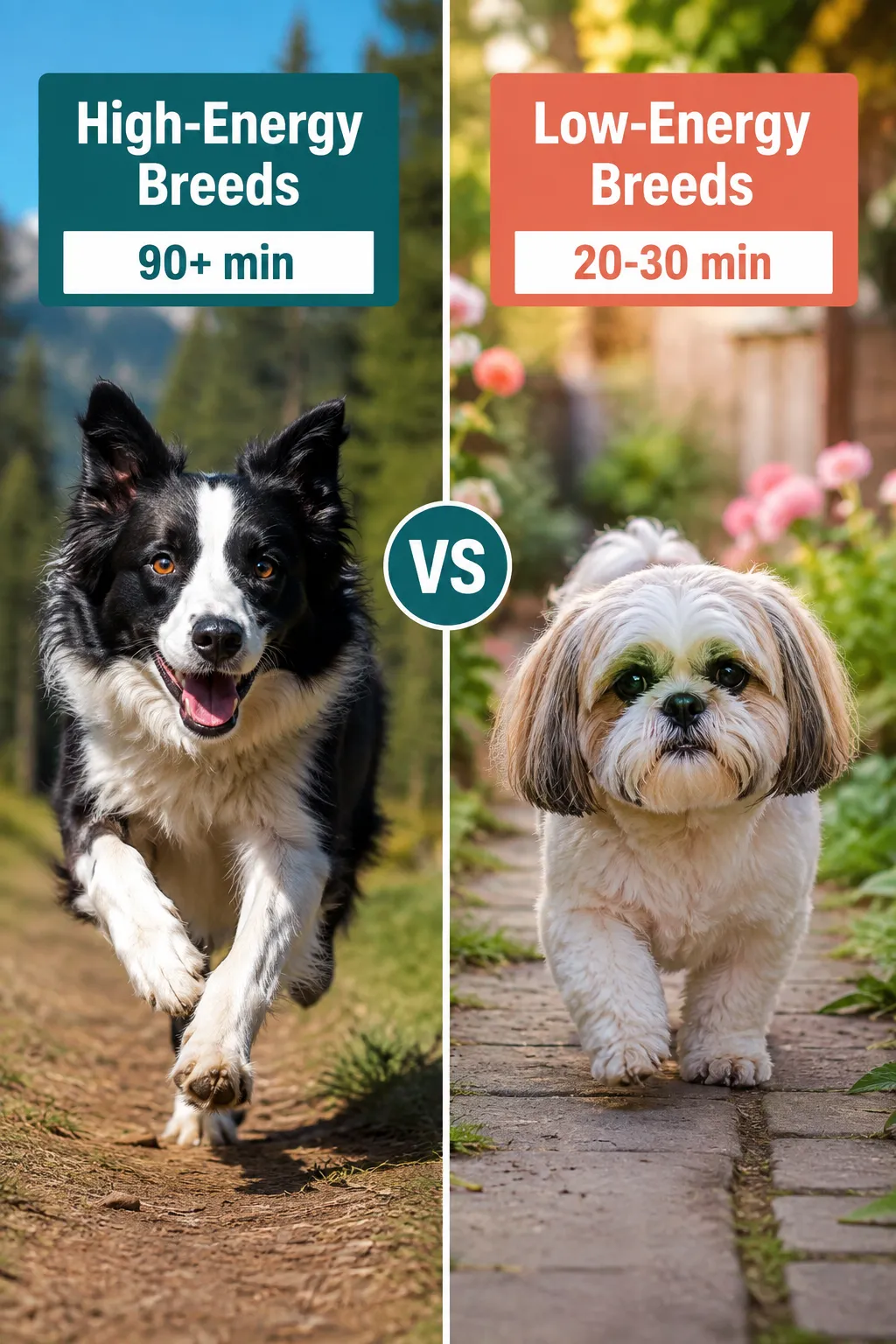
High-exercise breeds (need 60-90+ minutes daily):
- Border Collie, Siberian Husky, Australian Shepherd
- Weimaraner, Vizsla, Dalmatian
- Labrador Retriever, Golden Retriever, German Shepherd
Moderate-exercise breeds (need 30-60 minutes daily):
- Cocker Spaniel, Poodle, Boxer
- Beagle, Whippet, Brittany Spaniel
Low-exercise breeds (need 20-30 minutes daily):
- Basset Hound, Shih Tzu, Maltese
- Bichon Frise, Cavalier King Charles Spaniel
Brachycephalic breeds – special care needed (need 15-20 minutes, avoid heat):
- Pug, French Bulldog, English Bulldog, Boston Terrier
If you own a Shih Tzu, 20 to 30 minutes of gentle walking per day is usually plenty. Pushing a flat-faced dog beyond their comfort zone is a genuine health risk.
How Often Should You Walk Your Dog?
Most dogs should be walked at least twice per day. Frequency matters as much as total duration – a dog left alone for 10 hours with no walk will experience stress, boredom, and potential health issues regardless of how long the evening walk is.
According to PetMD’s guide on how often to walk your dog, the minimum for most dogs is three to four times per day for bathroom needs alone, with at least two of those being proper exercise walks.
A practical daily schedule for most adult dogs:
- Morning walk: 20-30 minutes (exercise + bathroom)
- Midday outing: 10-15 minutes (bathroom break, especially for puppies)
- Evening walk: 20-30 minutes (exercise + mental stimulation)
If your schedule doesn’t allow for midday walks, consider a dog walker or doggy daycare a few days per week. The dos and don’ts of walking your dog include never going more than 6 to 8 hours without a bathroom break for adult dogs, and far less for puppies.
Is One Long Walk Better Than Multiple Short Walks?
Multiple shorter walks are generally better than one long walk for most dogs, especially puppies, senior dogs, and brachycephalic breeds. For healthy adult dogs with good exercise tolerance, a mix of both works well.
Here’s why shorter walks often win:
- They provide more frequent mental stimulation throughout the day
- They’re easier on joints, especially in older dogs
- They reduce the risk of over-exertion in hot weather
- They keep energy levels more consistent, reducing destructive behavior at home
That said, a healthy 3-year-old Border Collie will benefit from at least one longer, more vigorous outing daily. For those dogs, one 45-minute walk plus two shorter 15-minute outings is a solid routine.
Walking Your Dog Safely in Hot and Cold Weather
Temperature is a critical factor in deciding how long to walk your dog. Hot pavement can burn paw pads in under 60 seconds, and dogs can overheat quickly in warm weather.
Hot weather rules:
- Walk in the early morning or evening when pavement is cooler
- Use the 5-second pavement test: hold your hand on the ground for 5 seconds – if it’s uncomfortable, it’s too hot for your dog’s paws
- Shorten walks significantly above 25°C (77°F), especially for flat-faced breeds
- Always bring water and take breaks in the shade
Cold weather rules:
- Short-coated and small dogs may need a coat below 7°C (45°F)
- Check paws for ice, salt, and cracking after winter walks
- Older dogs and puppies feel cold faster – shorten walks accordingly
For more on keeping dogs comfortable in the cold, see our guide on how to keep your outside dog warm.
What Happens If You Don’t Walk Your Dog Enough?
Under-exercising a dog is just as problematic as over-exercising. Dogs that don’t get enough walking often develop behavioral problems, weight issues, and health complications.
According to the Pet Obesity Prevention organization, regular physical activity is essential for maintaining a healthy weight in dogs, and obesity is one of the most common preventable health problems in pets today.
Signs your dog isn’t getting enough exercise:
- Destructive chewing or digging
- Excessive barking or whining
- Weight gain and low muscle tone
- Restlessness and inability to settle
- Attention-seeking or hyperactive behavior
A dog that doesn’t get regular walks is also more likely to show signs of being lonely and may develop anxiety over time.
What to Do If Your Dog Limps After a Walk
A dog limping after a walk needs prompt attention. Stop all walking immediately and examine the paw for cuts, thorns, or cracked pads. If the limping continues after 24 hours of rest, contact your vet.
Immediate steps:
- Stop the walk and let your dog rest
- Check all four paws for visible injuries
- Look for swelling around joints
- Apply gentle pressure to pads to check for tenderness
- Rest for 24-48 hours before attempting another walk
- Call your vet if limping persists or worsens
Never push a limping dog to keep walking. Even a small injury can become a serious problem if ignored.
FAQs
What is considered too long of a walk for a dog?
A walk is too long when your dog shows signs of fatigue, pain, or distress during or after the outing. For most adult dogs, walks over 2 hours without conditioning are excessive. Puppies should never exceed 5 minutes per month of age per session. Senior dogs and brachycephalic breeds can reach their limit in as little as 15 to 20 minutes. Watch for lagging, panting, and limping as your key signals.
What is the 7 7 7 rule for dogs?
The 7-7-7 rule is a socialization guideline for puppies, not a walking rule. It suggests exposing a puppy to 7 new people, 7 new places, and 7 new experiences before they are 7 weeks old to build confidence and reduce fear. It’s a helpful framework for early puppy development and is often recommended by trainers and vets as part of a broader socialization plan.
Do dogs need rest days from walking?
Yes, dogs can benefit from rest days, especially after intense exercise or long hikes. A rest day doesn’t mean zero activity – short, gentle bathroom walks are still important. Dogs recovering from illness, surgery, or injury absolutely need rest days. For healthy adult dogs with a consistent routine, one lighter day per week helps muscles recover and prevents cumulative overuse injuries.
Is a 2 mile walk too long for a dog?
A 2-mile walk is not too long for most healthy adult dogs – in fact, it’s a reasonable daily distance for medium to large breeds. However, it may be too much for puppies, senior dogs, small breeds, or dogs with health conditions. The key is how your dog feels during and after the walk. If they finish energized and recover quickly, the distance is fine. If they lag, limp, or seem exhausted, shorten the route.
Conclusion
Knowing how long you should walk your dog is one of the most important things you can do for their long-term health and happiness. The sweet spot for most adult dogs is 30 to 60 minutes of daily walking, split into two or more outings – but breed, age, and individual fitness level all shift that number significantly.
The 7 signs covered here – lagging, limping, paw pad damage, prolonged panting, behavioral changes, excessive thirst, and vet-flagged risk factors – are your most reliable guides. If your dog is showing any of them, it’s time to cut back and reassess.
Your next steps:
- Check your dog’s breed and age against the walk time table above
- Start tracking how your dog feels during and after each walk
- Add a midday break if your schedule allows
- Book a vet check if you notice persistent limping or fatigue
- Adjust walk length seasonally, especially in summer heat
Walking your dog should be enjoyable for both of you. Keep it that way by listening to what your dog’s body is telling you – they’ll thank you for it.