Last updated: August 23, 2026
Quick Answer: Most dog ear infections are preventable with regular checks, proper cleaning technique, and moisture control. This dog ear care guide covers the 9 key secrets that help you spot trouble early, clean safely at home, and know exactly when to call your vet.
Key Takeaways
- Do a weekly look, sniff, and touch check – not just a cleaning session
- Use only vet-approved ear cleaners; skip hydrogen peroxide, vinegar, and alcohol
- Clean frequency depends on your dog’s breed, activity level, and ear shape
- Never insert cotton swabs deep into the ear canal
- Dry your dog’s ears thoroughly after every bath or swim
- Yeast and bacterial infections look similar but need different treatments
- Floppy-eared and hairy-canal breeds need more frequent monitoring
- Ear mites are more common in puppies and dogs with outdoor exposure
- See a vet if symptoms last more than 2-3 days or involve pain and discharge
What Healthy Dog Ears Actually Look Like
Healthy dog ears are pale pink inside, lightly moist, and carry a faint neutral odor at most. There should be a small amount of light tan or yellowish wax – that’s normal and protective.
Here’s what to look for during a routine check:
- Color: Light pink, no redness or dark patches
- Smell: Mild or odorless – never sour, yeasty, or foul
- Discharge: Minimal light wax only
- Behavior: Dog doesn’t shake head, scratch ears, or tilt head to one side
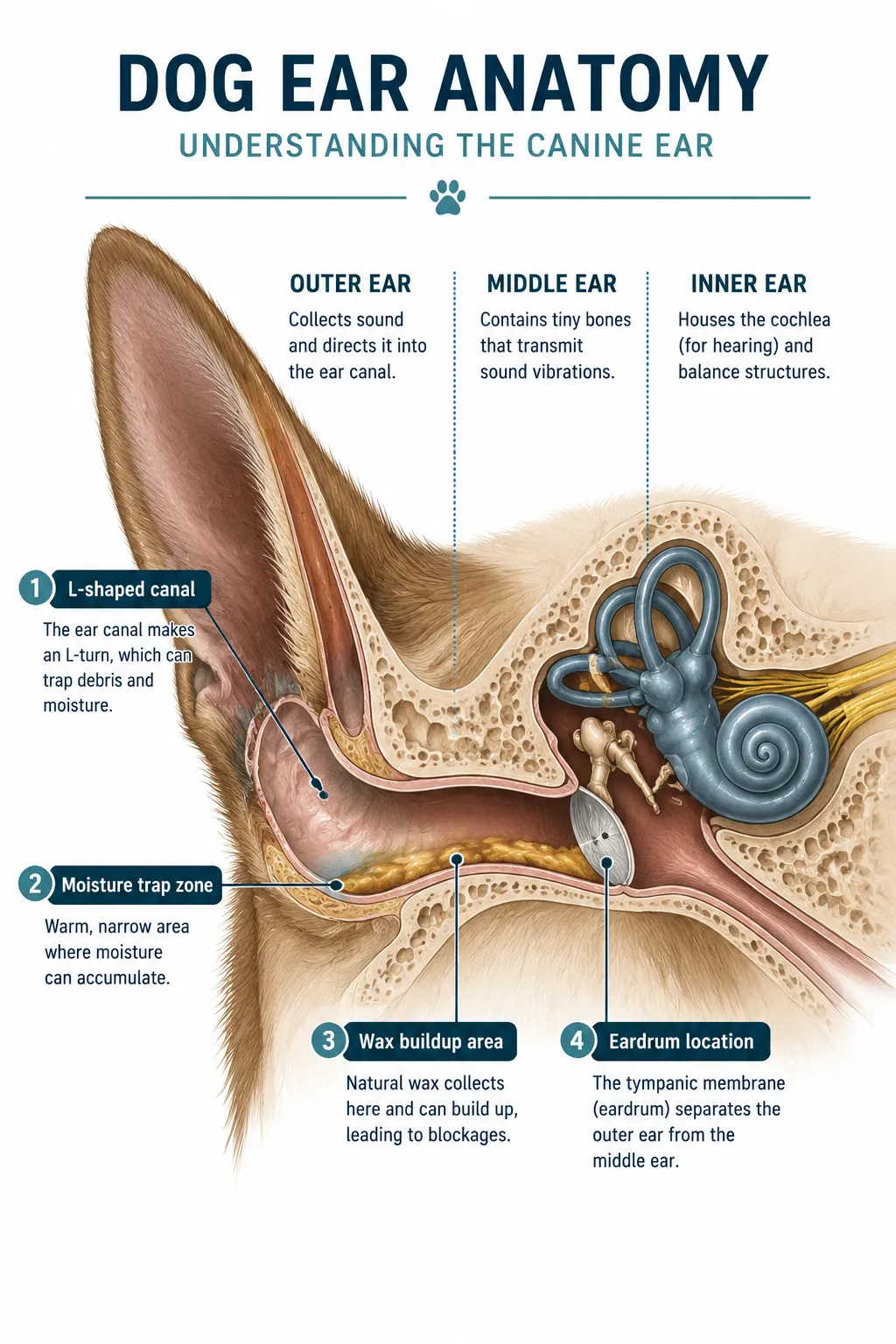
According to Cornell University’s Riney Canine Health Center, a dog’s ear canal is L-shaped, which makes it naturally prone to trapping moisture and debris. That shape is exactly why routine checks matter so much.
If you notice any change from the above baseline, that’s your signal to act.
What Causes Dog Ear Infections
Dog ear infections are most often caused by an overgrowth of yeast or bacteria inside the ear canal, triggered by moisture, allergies, or poor airflow.
The most common triggers include:
- Trapped moisture after swimming or bathing
- Food or environmental allergies that inflame the ear skin
- Excessive wax buildup that creates a breeding ground for microbes
- Foreign objects like grass seeds or debris
- Ear mites (more on those below)
- Hormonal imbalances such as hypothyroidism
The VCA Hospitals ear cleaning guide notes that otitis externa – infection of the outer ear canal – is one of the most common reasons dogs visit the vet. The good news is that most cases are preventable with consistent home care.
Allergies are a major and often overlooked driver. If your dog keeps getting repeat infections, talk to your vet about allergy testing. You might also find our French Bulldog Allergies Survival Guide useful, since allergy-related ear issues affect many breeds beyond Frenchies.
Dog Ear Yeast Infection vs Bacterial Infection
Yeast infections typically produce a dark brown, musty-smelling discharge and cause intense itching. Bacterial infections tend to produce yellow or greenish pus with a sharper, more unpleasant odor.
You can’t reliably tell them apart just by looking – and that matters because they need different treatments.
| Feature | Yeast Infection | Bacterial Infection |
|---|---|---|
| Discharge color | Dark brown | Yellow or green |
| Odor | Musty, “corn chip” smell | Sharp, foul |
| Itching level | Intense | Moderate to severe |
| Skin appearance | Greasy, dark | Red, raw, sometimes ulcerated |
| Treatment | Antifungal ear drops | Antibiotic ear drops |
Common mistake: Owners often treat a bacterial infection with leftover antifungal drops (or vice versa) and wonder why it’s not improving. Always get a proper diagnosis before starting treatment.
Some dogs have mixed infections involving both yeast and bacteria at the same time. Only a vet swab and microscopy can confirm what you’re dealing with.
Why Does My Dog Keep Scratching Their Ears
Persistent ear scratching usually means irritation, infection, or ear mites. If your dog is also shaking their head, rubbing their ear on the floor, or tilting their head to one side, those are stronger signals that something is wrong.
Other reasons a dog might scratch their ears:
- Allergic reaction (food or environment)
- Water trapped after a bath or swim
- Buildup of wax or debris
- A foreign body like a grass awn
- Skin condition affecting the outer ear
One scratch here and there is normal. But if it’s happening multiple times a day for more than a day or two, check inside the ear. If you see redness, discharge, or smell something off, it’s time to act.
Check out our guide on 10 early signs of pain in dogs for more signals that something may be hurting your pup.
Dog Ear Mites – Symptoms and Treatment
Ear mites are tiny parasites that live in the ear canal and cause intense itching, dark crumbly discharge, and head shaking. They’re highly contagious between dogs and cats.
Classic symptoms:
- Dark brown or black discharge that looks like coffee grounds
- Constant scratching at both ears
- Head shaking
- Visible irritation around the outer ear
Ear mites are more common in puppies, outdoor dogs, and multi-pet households. Old Dog Haven’s ear care resource points out that senior dogs with weakened immunity can also be vulnerable.
Treatment: Your vet will confirm mites with an otoscope or microscope. Treatment usually involves prescription ear drops or a topical antiparasitic. Never try to treat suspected mites with olive oil or home remedies – you risk masking symptoms while the infestation worsens.
Best Way to Clean Dog Ears at Home – A Dog Ear Care Guide Step by Step
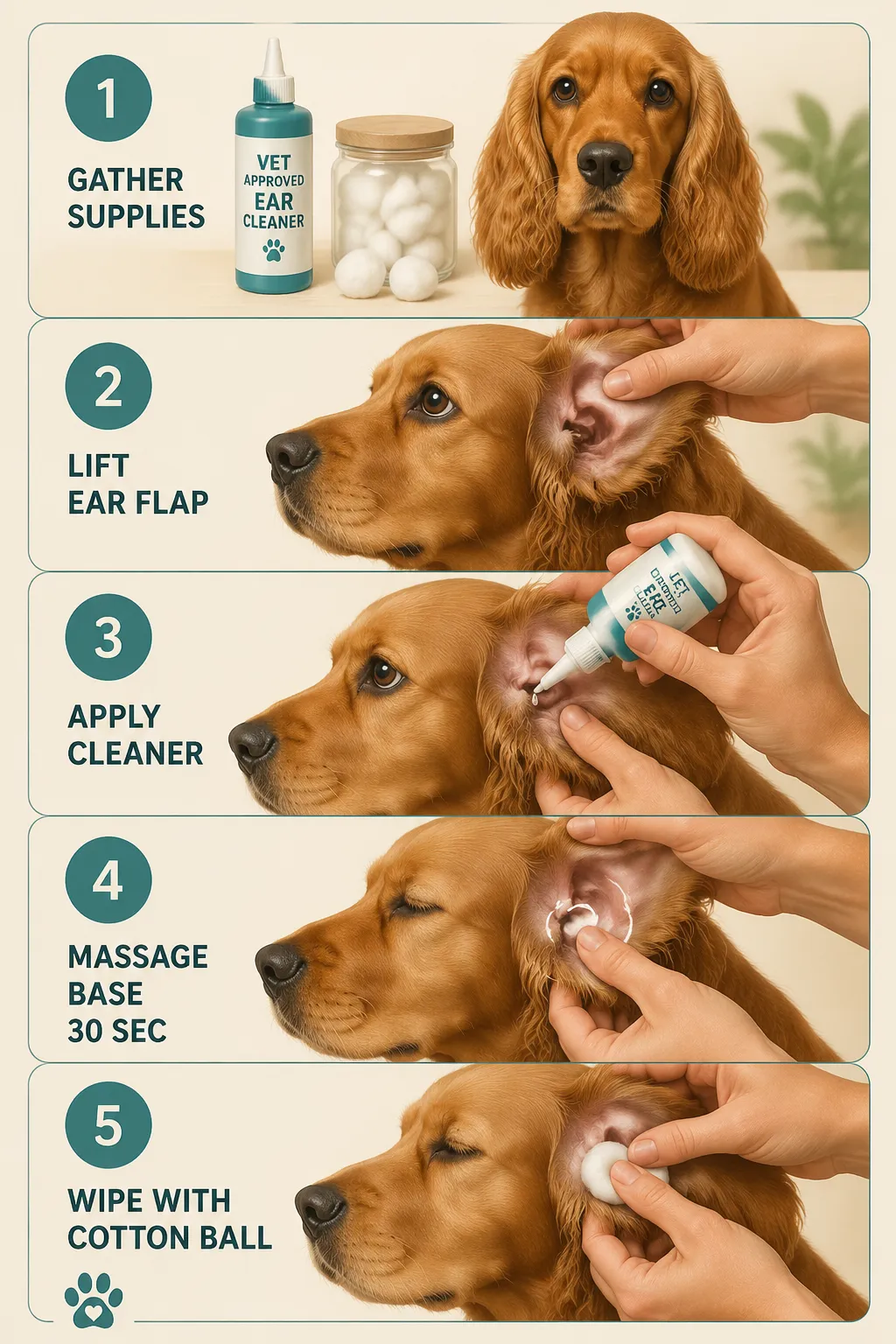
The safest home cleaning method uses a vet-approved ear cleaner, cotton balls, and a calm approach. Never use cotton swabs deep in the canal – they push debris further in and can damage the eardrum.
What you need:
- Vet-approved ear cleaning solution
- Cotton balls or gauze pads
- Treats for positive reinforcement
Step-by-step process:
- Sit with your dog in a calm spot. Have treats ready.
- Lift the ear flap and inspect the canal visually.
- Fill the ear canal with the cleaning solution until it’s just full.
- Gently massage the base of the ear for 20-30 seconds – you’ll hear a squishing sound.
- Let your dog shake their head (step back!).
- Use a cotton ball to wipe out loosened wax and debris from the visible canal.
- Repeat on the other ear.
- Reward with a treat.
Blue Springs Animal Hospital recommends doing this in a bathroom or outdoors since the head shake can spray debris.
Never use hydrogen peroxide, rubbing alcohol, or vinegar. These can irritate or damage the sensitive ear canal lining, according to Petterly’s ear cleaning guide.
How Often Should I Clean My Dog’s Ears
Most dogs need their ears cleaned once every 1-4 weeks, but the right frequency depends on your dog’s breed, ear shape, activity level, and history of infections.
General guidelines:
- Low-risk dogs (upright ears, no allergy history): Once a month or when visibly dirty
- Moderate-risk dogs (floppy ears, occasional swimmer): Every 2 weeks
- High-risk dogs (floppy ears, allergies, frequent swimmer): Weekly
Over-cleaning is a real problem. Cleaning too often strips the natural protective wax and can actually increase infection risk. If your dog’s ears look and smell clean, don’t clean them.
Use the weekly “look, sniff, and touch” check to decide whether cleaning is needed – rather than cleaning on autopilot.
Dog Breeds Prone to Ear Problems
Certain breeds face a significantly higher risk of ear infections due to their anatomy, coat type, or genetic predispositions.
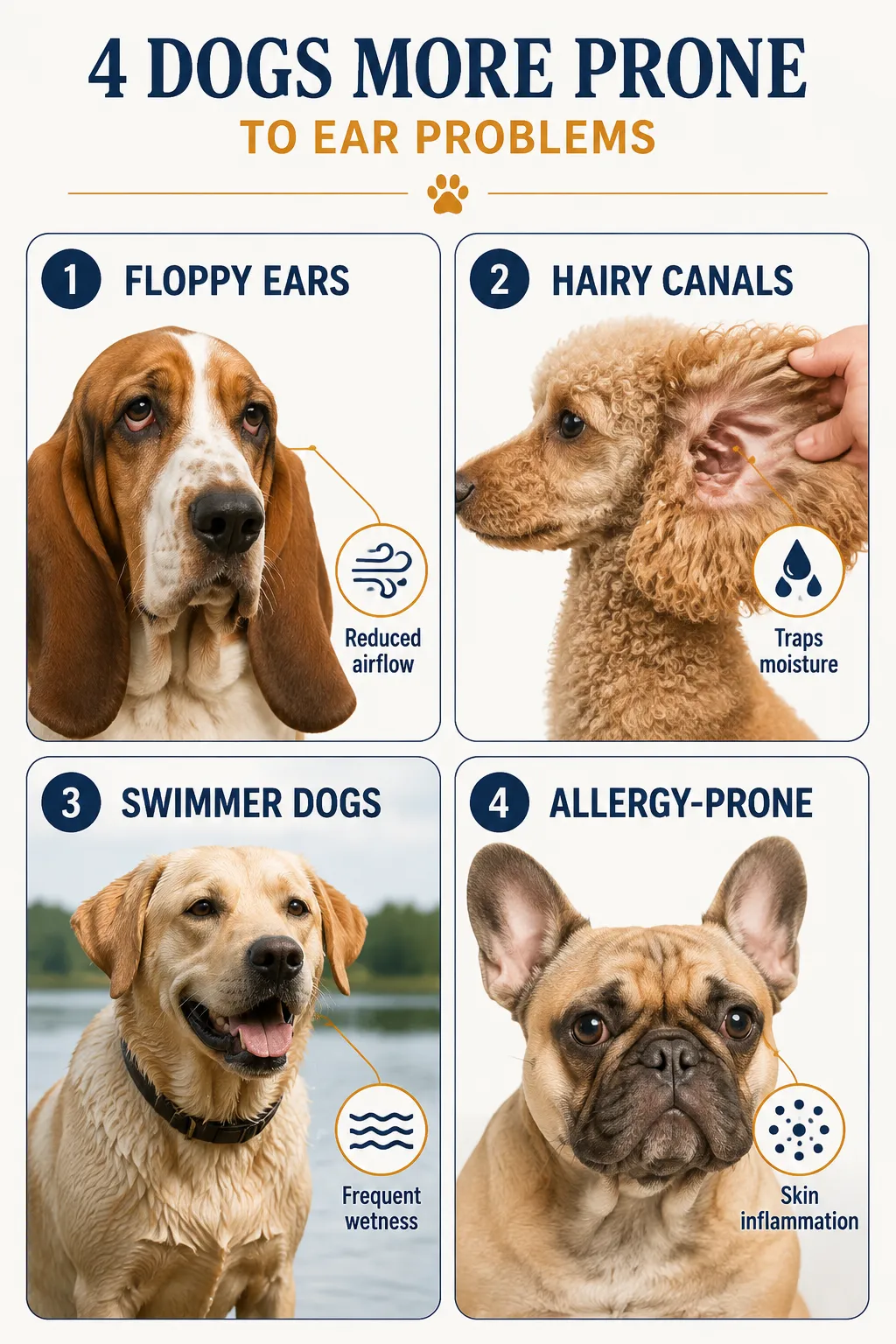
High-risk breeds include:
- Floppy-eared breeds: Basset Hounds, Cocker Spaniels, Beagles, Bloodhounds – the ear flap traps heat and moisture
- Hairy ear canal breeds: Poodles, Bichon Frises, Shih Tzus – hair inside the canal traps debris
- Water-loving breeds: Labrador Retrievers, Golden Retrievers, Irish Water Spaniels – frequent moisture exposure
- Allergy-prone breeds: French Bulldogs, West Highland White Terriers, Bulldogs
If you own a Basset Hound or an English Springer Spaniel, ear care should be a non-negotiable part of your weekly routine.
According to Pure Majesty Pet’s dog ear health guide, breeds with long, pendulous ears have significantly reduced airflow to the canal, creating a warm, moist environment where bacteria and yeast thrive.
Are Floppy Ears Worse Than Pointed Ears for Infections
Yes – floppy ears are associated with a higher rate of ear infections compared to upright ears. The ear flap acts like a lid, trapping warmth and moisture inside the canal and reducing the airflow that keeps the environment dry.
Dogs with upright, open ears – like German Shepherds, Huskies, or Chihuahuas – naturally get better ventilation. That doesn’t mean they’re immune, but their baseline risk is lower.
If you own a Husky, for example, you can likely get away with monthly checks. A Cocker Spaniel owner should be checking weekly.
What’s the Difference Between Ear Cleaning and Ear Plucking
Ear cleaning removes wax and debris using a liquid cleaner and cotton. Ear plucking removes hair from inside the ear canal using fingers or forceps.
Ear plucking is controversial. Some groomers and older vet protocols recommend it for hairy-canal breeds. But current veterinary thinking – as reflected in recent canine otitis research – suggests that plucking can create micro-tears in the canal lining, which may actually increase infection risk.
Current recommendation: Only pluck if your vet specifically advises it for your dog. Don’t do it routinely or as a grooming standard unless there’s a clinical reason.
Can I Use Human Ear Drops on Dogs
No. Human ear drops are formulated for human ear anatomy and pH levels, and many contain ingredients that are irritating or harmful to dogs.
This includes common over-the-counter products like Debrox or Swimmer’s Ear drops. Even if the active ingredient seems similar, the concentration and formulation may not be safe for canine use.
Always use ear cleaners and treatments specifically labeled for dogs, and prescription drops only under vet guidance. Virbac’s pet ear care guide reinforces this point – using the wrong product can worsen irritation and delay proper treatment.
When Should I Take My Dog to the Vet for Ear Issues
Take your dog to the vet if symptoms last more than 2-3 days, involve pain, swelling, or significant discharge, or if your dog is showing signs of distress.
Go to the vet if you notice:
- Head tilting that doesn’t resolve
- Loss of balance or walking in circles (possible inner ear involvement)
- Crying or flinching when the ear is touched
- Thick, dark, or bloody discharge
- Swelling of the ear flap (possible hematoma)
- Symptoms that return within weeks of treatment
Can dog ear problems go away on their own? Minor wax buildup can resolve with a single cleaning. But actual infections – bacterial, yeast, or mite-related – rarely clear up without treatment. Leaving them untreated risks the infection spreading to the middle or inner ear, which can cause permanent hearing loss.
Our vet-approved dog health checklist can help you track symptoms and decide when home care is enough vs. when a vet visit is needed.
How Much Does a Vet Ear Cleaning Cost
A basic vet ear cleaning typically costs between $50 and $150 USD, depending on your location, the clinic, and whether diagnostics like a swab culture are needed. Prescription ear drops are usually an additional cost.
If the infection is severe or involves the middle ear, costs can rise significantly due to imaging, sedation, or specialist referral. Preventing infections through regular home care is almost always cheaper than treating them.
Your Dog Ear Care Guide – Healthy vs. Infected Ear Comparison
Knowing what to look for is half the battle. Here’s a quick visual reference:
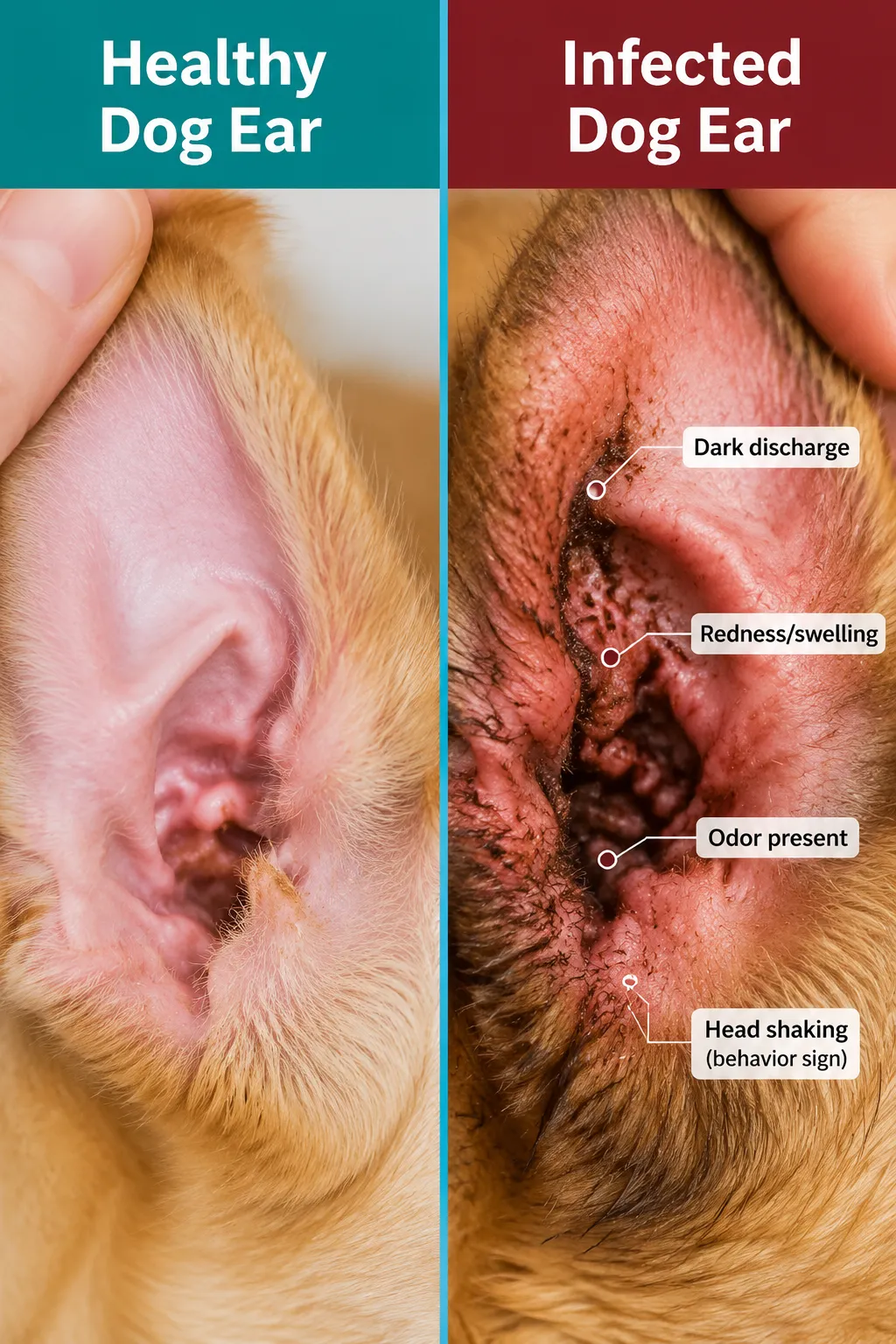
| Feature | Healthy Ear | Infected Ear |
|---|---|---|
| Color | Pale pink | Red, dark, or inflamed |
| Odor | Mild or none | Yeasty, sour, or foul |
| Discharge | Light tan wax | Dark brown, yellow, or green |
| Dog behavior | Calm, no scratching | Scratching, head shaking, tilting |
| Skin texture | Smooth | Greasy, crusty, or ulcerated |
FAQ
How do I know if my dog’s ears need cleaning?
Check weekly. If you see visible wax buildup, notice a mild odor, or your dog is scratching more than usual, it’s time to clean. If the ears look pink and odorless, skip the cleaning.
What’s the safest ear cleaner for dogs?
Use a vet-approved, pH-balanced ear cleaner made specifically for dogs. Brands like Virbac Epi-Otic and Zymox are commonly recommended. Avoid anything containing alcohol, hydrogen peroxide, or vinegar.
Can I clean my dog’s ears with water?
No. Water doesn’t break down wax effectively and can leave moisture in the canal, which increases infection risk. Use a proper ear cleaning solution.
My dog hates ear cleaning – what can I do?
Start slow. Touch and lift the ear without cleaning for several sessions, rewarding with treats each time. Gradually introduce the cleaner. Keeping sessions short and positive makes a big difference over time.
How do I know if my dog has an ear infection vs. just dirty ears?
Dirty ears have mild wax and no odor. Infected ears smell bad, show redness or dark discharge, and cause visible discomfort. When in doubt, see your vet.
Is ear plucking necessary for Poodles and Shih Tzus?
Not routinely. Current evidence suggests plucking can irritate the canal. Ask your vet whether your specific dog benefits from it.
Can allergies cause recurring ear infections?
Yes. Food and environmental allergies are one of the most common underlying causes of repeat ear infections. If your dog keeps getting infections, allergy testing may be worth discussing with your vet.
Are ear infections contagious between dogs?
Standard yeast and bacterial infections are not contagious. Ear mites, however, are highly contagious and can spread between dogs and cats in the same household.
What happens if a dog ear infection goes untreated?
It can spread from the outer ear to the middle and inner ear, potentially causing chronic pain, neurological symptoms, and permanent hearing loss.
How long does a dog ear infection take to clear up?
With proper treatment, mild infections often improve within 1-2 weeks. Severe or chronic infections may take longer and require follow-up vet visits.
Conclusion
A solid dog ear care guide doesn’t have to be complicated. The core of it is simple: check weekly, clean only when needed, use the right products, keep ears dry, and know when to call your vet.
Your action steps starting this week:
- Do a quick look, sniff, and touch check on your dog’s ears today
- Identify your dog’s risk level (breed, ear shape, activity) and set a cleaning schedule
- Pick up a vet-approved ear cleaning solution if you don’t already have one
- Bookmark the healthy vs. infected comparison table above for quick reference
- If you see any red flags – discharge, odor, pain – book a vet appointment rather than waiting
Ear problems are one of the most common and most preventable issues in dogs. A few minutes of attention each week can save your dog real discomfort and save you a significant vet bill.
For more on keeping your dog healthy from head to tail, check out our vet-approved dog health checklist and our guide on 10 early signs of pain in dogs.