

Last updated: October 5, 2026
Quick Answer: Holistic dog care means supporting your dog’s physical health, mental well-being, and emotional safety together – not just feeding them well. These 11 holistic dog care tips cover everything from stress reduction and grooming to environmental toxins and senior-specific adjustments, giving you a full-picture approach to keeping your dog thriving.
Key Takeaways
- Holistic dog care treats the whole dog – body, mind, and environment – not just symptoms or diet
- Mental enrichment and daily exercise are health necessities, not optional extras
- Reducing household toxins is one of the most overlooked steps in natural dog wellness
- Stress and fear responses directly affect your dog’s immune health and behavior
- Senior dogs need adjusted routines, not just different food
- Holistic care works best alongside regular vet visits, not instead of them
- Grooming and dental care are preventive health practices, not just cosmetic ones
- Budget-friendly options exist for nearly every aspect of natural dog wellness
- Puppies can benefit from gentle, age-appropriate natural care practices
- Finding a vet who supports integrative approaches makes the whole plan easier to follow
What Does Holistic Dog Care Actually Mean?
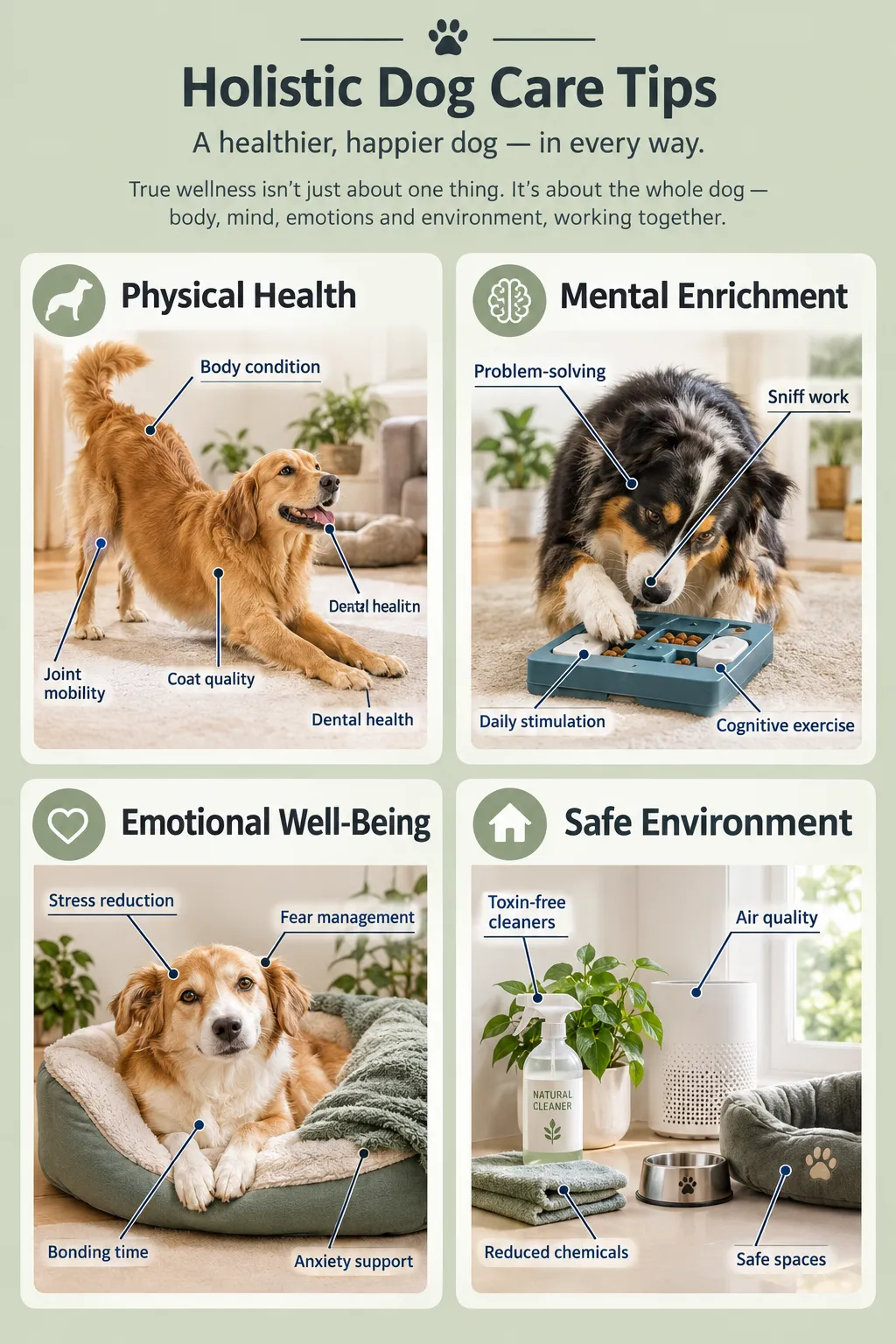
Holistic dog care means looking at your dog as a whole living being – not just treating individual symptoms. It combines physical health, emotional well-being, mental stimulation, and a safe environment into one connected approach.
According to the American Kennel Club’s guide on holistic care for dogs, this approach focuses on prevention and balance rather than reactive treatment. It doesn’t reject conventional medicine – it works alongside it.
Think of it this way: your dog’s digestion, anxiety levels, coat health, and social behavior are all connected. Addressing one without the others often leads to incomplete results.
How Is Holistic Dog Care Different From Regular Vet Care?
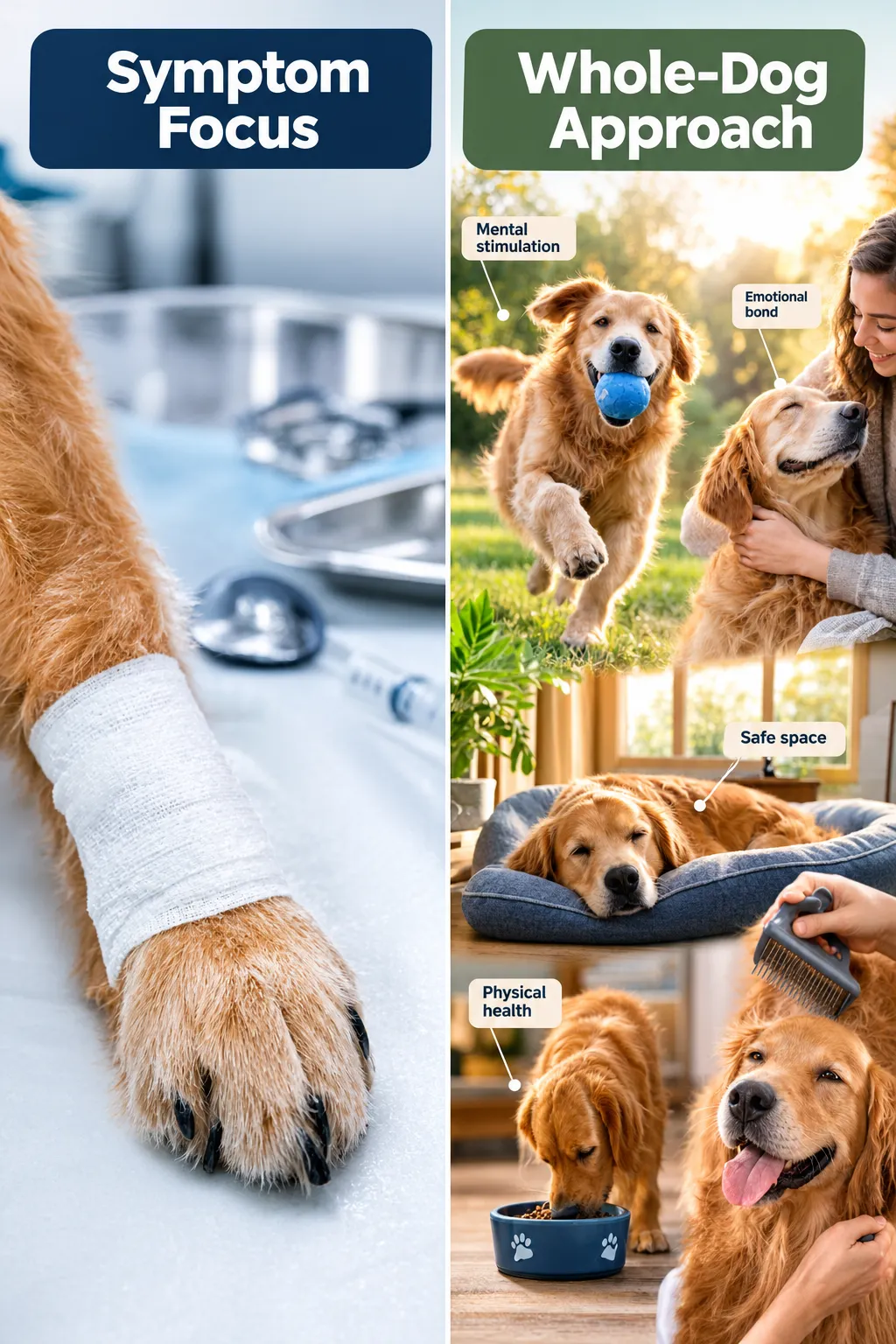
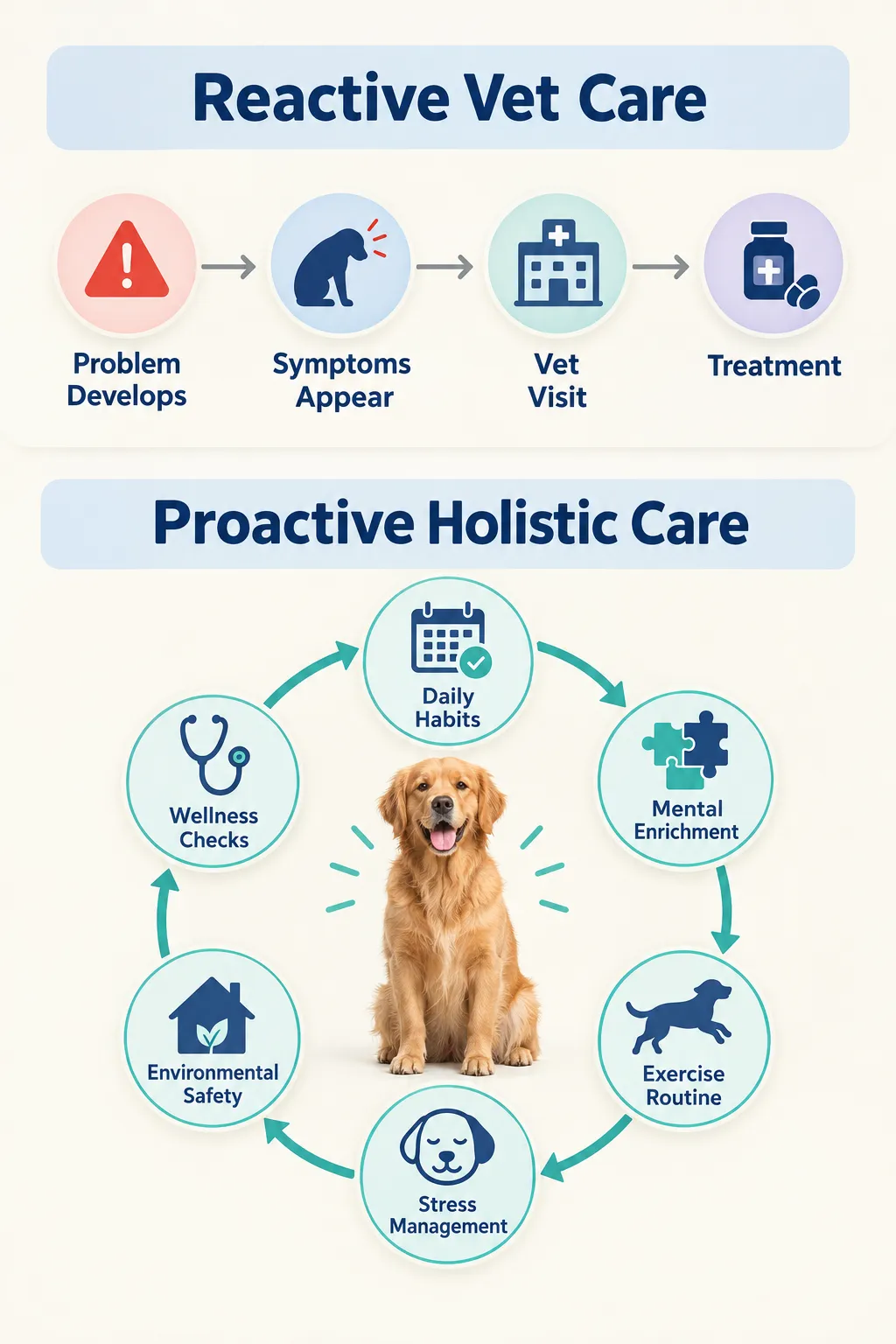
Regular vet care is reactive – you go when something is wrong. Holistic dog care is proactive – you build daily habits that reduce the chance of problems developing in the first place.
Integrative veterinary clinics describe this as “wellness and prevention” focused care, combining conventional diagnostics with lifestyle guidance, nutrition, and behavioral support.
The key differences:
| Conventional Vet Care | Holistic/Integrative Care |
|---|---|
| Treats symptoms | Addresses root causes |
| Medication-first approach | Lifestyle + medicine combined |
| Reactive (visit when sick) | Preventive (ongoing habits) |
| Physical health focus | Physical + mental + emotional |
Both matter. The goal is to use each where it fits best.
11 Holistic Dog Care Tips That Actually Make a Difference
These tips go beyond food bowls and supplement bottles. They’re the lifestyle changes that often have the biggest impact.
1. Prioritize Mental Enrichment Every Day
Mental stimulation is now treated as a health necessity, not a bonus. Research on canine enrichment shows that dogs who receive regular mental challenges show lower stress hormones and fewer destructive behaviors.
Try puzzle feeders, scent work, or rotating toys weekly. Even 10 minutes of nose work can tire a dog more than a 30-minute walk.
2. Build a Fear-Free Home Environment
Stress and fear directly affect your dog’s immune system and gut health. Creating a calm, predictable home routine reduces chronic low-level anxiety that many owners don’t even notice.
Signs your dog may be chronically stressed include excessive licking, yawning during calm moments, or hiding. If your dog struggles around visitors, check out these tips to keep your dog calm around visitors.
3. Reduce Environmental Toxins at Home
Many common household products – certain cleaning sprays, scented candles, synthetic air fresheners, and some lawn chemicals – can affect your dog’s respiratory and hormonal health over time.
Holistic pet wellness guides consistently flag environmental toxin reduction as one of the most underused strategies in natural dog care.
Simple swaps: use pet-safe floor cleaners, avoid dryer sheets near bedding, and rinse your dog’s paws after walks in treated areas.
4. Take Dental Health Seriously
Dental disease affects an estimated 80% of dogs over age three (American Veterinary Dental College). Poor oral health links directly to heart, kidney, and liver problems.
Daily brushing is the gold standard. If your dog resists, start with finger brushes and work up slowly. See our guide on how to brush your dog’s teeth with 5 easy hacks for a step-by-step approach.
5. Match Exercise to Your Dog’s Actual Needs
Generic advice like “walk your dog twice a day” misses the point. A Border Collie and a Basset Hound have completely different exercise needs – and so does a healthy adult dog versus a senior.
Tailor movement to your dog’s age, breed, and joint health. For older dogs, senior dog exercises that keep them active safely are worth bookmarking.
6. Treat Grooming as a Health Practice
Regular grooming isn’t just about looks. It’s how you catch skin infections, lumps, ear problems, and parasite infestations early. Holistic natural pet wellness guides frame grooming as a key part of preventive care.
Brush your dog’s coat at least 2-3 times per week. Check ears weekly. For ear care specifics, this dog ear care guide covers what most owners miss.
7. Support Emotional Safety Through Bonding
Your dog’s relationship with you directly affects their health. Dogs with secure human bonds show better stress recovery and lower baseline cortisol levels, according to holistic pet care research.
Bonding doesn’t require expensive classes. Daily calm interaction, consistent handling, and positive training all build emotional safety. If you’re working with a rescue dog, these rescue dog training tips that build trust first are a great starting point.
8. Manage Allergies With Lifestyle Changes First
Many dogs with skin allergies or digestive sensitivities improve significantly with environmental changes before any medication is needed. Common triggers include synthetic fabrics in bedding, certain grasses, mold, and dust mites.
Wash your dog’s bedding weekly in hot water. Wipe paws after outdoor time. Keep indoor humidity below 50%. These steps reduce allergen load before it becomes a vet visit.
For food-related sensitivities, check our list of everyday foods that can harm your dog to rule out dietary triggers first.
9. Adjust Routines Seasonally
Dogs feel seasonal changes more than most owners realize. Winter means shorter days, less outdoor time, and dry indoor air. Summer brings heat stress and increased parasite exposure.
In winter: add enrichment indoors to compensate for less outdoor time. In summer: shift walks to early morning or evening, check paws for heat damage, and watch for signs of overheating.
10. Use Natural Remedies Carefully and With Vet Guidance
Natural doesn’t always mean safe. Dogster’s review of natural remedies for dogs notes that some popular options – like essential oils and certain herbs – can be toxic to dogs even in small amounts.
Always check with your vet before introducing anything new. Chamomile, oat baths for itchy skin, and coconut oil for dry paws are among the more widely supported options – but even these have limits.
11. Schedule Wellness Visits, Not Just Sick Visits
One of the most practical holistic dog care tips is also the simplest: go to the vet when your dog is healthy. Wellness exams catch early changes in weight, dental health, organ function, and mobility before they become serious problems.
Integrative veterinary practices now offer comprehensive wellness plans that combine conventional checkups with lifestyle and behavioral assessments.
Best Holistic Dog Care Practices for Anxiety and Stress
Anxiety in dogs shows up as destructive behavior, excessive barking, digestive issues, and even immune suppression. The most effective approach combines environmental management, routine, and positive training.
Key strategies:
- Create a safe zone – a quiet corner with familiar bedding your dog can retreat to
- Stick to a daily routine – predictability reduces baseline anxiety significantly
- Use calming touch – slow, gentle massage along the spine can lower heart rate
- Try species-appropriate music – research suggests classical music and certain frequencies calm dogs in shelters (University of Glasgow, 2017)
- Avoid punishment-based training – it raises cortisol and worsens anxiety long-term
Holistic Dog Grooming and Skin Care Tips
Healthy skin and coat start from the outside in. Regular brushing distributes natural oils, removes dead skin cells, and gives you a weekly health check all in one.
For dogs with sensitive skin, switch to fragrance-free, pH-balanced shampoos. Human shampoos – even “gentle” ones – are too acidic for dog skin.
Check between toes, in skin folds, and around the ears for redness, odor, or discharge. These are early signs of yeast or bacterial overgrowth that respond well to early intervention.
If you have a breed with a complex coat, like a Havanese, specific grooming knowledge matters – see this Havanese grooming guide for coat-specific advice.
Holistic Dog Care for Senior Dogs – What Changes
Senior dogs (generally age 7+ for large breeds, 10+ for small breeds) need adjusted routines across every area – not just food.
What to adjust:
- Exercise – shorter, more frequent walks instead of long ones; avoid high-impact jumping
- Sleep – orthopedic bedding reduces joint pain and improves sleep quality
- Mental stimulation – keep it going; cognitive decline in dogs is real and enrichment slows it
- Vet visits – move to every 6 months instead of annually
- Grooming – older dogs may have drier skin and thinner coats that need gentler care
For a full guide, see how to care for senior dogs.
Can Holistic Dog Care Replace Traditional Veterinary Medicine?
No – and any source claiming otherwise is worth treating with skepticism. Holistic dog care is a complement to conventional medicine, not a replacement.
Petworks’ holistic pet care overview makes this clear: integrative approaches work best when they’re built around a foundation of regular veterinary care, not instead of it.
Vaccines, parasite prevention, and early disease detection require conventional tools. Natural wellness practices fill the gaps between vet visits and reduce the frequency of problems that need medical intervention.
Choose holistic-only if: your vet has confirmed your dog is healthy and you’re maintaining preventive care alongside it.
Don’t skip conventional care if: your dog shows signs of pain, rapid weight change, unusual lumps, or behavioral shifts.
Holistic Dog Care on a Budget – How to Do It Affordably
Good news: most of the best holistic dog care practices cost very little. Mental enrichment, consistent routines, daily brushing, and bonding time are essentially free.
Budget-friendly priorities:
- DIY puzzle feeders using muffin tins and kibble
- Homemade oat baths for itchy skin (plain rolled oats in a sock, run under warm water)
- Rotating existing toys instead of buying new ones
- Cooking simple, vet-approved home meals occasionally – see these homemade dog food recipes on a budget
- Brushing teeth at home daily to reduce costly dental cleanings
The biggest investment is time, not money.
Environmental Enrichment and Exercise for Holistic Dog Wellness
Environmental enrichment means giving your dog opportunities to express natural behaviors – sniffing, exploring, problem-solving, and social interaction.
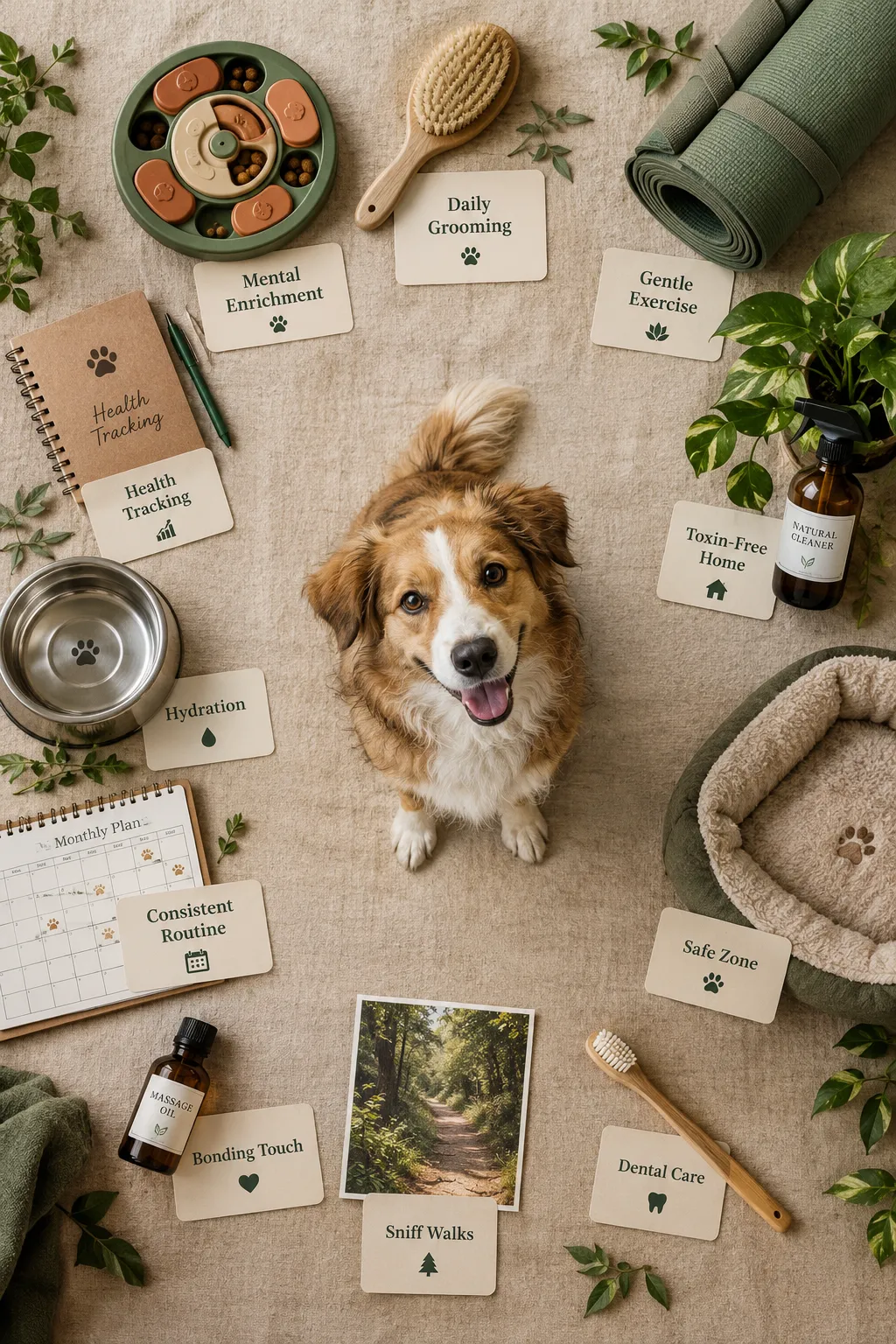
Humane societies and canine enrichment researchers now treat enrichment as a core welfare need, not an optional add-on.
Practical enrichment ideas:
- Allow “sniff walks” where your dog sets the pace and follows their nose
- Rotate play areas – backyard, park, new neighborhood routes
- Introduce novel textures and surfaces for puppies and adults alike
- Use food-dispensing toys to make mealtime mentally engaging
- Schedule regular off-leash time in safe spaces
Is Holistic Dog Care Safe for Puppies?
Yes, with age-appropriate adjustments. Puppies benefit enormously from early socialization, gentle handling, and low-stress environments – all core parts of natural dog wellness.
What’s safe for puppies:
- Gentle massage and handling to build comfort with touch
- Early socialization to sounds, surfaces, and people
- Positive-only training methods
- Age-appropriate mental enrichment (simple puzzle toys, sniff games)
What to avoid or delay:
- High-impact exercise before growth plates close (typically 12-18 months for large breeds)
- Herbal supplements without vet approval
- Essential oils near puppies – many are toxic
For breed-specific puppy care, Labrador puppy training tips offer a solid foundation for early positive habits.
Holistic Dog Care for Specific Breeds – Any Differences?
Yes – breed matters more than most general guides acknowledge. A Siberian Husky needs very different enrichment and exercise than a Basset Hound. Brachycephalic breeds (pugs, bulldogs, French bulldogs) need extra attention to breathing, heat tolerance, and dental crowding.
Key breed considerations:
- High-energy working breeds – need more mental stimulation, not just more exercise
- Brachycephalic breeds – avoid overheating; prioritize dental and respiratory monitoring
- Giant breeds – joint support and low-impact exercise matter from puppyhood
- Anxious or reactive breeds – fear-free handling and consistent routines are non-negotiable
Research your specific breed’s known health tendencies and build your natural wellness plan around those.
How to Find a Holistic Vet Near You
Search for veterinarians with credentials in integrative or functional veterinary medicine. Look for certifications from the American Holistic Veterinary Medical Association (AHVMA) or the Chi Institute (for veterinary acupuncture and herbal medicine).
Practical steps:
- Search the AHVMA’s online directory at ahvma.org
- Ask your current vet if they offer or can refer to integrative services
- Look for clinics that describe themselves as “integrative” rather than purely “holistic” – the former typically means conventional + natural combined
- Ask about their approach to vaccination, parasite prevention, and diagnostics – a good integrative vet won’t skip these
Holistic Dog Care Common Mistakes Pet Owners Make
Even well-meaning owners make these errors:
- Replacing vet visits with natural remedies – the most dangerous mistake
- Using essential oils without checking toxicity – many are harmful to dogs
- Over-supplementing – more isn’t better; fat-soluble vitamins can accumulate to toxic levels
- Ignoring dental health – it’s one of the most impactful preventive steps and one of the most skipped
- Treating all breeds the same – a one-size approach misses breed-specific needs
- Confusing “natural” with “safe” – some natural substances are highly toxic to dogs
Conclusion – Your Next Steps
You don’t need to overhaul everything at once. Start with two or three of these holistic dog care tips and build from there.
This week: Add a 10-minute sniff walk, check your cleaning products for pet safety, and look at your dog’s teeth.
This month: Book a wellness vet visit, start a daily brushing routine, and introduce one enrichment activity.
Long-term: Build a relationship with a vet who supports integrative care, adjust your dog’s routine seasonally, and keep learning about breed-specific needs.
The goal isn’t perfection – it’s a dog who feels safe, stimulated, and well cared for in every part of their life.
FAQ
What is the most important holistic dog care tip for beginners?
Start with mental enrichment and stress reduction. These two areas have the widest impact on overall health and are completely free to implement.
Can I do holistic dog care without a special vet?
Yes. Most of these tips – enrichment, grooming, toxin reduction, dental care, exercise – don’t require a specialist. A standard vet relationship is still essential for preventive checkups.
How often should I groom my dog as part of natural wellness?
Brush 2-3 times per week minimum, check ears weekly, and bathe monthly or as needed. More frequent checks catch problems earlier.
Are essential oils safe to use around dogs?
Many are not. Tea tree, eucalyptus, peppermint, and citrus oils are toxic to dogs. Always check with your vet before using any essential oil near your pet.
What’s the best way to reduce my dog’s anxiety naturally?
A consistent daily routine, a designated calm space, gentle handling, and positive-only training are the most evidence-supported approaches.
Is holistic care different for large breeds vs. small breeds?
Yes. Large breeds need more joint-focused exercise adjustments and earlier senior care. Small breeds often have dental crowding issues that need more frequent monitoring.
How do I know if my dog needs more mental stimulation?
Signs include destructive chewing, excessive barking, restlessness, or attention-seeking behaviors. These often improve significantly with added enrichment.
Can puppies start holistic care routines?
Yes. Early socialization, gentle handling, and positive training are ideal from the start. Avoid supplements and essential oils without vet guidance.
Does holistic dog care cost a lot?
Most practices – enrichment, grooming, bonding, routine – cost little to nothing. The main investment is time and consistency.
What seasonal adjustments should I make for my dog?
In winter, increase indoor enrichment. In summer, shift exercise timing to avoid heat, check paws for burns, and watch for overheating in brachycephalic breeds.
How is a holistic vet different from a regular vet?
A holistic or integrative vet combines conventional diagnostics and treatments with lifestyle, nutritional, and behavioral guidance. They don’t replace standard care – they expand it.
Can holistic care help with my dog’s allergies?
Yes, as part of a combined approach. Environmental management (clean bedding, paw wiping, low humidity) reduces allergen exposure. A vet can confirm whether food, environment, or both are the trigger.