

Last updated: September 24, 2026
Quick Answer: Yes, dogs can absolutely get pink eye – known medically as conjunctivitis. It’s one of the most common eye conditions vets see in dogs. But red eyes in dogs aren’t always simple pink eye. They can signal infections, allergies, dry eye disease, or even serious conditions that need urgent care.
Key Takeaways 🐾
- Dogs can get pink eye (conjunctivitis) in one or both eyes, and it’s a leading reason for vet eye visits
- Most cases in dogs are caused by allergies or irritants – not bacteria or viruses
- Infectious pink eye in dogs is relatively rare compared to non-infectious causes
- Dogs cannot easily catch pink eye from humans, and vice versa – species-specific strains differ
- Seven warning signs tell you it’s more than just mild redness
- Never use human eye drops on your dog without vet approval
- Untreated pink eye can lead to corneal damage or vision problems
- Most cases resolve within 1-2 weeks with proper treatment
What Is Pink Eye in Dogs?
Pink eye in dogs is inflammation of the conjunctiva – the thin, moist tissue lining the inner eyelids and the white part of the eye. When this tissue gets irritated or infected, it turns red, swells, and produces discharge.
According to VCA Animal Hospitals’ guide on conjunctivitis in dogs, conjunctivitis is actually a symptom rather than a standalone diagnosis. That means red eyes always point to an underlying cause that needs to be identified.
The condition can affect one eye (unilateral) or both eyes (bilateral). Bilateral cases often suggest allergies or a systemic issue, while a single affected eye is more likely caused by a foreign body, injury, or localized infection.
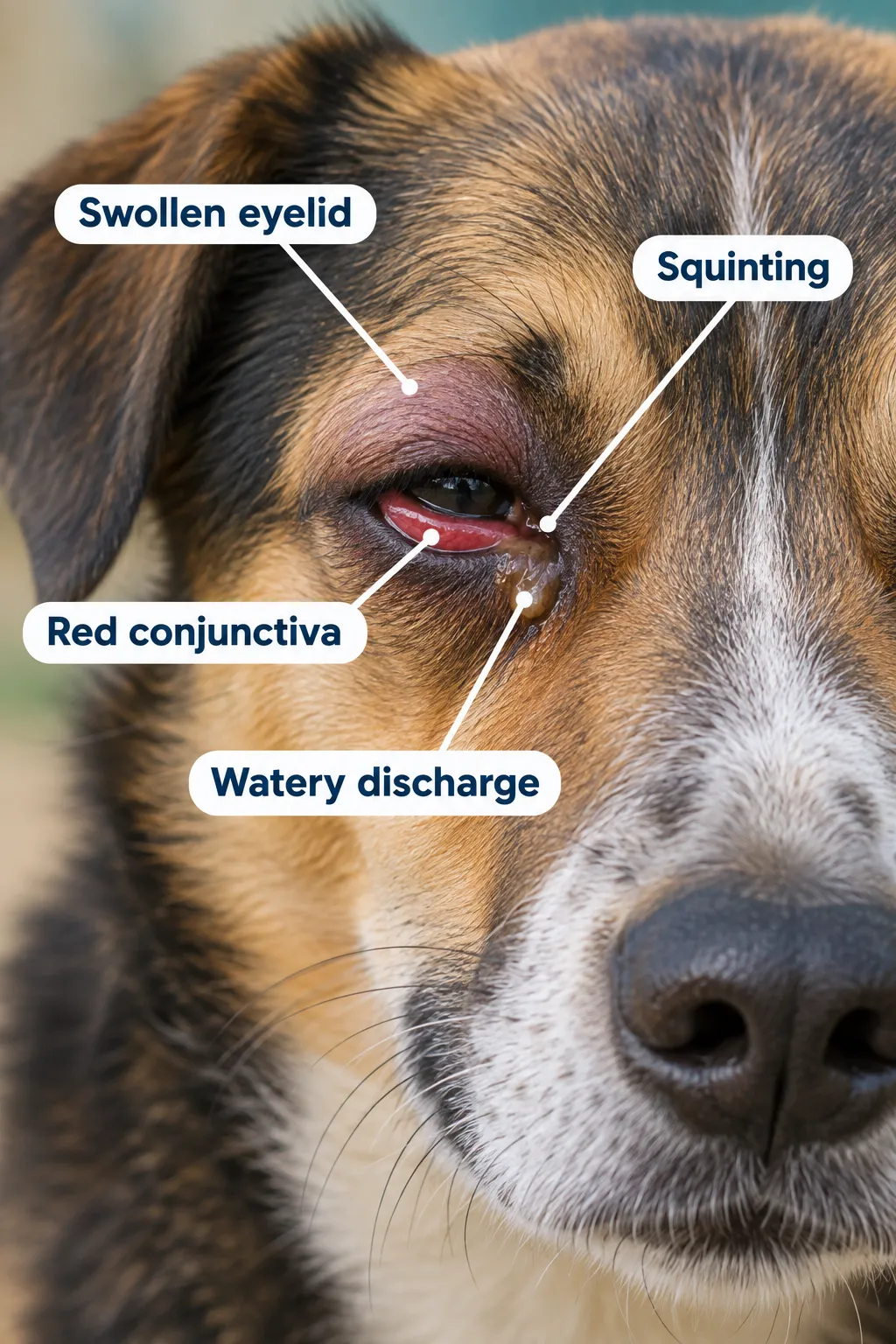
Three main types of conjunctivitis in dogs:
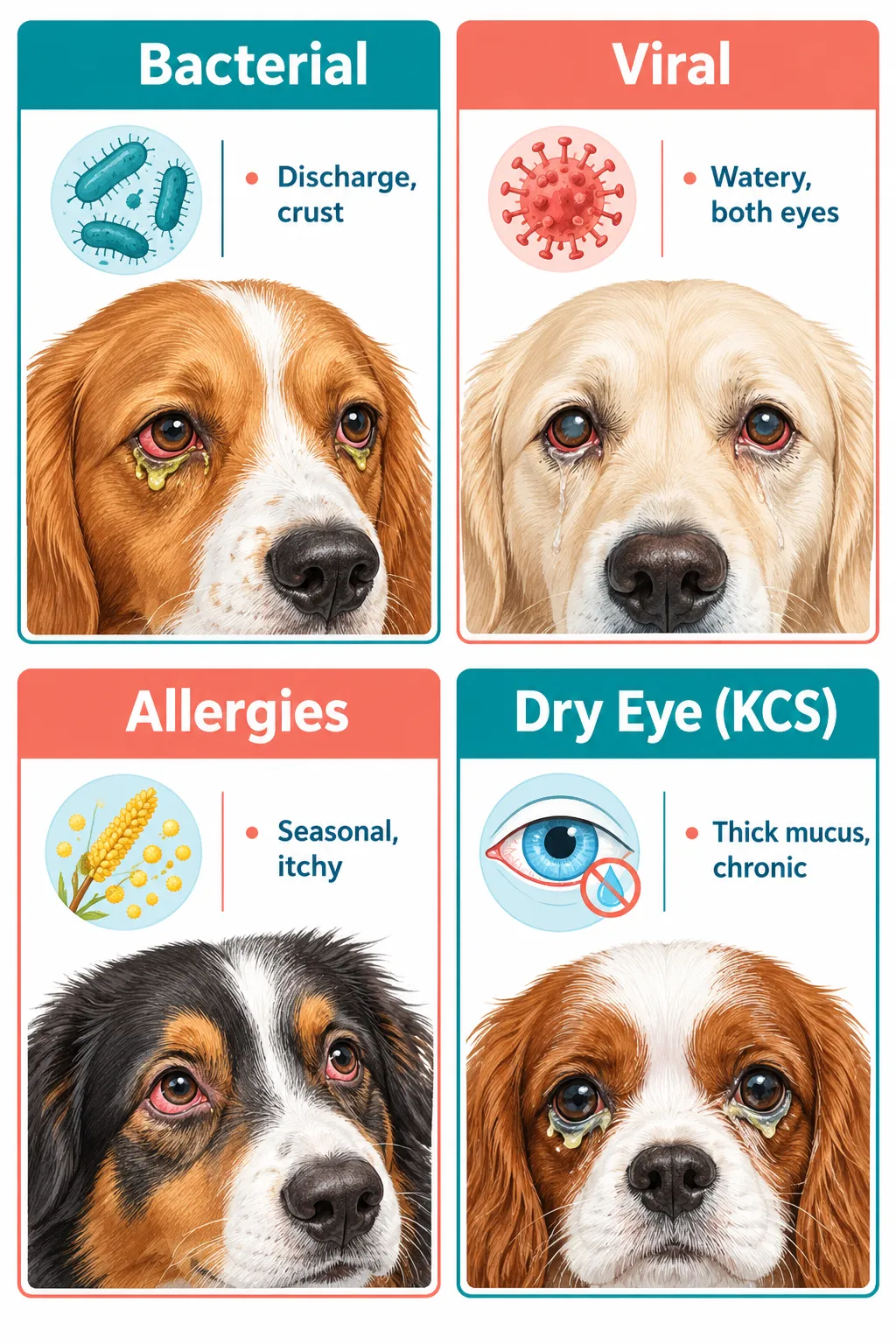
- Infectious – caused by bacteria, viruses, or parasites
- Non-infectious – caused by allergies, irritants, dry eye, or anatomical issues
- Secondary – a symptom of another underlying disease (like distemper or glaucoma)
Can Dogs Get Pink Eye from Humans – or Give It to Us?
The short answer is: it’s very unlikely. According to ASPCA Pet Insurance’s resource on dog pink eye, the bacteria and viruses that cause pink eye in humans are generally species-specific. The strains that infect human eyes don’t typically thrive in a dog’s eye environment, and the reverse is also true.
That said, basic hygiene still matters. Wash your hands after touching your dog’s eyes, especially if your dog has an active eye infection. This reduces any small transmission risk and prevents spreading bacteria to other pets.
Can dogs spread pink eye to other dogs? Yes – this is a real concern. If the cause is bacterial or viral, it can pass between dogs through direct contact or shared items like bedding and toys. More on that below.
What Causes Pink Eye in Dogs?
Pink eye in dogs has several possible causes, and identifying the right one is key to effective treatment. The Merck Veterinary Manual’s overview of conjunctival disorders in dogs notes that non-infectious causes are actually more common than infectious ones.
Common causes include:
- Allergies – environmental allergens like pollen, dust, or mold
- Bacterial infections – Staphylococcus, Streptococcus, and others
- Viral infections – canine distemper virus is a notable example
- Foreign bodies – grass seeds, dirt, or debris in the eye
- Dry eye (KCS) – insufficient tear production causes chronic irritation
- Anatomical issues – breeds with flat faces (brachycephalics) or droopy eyelids are more prone
- Chemical irritants – shampoo, smoke, or cleaning products
- Underlying disease – glaucoma, tumors, or autoimmune conditions
Edge case to know: Some flat-faced breeds like Bulldogs, Pugs, and Shih Tzus have structural eye issues that make them chronically prone to conjunctivitis. In these dogs, red eyes may be a recurring issue tied to anatomy, not just a one-time infection.
Is Dog Pink Eye Contagious to Other Dogs?
Infectious conjunctivitis – caused by bacteria or viruses – can spread between dogs. Hill’s Pet Nutrition’s guide on conjunctivitis in dogs confirms that dogs in close contact, such as in kennels or multi-dog households, are at higher risk of spreading eye infections.
How it spreads:
- Direct eye-to-eye or nose-to-eye contact
- Shared bedding, toys, or food bowls
- Grooming each other
What to do if you have multiple dogs:
- Separate the affected dog until a vet confirms the cause
- Wash shared items with hot water
- Avoid letting dogs share water bowls during an active infection
Non-infectious causes like allergies are not contagious at all. This is another reason why getting a proper diagnosis matters before assuming the worst.
How Do I Know If My Dog Has Pink Eye? 7 Signs It’s More Than Red Eyes
Red eyes alone don’t confirm pink eye – and they don’t tell you how serious the situation is. Pumpkin Pet Care’s breakdown of pink eye in dogs highlights that certain symptoms signal something more serious than mild irritation.
Here are the 7 signs that mean you should act fast:
1. 🔴 Discharge that’s yellow, green, or thick
Clear watery discharge can be normal with mild irritation. But yellow or green discharge almost always means bacterial infection and needs antibiotic treatment.
2. 🔴 Squinting or holding the eye shut
This is a pain signal. If your dog is squinting or pawing at their eye, something is causing real discomfort – not just mild redness.
3. 🔴 Swelling of the eyelid or tissue around the eye
Puffy, swollen eyelids suggest significant inflammation. This can progress quickly if left untreated.
4. 🔴 Cloudiness or haziness over the eye
A cloudy cornea is a red flag. It can indicate corneal ulcers, glaucoma, or uveitis – all of which are serious.
5. 🔴 Redness that doesn’t improve in 24-48 hours
Mild irritation from dust or wind usually clears up quickly. Persistent redness that stays or worsens needs a vet’s attention.
6. 🔴 Sensitivity to light
If your dog turns away from light or keeps their eye closed in bright conditions, this suggests deeper eye inflammation.
7. 🔴 Symptoms in only one eye with no obvious cause
One-sided eye issues are more likely to involve a foreign body, injury, or localized infection – all of which need examination.
If you notice any of these signs, also check our guide on why dogs get eye boogers and 9 warning signs it’s more serious – some causes overlap.
Can Allergies Cause Pink Eye in Dogs?
Yes – allergies are one of the most common causes of pink eye in dogs. The PDSA’s guide on conjunctivitis in dogs lists environmental allergens as a leading trigger, especially in dogs that also show skin itching, sneezing, or paw chewing.
Allergy-related pink eye tends to affect both eyes at the same time. It often appears seasonally – worse in spring and fall when pollen counts are high.
Signs it’s allergy-related:
- Both eyes affected equally
- Watery rather than thick discharge
- Symptoms improve indoors or after rain
- Your dog also has itchy skin or paws
If your dog chews their paws alongside eye redness, check out why dogs chew on their paws – it’s often the same allergic response showing up in two places at once.
What’s the Difference Between Pink Eye and Dry Eye in Dogs?
These two conditions look similar but have very different causes and treatments. Dry eye – medically called Keratoconjunctivitis Sicca (KCS) – happens when the tear glands don’t produce enough moisture. The eye gets irritated and inflamed, which looks a lot like pink eye.
Key differences:
| Feature | Pink Eye (Conjunctivitis) | Dry Eye (KCS) |
|---|---|---|
| Discharge type | Watery to thick | Thick, stringy, mucus-like |
| Tear production | Normal | Reduced or absent |
| Affected eyes | One or both | Usually both |
| Cause | Infection, allergy, irritant | Immune-mediated, nerve damage |
| Treatment | Drops, antibiotics, antihistamines | Lifelong artificial tears or cyclosporine |
MedVet’s clinical overview of conjunctivitis in dogs notes that KCS is often misidentified as simple conjunctivitis, which is why a Schirmer tear test (measuring tear production) is a routine part of any eye exam.
Choose a vet exam if: your dog has recurring eye issues, thick stringy discharge, or is a breed prone to dry eye (Cocker Spaniels, West Highland Terriers, Bulldogs).
How to Treat Pink Eye in Dogs at Home
Home care can help manage mild symptoms, but it does not replace veterinary treatment for confirmed pink eye. Blue Cross’s advice on conjunctivitis in dogs recommends keeping the eye area clean while you arrange a vet visit.
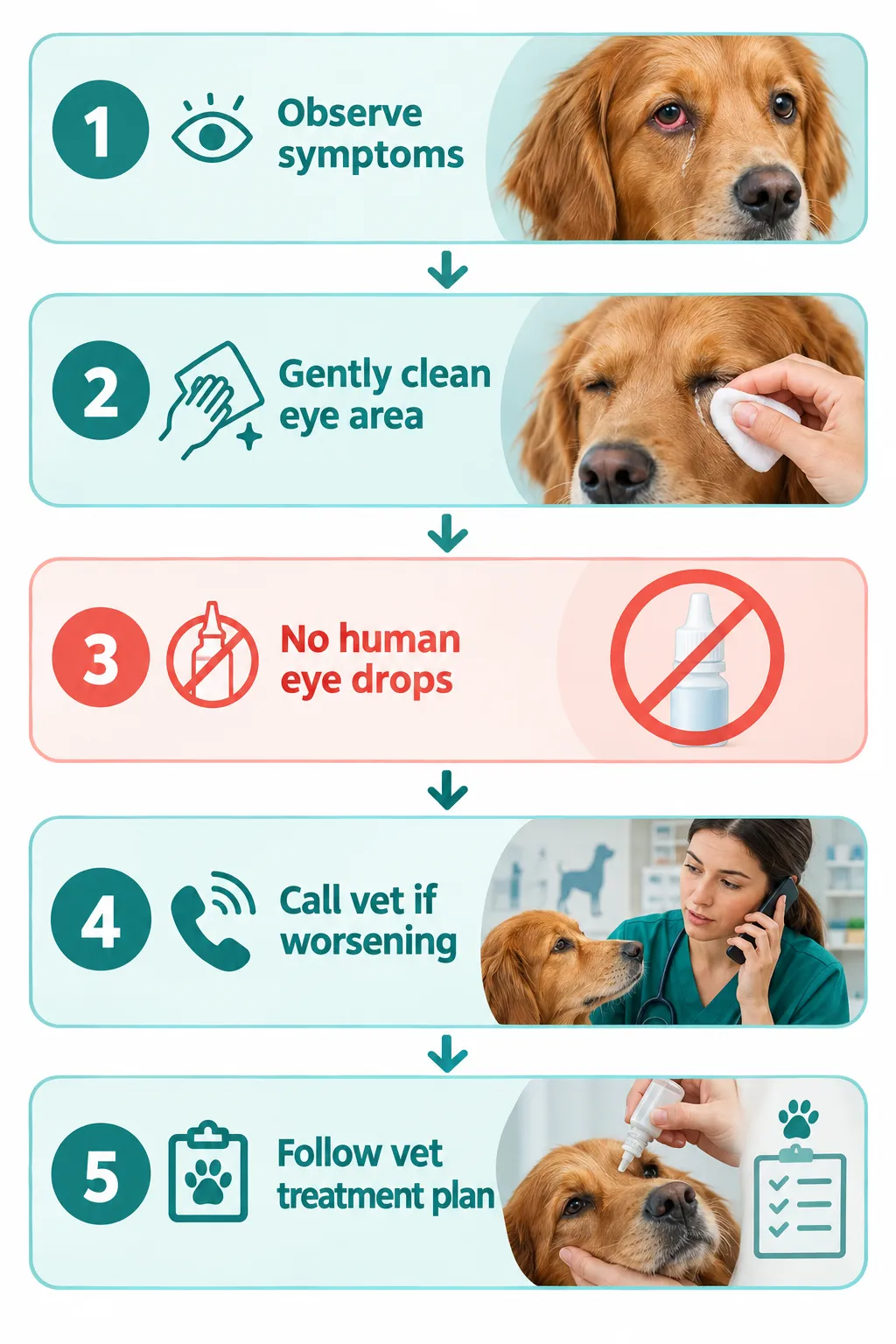
Safe home steps:
- Gently wipe discharge from the eye using a clean, damp cotton pad – always wipe from the inner corner outward
- Use a separate cotton pad for each eye to avoid cross-contamination
- Keep your dog from rubbing their eye (an e-collar can help)
- Remove potential irritants from their environment – smoke, dust, strong cleaning products
- Note when symptoms started, which eye is affected, and any recent exposures
What NOT to do at home:
- Do not use human eye drops (including Visine) on your dog
- Do not try to flush the eye with tap water unless a foreign body is suspected and you’re heading to the vet immediately
- Do not wait more than 48 hours if symptoms are worsening
For additional gentle home remedies, our article on homemade antibiotics for dogs and 7 gentle remedies covers some supportive options – though these should always complement, not replace, vet care.
Can I Use Human Eye Drops on My Dog?
No – do not use human eye drops on your dog without explicit vet approval. Human eye drops, including over-the-counter redness reducers and antibiotic drops, are formulated for human eye chemistry. Some contain ingredients that are toxic to dogs or can worsen the condition.
CareCredit’s overview of dog pink eye specifically cautions against self-medicating with human products. The only exception is plain sterile saline solution, which can be used to gently rinse the eye area in an emergency – but even this should be followed up with a vet visit.
What vets typically prescribe instead:
- Antibiotic eye drops or ointment (for bacterial infections)
- Antihistamine eye drops (for allergies)
- Cyclosporine or tacrolimus drops (for dry eye/KCS)
- Steroid eye drops (for inflammation, only when no infection is present)
When Should I Take My Dog to the Vet for Red Eyes?
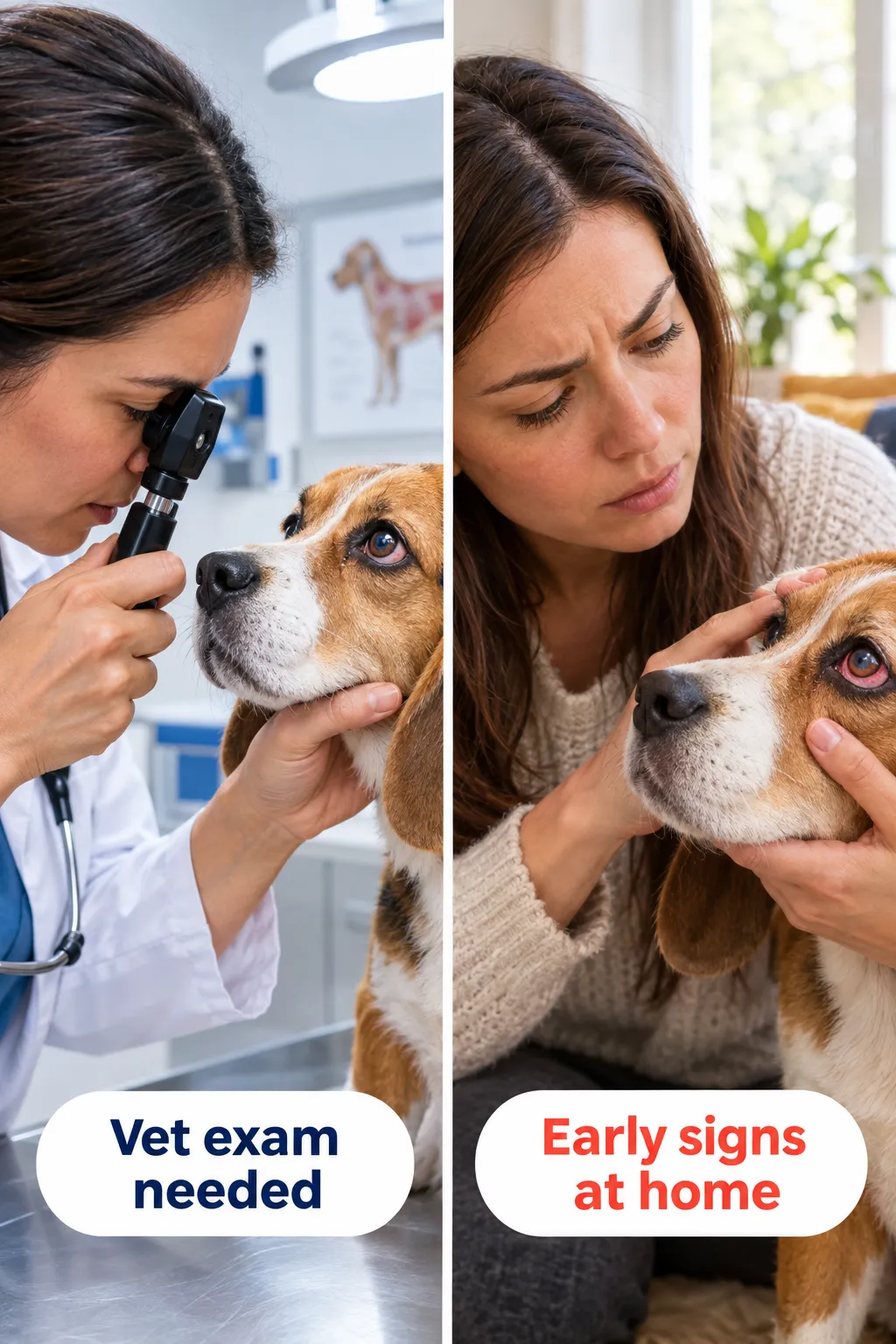
Take your dog to the vet within 24 hours if you notice any of the 7 serious signs listed above. Go to an emergency vet immediately if you see:
- A visible injury to the eye
- The eyeball looks enlarged or is bulging
- Your dog suddenly loses vision or bumps into things
- The eye has turned completely red or has visible blood
Routine redness with no discharge and no squinting can be monitored for 24-48 hours. But when in doubt, call your vet. Eye problems can escalate quickly, and early treatment prevents complications like corneal scarring.
If your dog is also showing signs of pain elsewhere, our guide on 10 early signs of pain in dogs every owner should recognize can help you assess the full picture.
How Long Does Pink Eye Last in Dogs?
With proper treatment, most cases of dog pink eye resolve within 1-2 weeks. Bacterial infections typically clear up in 7-10 days with antibiotic drops. Allergy-related cases may need ongoing management, especially during high-pollen seasons.
PetMD’s resource on eye problems in dogs notes that untreated cases can persist for weeks and risk complications including corneal ulcers and permanent scarring.
Factors that affect recovery time:
- The underlying cause (allergies take longer to manage than a simple bacterial infection)
- How quickly treatment was started
- Whether the dog keeps rubbing the eye
- Breed-related anatomical factors
How Much Does It Cost to Treat Dog Pink Eye?
Costs vary depending on the cause and your location. Here’s a general estimate based on typical 2026 veterinary pricing (these are estimates – always confirm with your vet):
- Vet exam fee: roughly $50-$100
- Antibiotic eye drops: roughly $20-$50
- Allergy testing (if needed): $200-$300+
- Specialist ophthalmology visit: $150-$300+
- Ongoing KCS treatment: monthly costs for prescription drops
Pet insurance can offset these costs significantly. If you don’t have coverage yet, it’s worth considering – eye conditions in dogs can become recurring and expensive, especially in predisposed breeds.
What Are the Signs My Dog’s Red Eyes Are Serious?
Red eyes become a genuine emergency when they involve the deeper structures of the eye. Conditions like glaucoma (high eye pressure), uveitis (internal eye inflammation), or a corneal ulcer can all cause red eyes – and all can lead to permanent vision loss if untreated.
Serious red flags that need same-day emergency care:
- Eye looks larger than normal or is bulging
- Dog suddenly seems disoriented or bumps into things
- Visible scratch, cut, or foreign object in the eye
- Eye is completely closed and dog won’t let you near it
- Redness came on suddenly after a trauma or fight
Dogs that are also showing signs of illness alongside eye symptoms – like lethargy, fever, or nasal discharge – may have a systemic condition. Check our guide on can dogs get colds and 7 warning signs if your dog seems generally unwell alongside eye symptoms.
FAQ: Can Dogs Get Pink Eye?
Q: Can dogs get pink eye in just one eye?
Yes. Single-eye pink eye is common and often points to a foreign body, injury, or localized infection rather than allergies, which typically affect both eyes.
Q: Is dog pink eye painful?
It can be. Mild cases may just cause irritation, but bacterial infections, corneal ulcers, and dry eye can be genuinely painful. Squinting and pawing at the eye are signs of discomfort.
Q: Can puppies get pink eye?
Yes. Puppies can develop neonatal conjunctivitis before their eyes fully open, which requires prompt vet care. Older puppies are also susceptible to viral causes like distemper.
Q: Can I catch pink eye from my dog?
It’s very unlikely. The strains that cause dog conjunctivitis are generally species-specific. Basic hand hygiene after handling an infected dog is still a good practice.
Q: Will dog pink eye go away on its own?
Mild irritation from a one-time exposure (like dust or wind) might clear up in a day. But true conjunctivitis – especially bacterial or allergy-related – typically needs treatment to fully resolve.
Q: What breeds are most prone to pink eye?
Flat-faced (brachycephalic) breeds like Bulldogs, Pugs, and Shih Tzus are most prone due to their eye anatomy. Cocker Spaniels and West Highland Terriers are prone to dry eye (KCS).
Q: Can I use saline solution on my dog’s eye?
Plain sterile saline can be used to gently rinse the eye area in an emergency. It’s not a treatment, but it’s safe for a quick rinse before a vet visit.
Q: How do I stop my dog from rubbing their eye?
An Elizabethan collar (e-collar or cone) is the most effective way to prevent eye rubbing during treatment. Rubbing can worsen irritation and introduce more bacteria.
Q: Can stress cause eye problems in dogs?
Stress doesn’t directly cause pink eye, but it can weaken the immune system, making dogs more susceptible to infections. Learn more about stress signals in dogs and 9 warning signs to see if anxiety might be affecting your dog’s overall health.
Q: Is pink eye in dogs the same as in humans?
The symptom (inflamed conjunctiva) is the same, but the specific causes and treatments often differ. Human pink eye treatments are not safe to use on dogs.
Conclusion
So, can dogs get pink eye? Absolutely – and it’s more common than most owners realize. The key takeaway is that red eyes in dogs are always a signal worth investigating. They’re rarely just cosmetic.
Your action plan:
- Watch for the 7 serious signs – discharge color, squinting, swelling, cloudiness, light sensitivity, persistent redness, and one-sided symptoms
- Don’t reach for human eye drops – they can do more harm than good
- Clean gently – use a damp cotton pad to remove discharge while you wait for your vet appointment
- Call your vet within 24 hours if symptoms aren’t improving or if any red flags appear
- Identify the cause – treatment only works when it targets the right underlying problem
Early action protects your dog’s vision and prevents a manageable condition from becoming a serious one. When those eyes look a little off, trust your instincts – your dog will thank you for it. 🐶